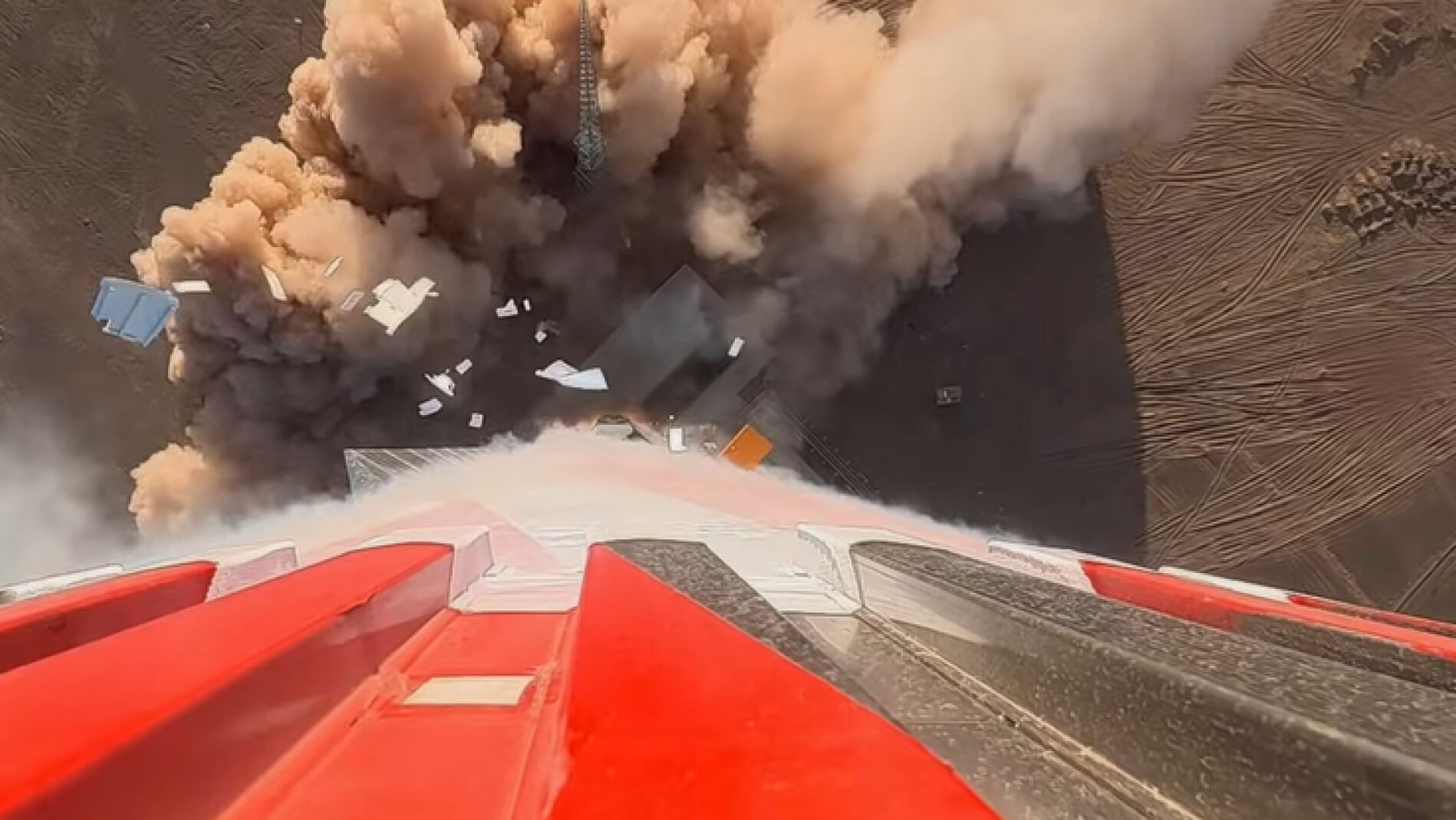
Twelve commercial DJI Osmo Action 6 cameras have recorded the launch and vertical landing of China's Zhuque-3 reusable rocket from aboard its first stage.
Camera manufacturer DJI said the off-the-shelf production units were installed on the exterior of the rocket without internal modifications. The test marked the first land recovery using landing legs for a Chinese orbital vehicle.
Landmark test flight in northwestern China
The Zhuque-3 rocket, developed by private Chinese aerospace firm LandSpace, launched from the Dongfeng commercial innovation test area in northwestern China. About 137 seconds after liftoff, the vehicle's two stages separated.
While the second stage continued its flight to place the Honghu-03 satellite into orbit, the first stage initiated its return journey. It landed vertically at a designated recovery zone in Gansu province.
LandSpace is headquartered in Beijing and specializes in developing liquid-fueled space launch vehicles. Gansu province in northwestern China borders the Gobi Desert and hosts major space testing and launch facilities.
Withstanding extreme heating and atmospheric re-entry
During ascent and atmospheric re-entry, friction and aerodynamic heating pushed the surface temperature of the rocket to between 400 and 500 degrees Celsius. High-frequency vibrations from the engines and strong G-forces during descent maneuvers created additional dynamic stress.
DJI clarified that the 500-degree temperature measurement applied to the outer surface of the rocket rather than the internal camera sensors or electronics. The cameras survived because of specialized mounting and integration systems that secured them to the vehicle.
Internal storage solves re-entry signal blackout
The returning rocket stage also encountered a temporary communications blackout zone during atmospheric re-entry. When spacecraft re-enter the atmosphere at high speeds, superheated plasma forms around the vehicle and blocks radio signals.
To prevent loss of video footage during the blackout, the Osmo Action 6 cameras recorded directly to internal storage rather than broadcasting a live feed. Technical teams recovered the video files intact alongside the cameras after touchdown.
Visual data for rocket recovery engineering
The onboard cameras documented the entire mission, capturing liftoff, stage separation, orbital space, re-entry maneuvers, and the final landing in ground dust.
LandSpace engineers said the multi-angle footage provides visual data to analyze structural behavior, aerodynamic control surface movements, and recovery maneuver phases. DJI noted that the recordings will help evaluate first-stage conditions and replicate success in future flights.
The cameras operated through extreme lighting changes, relying on a 1/1.1-inch CMOS sensor, up to 4K recording at 120 frames per second, and up to 13.5 stops of dynamic range. DJI stated that electronic image stabilization maintained steady video despite intense vibration and rapid changes in rocket orientation.