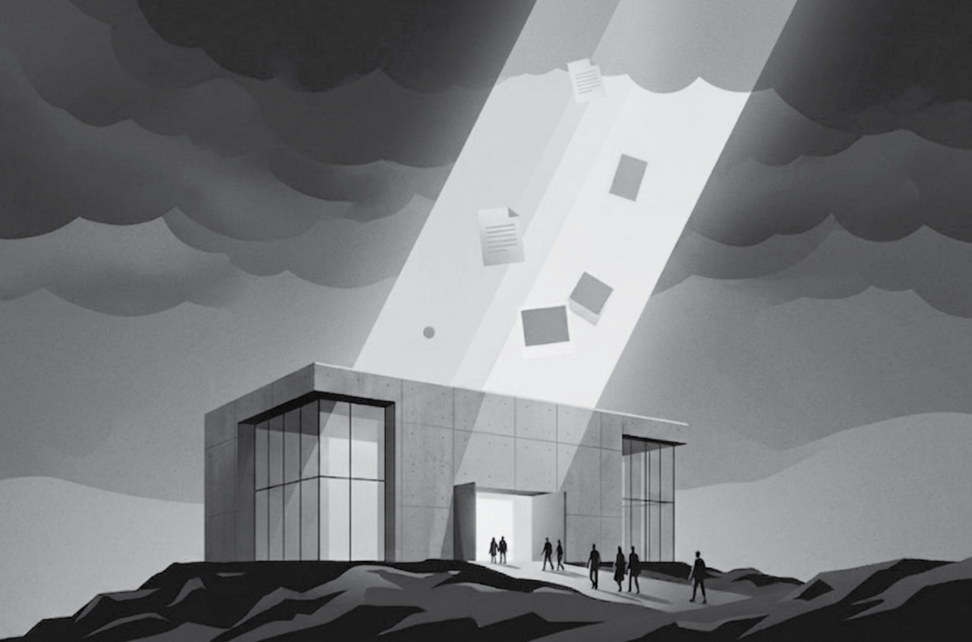
Former Peruvian justice minister Diego Garcia Sayan has defended Peru's Lugar de la Memoria museum against political threats, urging the country to follow Germany's post-war memorial model in facing national trauma.
Writing in World Stock Market on Saturday, August 29, 2026, the former diplomat called for an end to authoritarian bluster aimed at the institution. He argued that democratic nations do not build or strengthen themselves by hiding historical wounds, but by facing them directly.
Garcia Sayan previously served as head of the team that created the final design for the Lugar de la Memoria, la Tolerancia y la Inclusion Social, commonly known as the LUM. He took over leadership of the founding team from his friend, the writer Mario Vargas Llosa, who had led the initial phase.
During the design process, Garcia Sayan visited Germany at the invitation of the German federal government to inspect its post-war museum network. The German government also provided financial resources to support the initial design and construction of the Peruvian site.
German post-war memory policy
Germany established a public policy of confronting its past following the collapse of the Nazi regime, rather than building democracy on forgetting. The process was long, difficult, and at times contentious, but resulted in former concentration camps like Dachau, Buchenwald, and Sachsenhausen being converted into places of memory and education.
In Berlin, monuments proliferate across the city alongside institutions documenting state repression. The Topography of Terror, located in the basement of a central Berlin plaza, offers a raw and educational display detailing the operations of Nazi repressive organs. The House of the Wannsee Conference explains the bureaucratic machinery that organized genocide, while the Memorial to the Murdered Jews of Europe occupies a central location in the capital.
Garcia Sayan noted that German memory policy did not remain frozen in 1945. Following national reunification, Germany incorporated the abuses of the communist dictatorship in the former German Democratic Republic. Sites such as the Berlin Wall Memorial commemorate individuals who suffered persecution, imprisonment, and death under that regime.
The German federal government adopted a formal policy supporting memory sites in 1999, updating it in 2008 and renewing it again in November 2025. The current strategy emphasizes preserving historical sites, strengthening research and education, digitizing archives and exhibitions, and guaranteeing political and scientific independence for memory institutions.
In August 2026, the German federal government announced an additional 10 million euros in funding to reinforce memorials for victims of Nazism and the East German dictatorship. German authorities treat these centers as vital democratic infrastructure rather than national threats, and no political factions attempt to shut them down.
Peru internal conflict and state memory
Peru experienced an internal armed conflict between 1980 and 2000 that left tens of thousands of people dead and disappeared. The majority of the victims were rural and Andean Peruvians.
The insurgent group Shining Path unleashed ferocious and criminal terrorist violence during the period. Garcia Sayan stated that while the Peruvian state had a clear duty to combat and disarm terrorist organizations, that obligation did not make state abuses legitimate.
State anti-terrorist operations included extrajudicial executions, thousands of forced disappearances, torture, and massacres committed by specific state agents. Garcia Sayan stressed that a democratic memory must hold both truths simultaneously without relativizing either the terrorism or the state violence.
Role of the Lugar de la Memoria
Garcia Sayan stated that memory museums do not exist to prolong hatred or impose an official version of history. Instead, their role is to preserve facts, documents, and testimonies, recognize victims, and encourage critical reflection so new generations understand how societies collapse when violence, authoritarianism, and contempt for life replace justice and democracy.
He argued that a serious memory museum does not accuse a nation, but helps it understand itself. The LUM does not hold the Armed Forces as an institution responsible for everything that occurred, nor does it erase the heroic sacrifices of those who fought terrorism within the law.
However, Garcia Sayan warned that fighting terrorism cannot be used as a pretext to make victims of state abuses disappear from history. He added that any potential errors or imbalances in museum exhibitions should be addressed through research, evidence, public debate, and better displays, rather than censorship, silencing, or political control.
He concluded that remembering past crimes does not diminish patriotism, but makes it more demanding and democratic. Societies that preserve victim memories acquire better tools to prevent past horrors from repeating.
Background of Diego Garcia Sayan
Diego Garcia Sayan is a Peruvian lawyer holding a master's degree in law and the author of several books on legal issues and international relations.
He served as Peru's Minister of Justice from 2000 to 2001 and as Minister of Foreign Affairs from 2001 to 2002. He later served as President of the Inter-American Court of Human Rights.
Garcia Sayan also served as the United Nations Special Rapporteur on the Independence of Judges and Lawyers until December 2022.