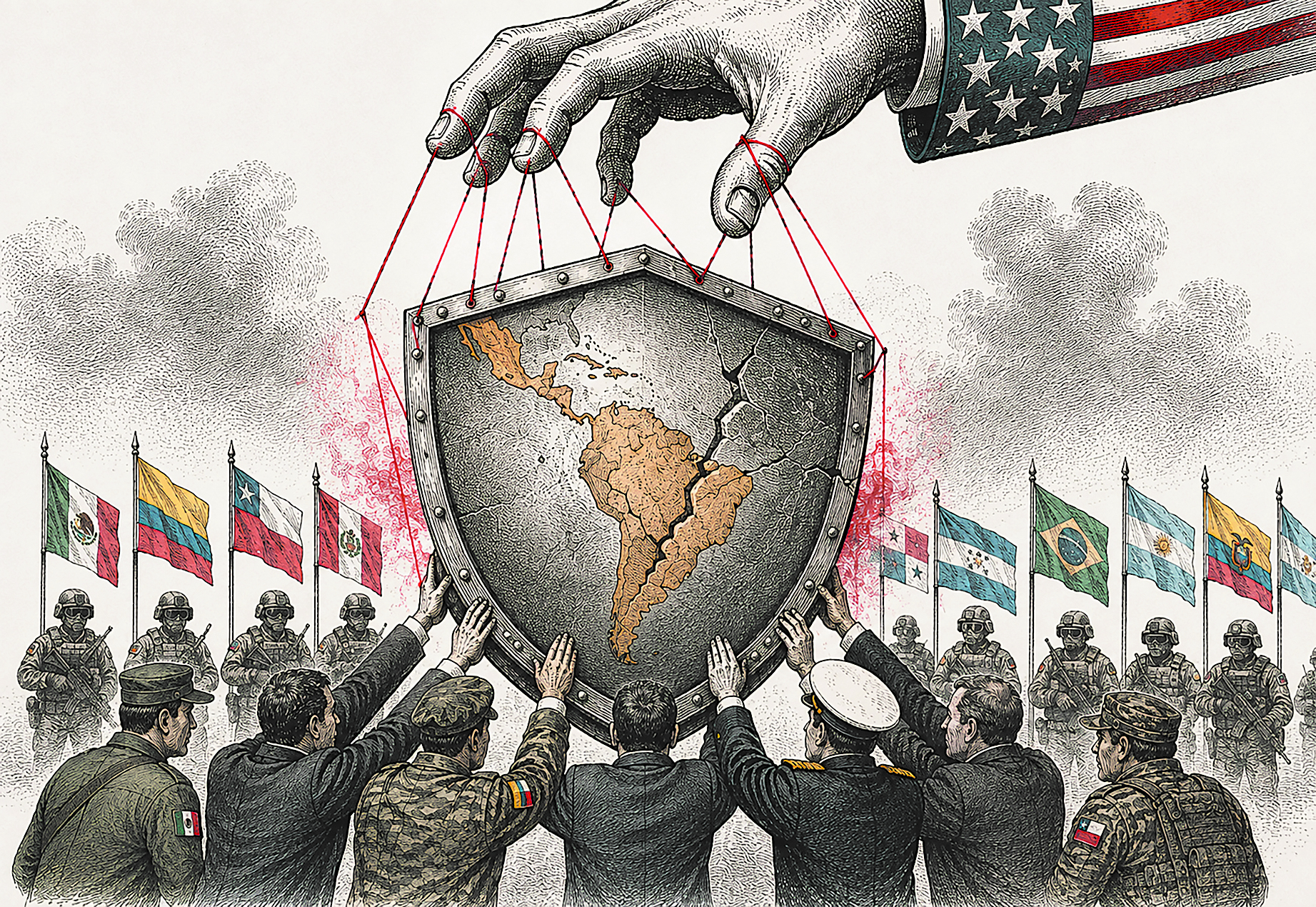
The United States initiative known as the American Coalition Against Cartels and Shield of the Americas faces severe legal and institutional uncertainty across Latin America.
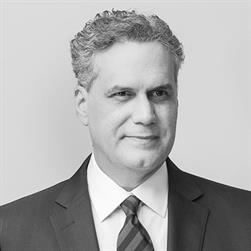
Former Peruvian Foreign Minister Manuel Rodriguez Cuadros reported that the anti-cartel mechanism, launched by US President Donald Trump, lacks any formal legal foundation, international treaty, or agreed rules of operation.
The initiative operates under two separate names for the same framework, dividing its primary coordination between the War Department under Secretary Pete Hegseth and the State Department.
Washington designed the mechanism to build an alliance with Latin American governments willing to support military-led operations against criminal drug cartels and organized crime.
Founding conference in Doral
The origin of the coalition traces back to the Americas Conference Against Cartels held in Doral, Florida, on March 4 and 5, 2026.
War Secretary Pete Hegseth led the conference alongside representatives from 17 nations, with Chile later joining the participating group.
Delegates signed a Joint Security Declaration expressing a common intent to expand cooperation against drug trafficking cartels and narcoterrorism.
The declaration also pledged to protect critical infrastructure, promote peace through strength, and form a joint front against threats originating outside the Western Hemisphere.
The Joint Security Declaration remains the sole multilateral document produced by the initiative.
It carries no binding legal obligations and does not constitute an international treaty.
The mechanism operates without permanent or temporary governing bodies, a secretariat, or agreed procedural rules, relying entirely on invitations issued by the United States.
Peru joined the mechanism as a co-signatory during its founding in March 2026.
However, Peru's president later submitted a formal request to US Secretary of State Marco Rubio asking for Peru to be admitted into the Shield of the Americas.
The request stemmed from an apparent administrative confusion over the initiative's dual naming, which the US State Department quietly left unremarked.
Summit launch and presidential proclamation
President Donald Trump convened the Shield of the Americas Summit in Doral, Miami, on March 7, 2026, two days after the ministerial meeting.
Heads of state and government from 12 regional nations attended the presidential summit, displaying a different participant lineup than the earlier defense conference.
Peru did not attend the presidential summit despite having signed the ministerial declaration two days prior.
During his address, Trump presented the gathering as the high-level launch of a new military alliance to destroy criminal cartels.
Trump urged participating leaders to deploy their national armed forces directly and compared the effort to the international coalition formed to combat ISIS in the Middle East.
The presidential summit ended without producing a joint diplomatic statement among the attending leaders.
Instead, Trump issued Presidential Proclamation 11015 on March 7, titled Commitment to Countering Cartel Criminal Activity.
The proclamation affirmed Washington's intent to mobilize US and partner military forces against cartels and formalised goals to counter external threats and foreign malign influences outside the hemisphere.
Operational shift and Panama meeting
The coalition held its second formal meeting in Panama on August 11 and 12, 2026, under the chairmanship of Pete Hegseth.
The Panama meeting marked a clear shift toward operational planning, with Hegseth pressing member states to move beyond diplomatic coordination into concrete military actions.
Hegseth framed the operational push under the Trump Corollary to the Monroe Doctrine, focusing on hemispheric defense against narcoterrorism and foreign bad actors.
Crossing into broader political matters, Hegseth urged attending governments to withdraw from the International Criminal Court by denouncing the Rome Statute.
The War Secretary also proposed that the security alliance adopt the official motto that they do bad things to bad people.
Legal limbo and national sovereignty
Significant contradictions exist between the coalition's ambitious objectives, such as permitting foreign troop deployments on national soil, and its complete lack of legal structure.
The framework remains in a political, institutional, and legal limbo without any formal mandate authorizing joint military or police operations.
No multilateral negotiations have taken place among participating countries to define shared goals, voting procedures, or action plans reflecting the interests of all members.
The initiative functions primarily as an extension of United States foreign policy tailored to Washington's specific national security priorities.
These institutional flaws prompted public pushback from Chilean Defense Minister Fernando Barros, who stated that Chile needed to evaluate the scope of its involvement.
Barros declared that Chile was not the backyard of any country, signaling clear distance from Washington's unilateral approach.
It later emerged that Barros had signed the Joint Declaration on March 12, 2026.
The Chilean Defense Ministry clarified that the document was a non-binding declaration of intent, separating routine anti-narcotics cooperation from military commitments or strategic guidance set by another state.
Diplomatic tensions and international obligations
Participating Latin American nations maintain extensive bilateral agreements with the United States covering military, police, intelligence, border security, and anti-narcotics work.
However, those historical agreements were negotiated bilaterally to balance the mutual interests of both sovereign parties.
In contrast, the Coalition and Shield framework presents a unique scenario where one power aligns other nations behind its own specific foreign policy agenda.
Pressure from the War Secretary to abandon the Rome Statute forces participating countries to align with Washington's opposition to the International Criminal Court, abandoning their own sovereign legal commitments.
Furthermore, US insistence on using the coalition to confront external global rivals introduces unilateral interference into the sovereign foreign policy choices of Latin American states.
The analysis was detailed by Rodriguez Cuadros, a jurist, ambassador, and former Peruvian Foreign Minister who previously served as president of United Nations commissions on human rights, disarmament, and cultural heritage.
Rodriguez Cuadros also served as deputy peace negotiator in Guatemala, authored the Inter-American Democratic Charter, and represented Peru in its maritime boundary case before the International Court of Justice.
Latin American nations maintain independent national priorities established by their own governments and societies that cannot be replaced by foreign demands.
The American Coalition Against Cartels must resolve these fundamental legal and sovereign contradictions if it intends to evolve from a US political project into a genuine multilateral mechanism for hemispheric security.