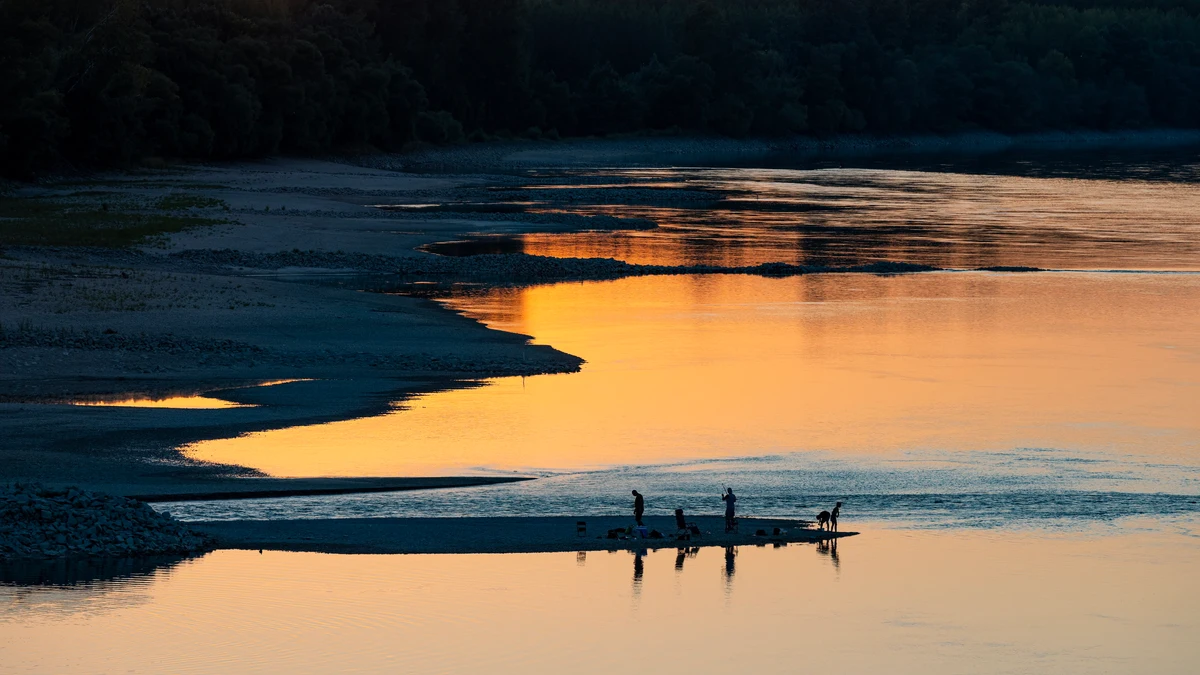
The Danube, Europe's second longest and most voluminous river, is drying up, according to columnist Marta Robles. The river rises in Germany's Black Forest, crosses ten countries and empties into the Black Sea after 2,900 kilometers, she writes.
For centuries the Danube has witnessed empires, wars and civilizations, and it has held fragments of that history in its depths. Those fragments are now surfacing as the water recedes. Sunken ships from World War II have appeared in Serbia, old shells have emerged in Hungary, and Ice Age mammoth remains have turned up in Bulgaria, Robles notes.
A wider pattern among major rivers
Robles writes that these are hidden pages of human evolution, exciting to witness but also unsettling, since each discovery points to a very different era and warns that extreme drought, driven by unbearable temperatures and undeniable climate shifts, could end the world as we know it. She notes the Danube is not alone: the Rhine, the Po, the Yangtze, the Mississippi and the Amazon have all seen historic drops in flow in recent years.
When major rivers suffer, she argues, everything suffers. Agriculture loses water, river navigation becomes difficult or stops altogether, hydroelectric power production falls, and ecosystems are pushed to the brink of collapse. Communities have always settled beside rivers because water is life, she writes.
Water redistributed, not lost
The planet has not lost its water, Robles argues, but global warming is redistributing it unpredictably: places that once saw heavy rain now get almost none, and vice versa. Droughts are growing longer, floods more intense and natural cycles harder to predict, she writes.
Robles suggests the rivers may be sending a message of distress, or perhaps a warning, and that what emerges from their beds is not only a remnant of the past but a preview of the future if the signals keep being ignored. She asks whether people will have to grow used to seeing dry, dead riverbeds in years to come. When rivers stop flowing normally, she writes, landscapes and living conditions change, and it becomes a reminder of how fragile and fleeting living things are, whether small humans or vast, powerful mammoths, since nature alone decides how much time each is given.