Daikin America and Claros Technologies have signed an agreement to permanently destroy PFAS contamination at Daikin's chemical manufacturing plant in Decatur, Alabama.
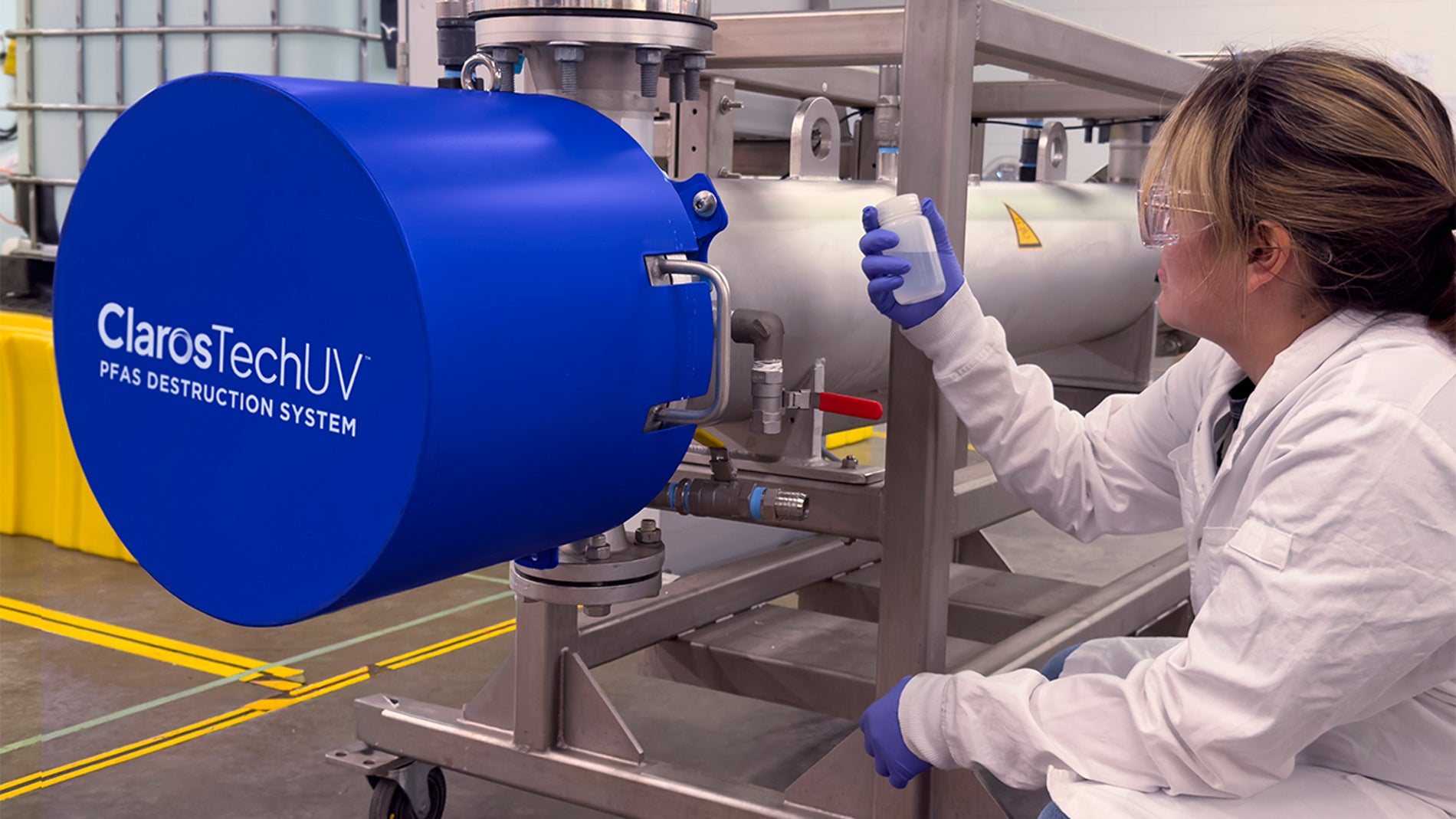
The commercial partnership will integrate a specialized treatment system known as ClarosTechUV directly into ongoing plant operations to eliminate perfluoroalkyl and polyfluoroalkyl substances on site as industrial wastewater is produced.
The announcement follows multiple preliminary testing phases and marks a key transition toward a permanent, industrial scale installation. Corporate representatives noted that the system forms part of planned facility upgrades over the coming years, meaning the agreement does not constitute an immediate operational launch.
Per- and polyfluoroalkyl substances, commonly known as PFAS or forever chemicals, represent a vast family of thousands of synthetic organofluorine compounds. First commercialized in the mid-twentieth century, these synthetic materials feature carbon atomic chains surrounded entirely by fluorine atoms. The chemical bond between carbon and fluorine is one of the single strongest covalent bonds in organic chemistry, rendering the substances extraordinarily resistant to heat, water, oil, biological decay, and standard chemical breakdown.
Because of their exceptional surface tension reducing and repellent properties, PFAS became standard foundational components in widespread industrial and commercial applications. They are widely used in waterproof outdoor apparel, stain-resistant upholstery, grease-proof food packaging materials, firefighting foams, and non-stick cookware coatings. However, that same extreme structural stability means the compounds decompose exceptionally slowly in natural environments, leading to persistent, long-term accumulation across global water systems, soil, wildlife, and human bodies.
The Challenge of PFAS Remediation
Traditional industrial wastewater treatment relies primarily on physical sequestration methods, such as granular activated carbon filtration beds or specialized ion exchange resin columns. While these filtration technologies can effectively trap PFAS molecules from contaminated liquid waste streams, physical sequestration merely captures the pollutants without altering their chemical structure. The toxic chemicals remain fully intact inside the spent filter media, creating a concentrated secondary waste product that requires hazardous material transport and high temperature incineration.
The ClarosTechUV system addresses this environmental bottleneck by decomposing PFAS molecules directly within industrial effluent streams before water leaves the production plant. Designed for continuous inline operation, the technology applies targeted ultraviolet radiation to drive photochemical reactions through the flowing wastewater.
This photochemical process directly severs the carbon-fluorine chemical bonds that give forever chemicals their persistent nature. Claros Technologies engineered the system to process diverse categories of PFAS compounds while operating under flexible physical conditions that do not require temperatures or pressures significantly elevated above ambient room levels.
The decision to proceed with a permanent industrial installation builds upon extensive pilot testing conducted at the Decatur facility. Claros Technologies reported in December 2025 that an experimental trial run at the Daikin plant successfully treated approximately 640,000 liters of industrial process water.
According to trial performance data released by Claros, the ultraviolet treatment process successfully destroyed more than 99.99 percent of the targeted PFAS compounds selected for the evaluation trial.
Monitoring Systems and Global Operations
The planned permanent installation will incorporate automated continuous analytical monitoring equipment designed to measure treatment efficacy continuously. These integrated testing instruments will allow plant operators to verify chemical destruction rates in real time and ensure consistent regulatory compliance during routine manufacturing cycles.
Daikin America is the North American fluorochemical manufacturing arm of Japan-based Daikin Industries, a global industrial corporation headquartered in Osaka. The Decatur manufacturing complex, situated along the Tennessee River in Morgan County, Alabama, serves as one of the region's major chemical manufacturing centers, producing fluoropolymer resins, fluoroelastomers, and specialized chemical compounds used across automotive, aerospace, semiconductor, and industrial electronics sectors.
Claros Technologies is an American environmental technology firm focused on advanced materials science and sustainable chemical destruction platforms. The company specializes in developing photolytic and catalytic technologies capable of mineralizing hazardous halogenated contaminants into harmless basic chemical constituents.
Following the installation in Alabama, Claros and Daikin plan to evaluate potential applications for the ClarosTechUV system across Daikin's broader international manufacturing network. Corporate representatives specified that the current deployment agreement is strictly confined to the Decatur facility, with any future international expansion depending on the outcome of subsequent evaluation phases.