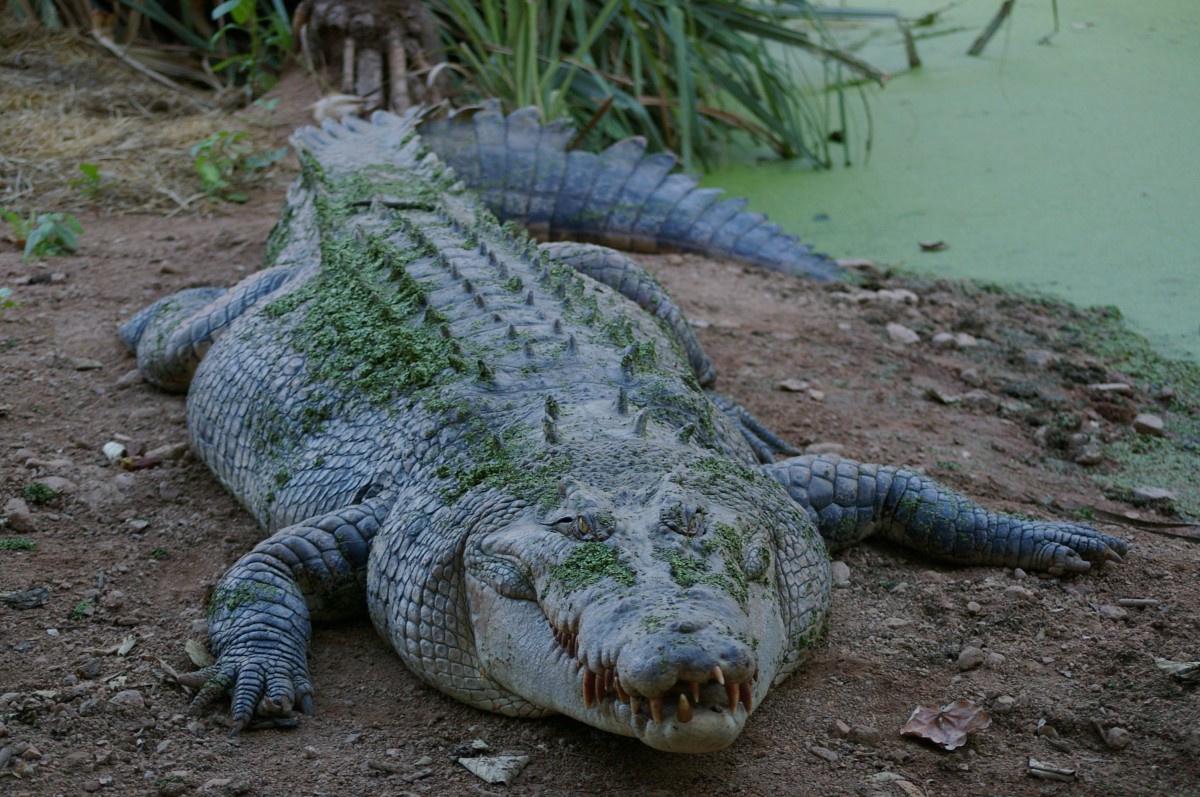
Crocodiles and alligators are frequently mixed up because of their similar appearance and habits, but the two reptiles belong to different families and have several distinguishing features, according to the American publication HowStuffWorks.
Both animals belong to the order Crocodilia, a group of large, semi-aquatic reptiles that also includes caimans and gharials. Despite the shared ancestry, crocodiles and alligators diverge in ways that are visible to anyone who knows what to look for.
Snout shape and teeth
The easiest place to start is the shape of the snout. Alligators have a wide, U-shaped snout, while most crocodiles have a longer, narrower, V-shaped one. HowStuffWorks cautioned that this rule is not absolute, since jaw shape varies between the several species that make up each family.
A more reliable sign is the position of the teeth. When an alligator closes its mouth, its upper jaw is wider than its lower jaw, so most of the lower teeth are hidden from view. Crocodiles' jaws are roughly the same width, so the upper and lower teeth interlock and remain visible. The fourth tooth on the lower jaw is especially distinctive, staying visible on a crocodile even when its mouth is shut.
Size differences
When it comes to size, crocodiles generally have the edge. Adult American alligators average around 2.4 metres in females and 3.4 metres in males, according to HowStuffWorks, though particularly large males can approach 4.3 metres. Some crocodile species grow far bigger: male saltwater crocodiles can exceed 6 metres in length and weigh more than 900 kilograms, making them the largest living reptiles. That means crocodiles are the bigger of the two groups at the top end of the scale.
Habitat and range
Alligators are mostly associated with fresh water. The American alligator lives in swamps, wetlands, lakes and slow-moving rivers across the southeastern United States, while the much smaller Chinese alligator is confined to a limited range in the lower reaches of the Yangtze River.
Crocodiles are found far more widely, across Africa, Asia, Australia, and North and South America. HowStuffWorks attributed this spread to true crocodiles having specialised salt glands that let them tolerate brackish and salt water, an adaptation alligators lack.
Colouring is not a reliable guide
American alligators are usually dark grey or nearly black, while American crocodiles tend to look lighter, in shades of greyish green, olive or brown. HowStuffWorks warned that colour depends heavily on water conditions, mud, the animal's age and lighting, so it should not be relied on alone when identifying a species.
Which is more dangerous
Both alligators and crocodiles are ambush predators capable of attacking people, so approaching or feeding them is dangerous, HowStuffWorks said. American alligators generally avoid humans but can turn aggressive when defending their young or if they have grown used to being fed by people.
The publication cautioned against the blanket assumption that crocodiles are always more aggressive than alligators. American crocodiles tend to be timid, whereas Nile crocodiles and saltwater crocodiles, both native to Africa, Asia and Australia respectively, have been linked to a significant number of serious and fatal attacks, according to HowStuffWorks.