Archaeologists in Spain have discovered at least 120 Latin inscriptions inside Cova Dones cave in Millares, Valencia, dedicated to an unknown Roman goddess.
The discovery makes the subterranean site the sanctuary with the largest number of Latin cave inscriptions known in the entire Roman Empire if ongoing research is confirmed.
The inscriptions were documented on the walls and ceiling of a specific chamber located more than 200 metres deep inside the cave, far from natural light. Most of the texts date to the first and second centuries AD, a period when the Roman Empire expanded its cultural and religious influence across the Iberian Peninsula.
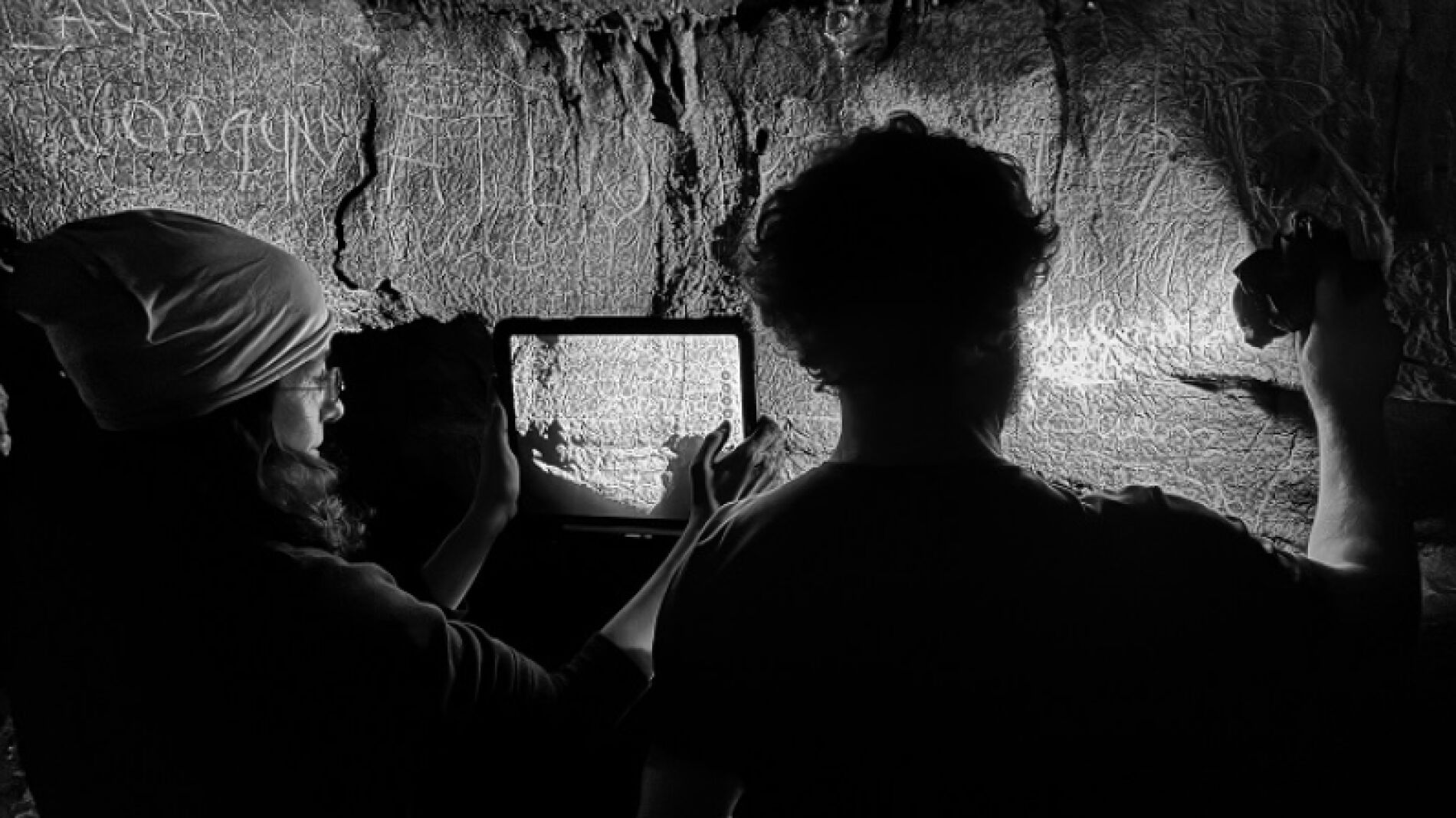
The new evidence emerged from an archaeological field campaign conducted during May and June 2026. The research was co-directed by Virginia Barciela from the University of Alicante and Aitor Ruiz-Redondo from the University of Zaragoza. Epigraphic analysis was carried out by ancient history specialist Silvia Alfayé alongside Sergio García-Dils, a professor at UNED-Sevilla and director of the Spanish School of Caving.
Secret deity of the subterranean pool
Epigraphers examining the chamber identified personal names alongside votive formulas, which are written texts accompanying offerings or prayers addressed to a divinity. Several of the recorded names belong to women, which researchers said indicates an active participation of women in the ritual activities of the site rather than casual visits.
The most intriguing revelation came from five specific inscriptions. Readings established that Roman worshippers in the cave venerated a goddess addressed by the title Domina, meaning the Lady. Three of those texts also contained the word MALACI, an epithet previously unknown in ancient historical records.
Specialists have not yet determined the exact identity of the goddess, but they are evaluating several hypotheses. Researchers believe her title may be connected to water, a link highlighted by the natural environment of the deep cave chamber. Small natural pools known as gours retain water flowing through the underground rock galleries, and archaeologists found various objects deposited inside them as ritual offerings.
Sergio García-Dils said in a statement that the presence of at least five inscriptions dedicated to the same deity proved the cave hosted a specific cult to a single goddess rather than sporadic visits for general religious purposes. He added that the concentration of texts within a defined zone far from the cave entrance confirmed the presence of an organized cult structure.
Artifacts linked to ancient female rituals
Excavations in the chamber yielded numerous spindle whorls, small weighted items used with spindles in traditional textile spinning that were closely associated with women in antiquity. Archaeologists also recovered two rings, a bracelet, chalice-shaped ceramic vessels, pottery fragments, and animal bones from the same area as the inscriptions.
The recent findings build upon the discovery of a Roman coin during a 2024 excavation. The coin dates to the reign of Emperor Claudius, who ruled the Roman Empire from AD 41 to 54. While the coin proved that the cave was used for rituals during the first century AD, the 120 inscriptions provide the direct names of the individuals who gathered to worship there.
Researchers pointed out that the modern name of the site, Cova Dones, translates from Catalan as the Cave of the Women. Virginia Barciela noted that the name might reflect the long term survival of an ancient place name linked to the historical presence of women or female entities at the cave. She noted that while this does not constitute formal proof, it represents a remarkable parallel with the emerging epigraphic evidence.
Thousands of years of human activity
Cova Dones contains a long, layered history of human occupation that predates the arrival of the Roman Empire by tens of thousands of years. In 2023, researchers working under the DONARQ project confirmed that the cave housed more than 100 Palaeolithic cave paintings and engravings dating back more than 24,000 years, making it one of the most significant rock art discoveries in Europe in recent decades.
In 2025, archaeologists documented more than 100 speleofacts inside the cave, which are natural geological formations intentionally reshaped by human hands. The cumulative findings show how prehistoric groups first modified the cave walls, followed thousands of years later by Roman worshippers who established a sacred space in its deepest chambers.
Archaeologists continue to analyze the 120 inscriptions, many of which remain under active study. Researchers hope that ongoing epigraphic work will uncover additional names, religious formulas, or clues explaining the origin of the goddess Malaci and why worshippers journeyed more than 200 metres underground to honor her.