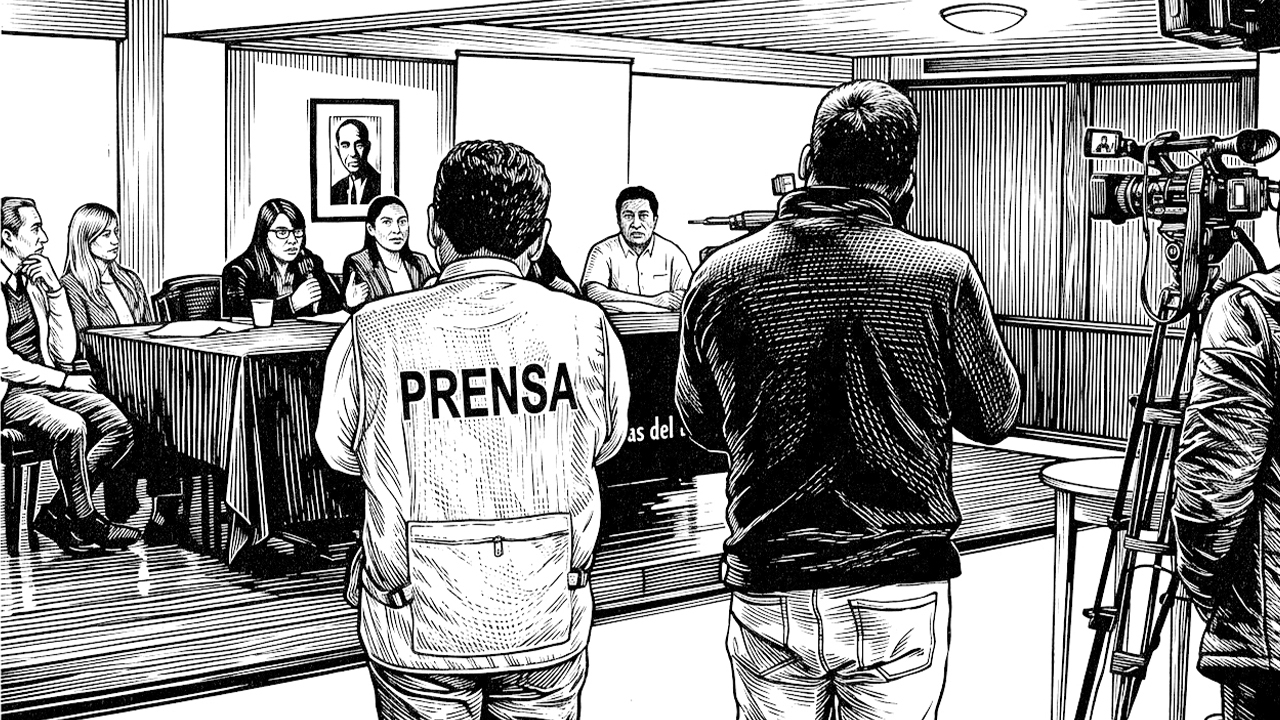
Cynthia Cienfuegos, a Peruvian cultural manager based in Cajamarca, wrote in an opinion column published on September 10 that Peru fails to legally protect its women and girls, arguing that the country's justice system justifies and normalizes violence against them.

Cienfuegos cited Peru's 2024 National Survey on Social Relations, known as ENARES, which found that 56.5% of men aged 18 and older justify rape, and that 75.7% of men and women tolerate some form of violence against women.
In the column, titled Estamos solas ("We are alone"), Cienfuegos listed a series of recent cases she said showed the scale of the problem.
She wrote that in August 2025, a 13-year-old girl from the hamlet of Piruro, in the Huánuco region of central Peru, died two hours after giving birth.
In July 2026, she wrote, news broke of an Awajún girl, from an Indigenous people of Peru's northern Amazon, left in critical condition after being raped by her stepfather.
In August 2026, according to the column, a 10-year-old Indigenous girl was rescued while being taken to Ecuador to be married to a 50-year-old man.
A few days before the column was published, Betsy Mallma, president of a communal soup kitchen, or "olla común", in the San Juan de Miraflores district of Lima, was shot by a group of men, Cienfuegos wrote. Communal kitchens, often run by women, provide low-cost meals in Peru's poorer neighborhoods.
She also wrote that a lawmaker from Renovación Popular, a conservative Peruvian political party, intervened to scrutinize the case of a patient undergoing a therapeutic abortion in Abancay, then said it was fortunate that a life had been saved, a remark Cienfuegos said was not directed at the pregnant woman.
A system Cienfuegos calls structural
Cienfuegos wrote that this violence is structural: sustained by a system, reproduced by certain conditions and normalized by society. She said the vulnerability of girls and women deepens where there is geographic distance, lack of connectivity, limited access to education, economic dependence or language barriers.
She asked whether women were now being told they could not access a therapeutic abortion, legal in Peru for more than a century, without being stigmatized and harassed. She also asked whether, on top of physical pain and emotional shock, women must endure the exposure of their private data and political scrutiny of their bodies by conservative groups.
Who is Cynthia Cienfuegos
Cienfuegos writes under the byline "Modo Norte". She is a cultural manager with more than ten years of experience designing and running social, political and cultural projects in Peru's public and private sectors, and has worked in cultural education and research.
She currently sits on the board of the Asociación Civil Transparencia, a Peruvian nonprofit organization known for its work on transparency and election monitoring, and lives in Cajamarca, in Peru's northern highlands.
Cienfuegos wrote that this wave of violence against the country's most vulnerable and poorest girls and women demands a response, but said there had been no answers and no political decisions. She concluded that women are alone.