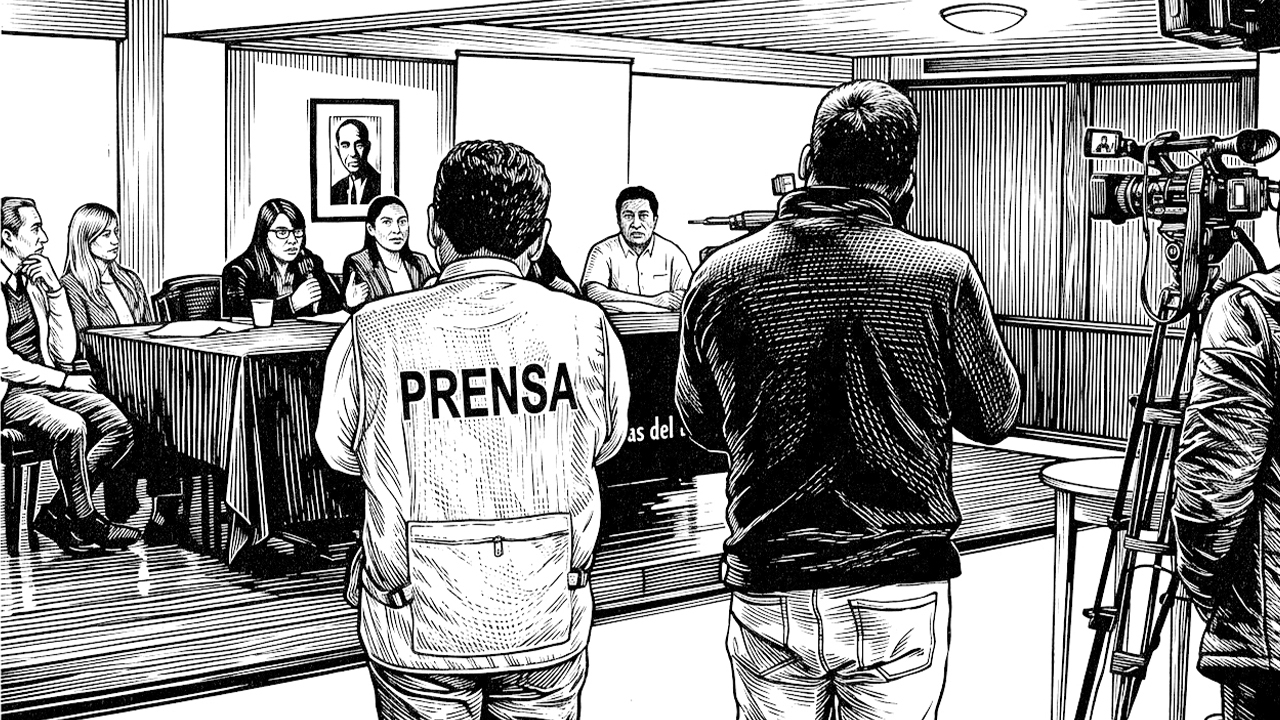
The Dominican-Haitian border debate has long needed a literary reckoning, a Santo Domingo columnist argues, drawing on Mexican novelist Carlos Fuentes to frame economic migration as the central lens for understanding the Dominican Republic's unresolved relationship with Haiti.
León de Moya, writing in Santo Domingo, takes Fuentes' 1992 book as a starting point. The original title translates roughly as "The Buried Mirror," and de Moya adapts it into what he calls "the unearthed mirror" , a framework for a sociohistorical reality that Dominican governments have debated, under various terms, since at least 1970.
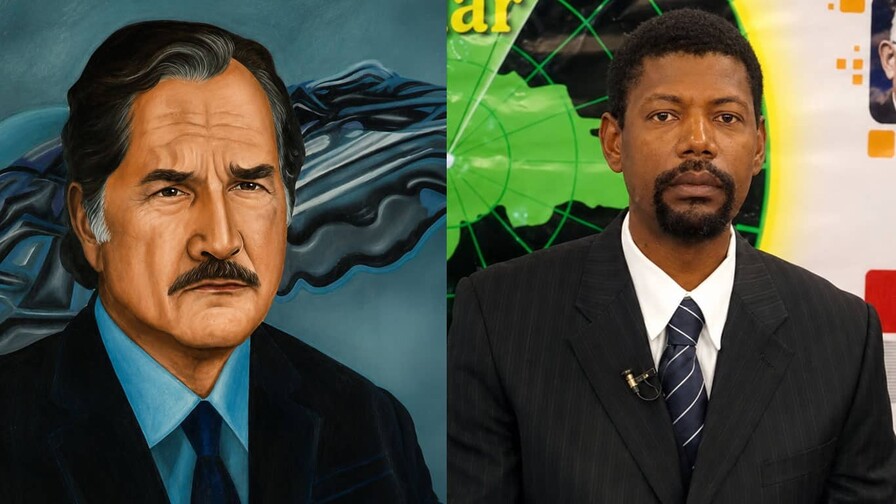
The column draws a parallel between Mexico's Rio Grande crossings, facilitated by so-called coyotes, and the flow of Haitian workers who entered Dominican territory in the 1970s, 1980s and 1990s to cut sugarcane. De Moya argues this history of cross-border labour mirrors what Freddy Prestol Castillo described in his classic Dominican novel "El Masacre se pasa a pie." He also notes that the question predates modern politics: a book by R. Lepelletier de Saint Remy, published in Paris in 1848 and reissued in 1978, opened its second volume with a summary of negotiations between France and Santo Domingo from 1815 to 1825.
Huntington and WASP logic
De Moya cites a long article by Fuentes, titled "El racista enmascarado" and published in a Catholic magazine, in which Fuentes argued that American political thinker Samuel Huntington could be compared to Captain Ahab from Herman Melville's novel , a figure who conjures threats in order to control access to political and social reality. Fuentes used the piece, de Moya writes, to examine what Fuentes called the WASP , White, Anglo-Saxon and Protestant , logic underpinning American life, a logic de Moya sees reflected in how Donald Trump manages political reality today.
Dominican scholars and the frontier
For local scholarship, de Moya points to historian Héctor Pastor Vázquez, whose books "Diplomacia con Haití a principios del siglo XX" and "La isla montonera," published in 2016, won the José Gabriel García prize for history and the Vetilio Alfau Durán prize respectively. De Moya describes Vázquez's work as an unprejudiced guide through the diplomatic history of Dominican-Haitian relations.
He also invokes historian Frank Moya Pons, who has argued that commerce unites both sides of the border. Recalling a personal visit to the Dominican-Haitian frontier more than a decade ago, de Moya said he came away understanding that trade creates bonds across the line , a reality he connects to the long history of Dominican workers in the bateyes and to the cocolos of San Pedro and Samaná, emigrants from the colonial era.
The column references writer José Miguel Soto Jiménez as further evidence that the Haitian question permeates the entire eastern side of the island, arguing that Dominican identity across the pre- and post-Trujillo eras has always carried the weight of that shared history.
A call to candidates
De Moya closes by calling on Dominican political candidates to develop a concrete discourse on the border. He attributes to the late scholar Carlos Esteban Deive the view that expression , at whatever cost , is essential, and he argues that Dominican political democracy has protected that right and must build on it.
The column also praises Guatemalan Nobel laureate Miguel Ángel Asturias, citing his 1956 work "Weekend en Guatemala," published by F y G Editores, as a model of what de Moya calls complete, total authorship. He places Asturias alongside Fuentes , whose novels include "Cambio de piel," "Mis años con Laura Díaz" and "La silla del Águila," published in 2003 , as writers whose literary engagement with history continues to illuminate the present.