

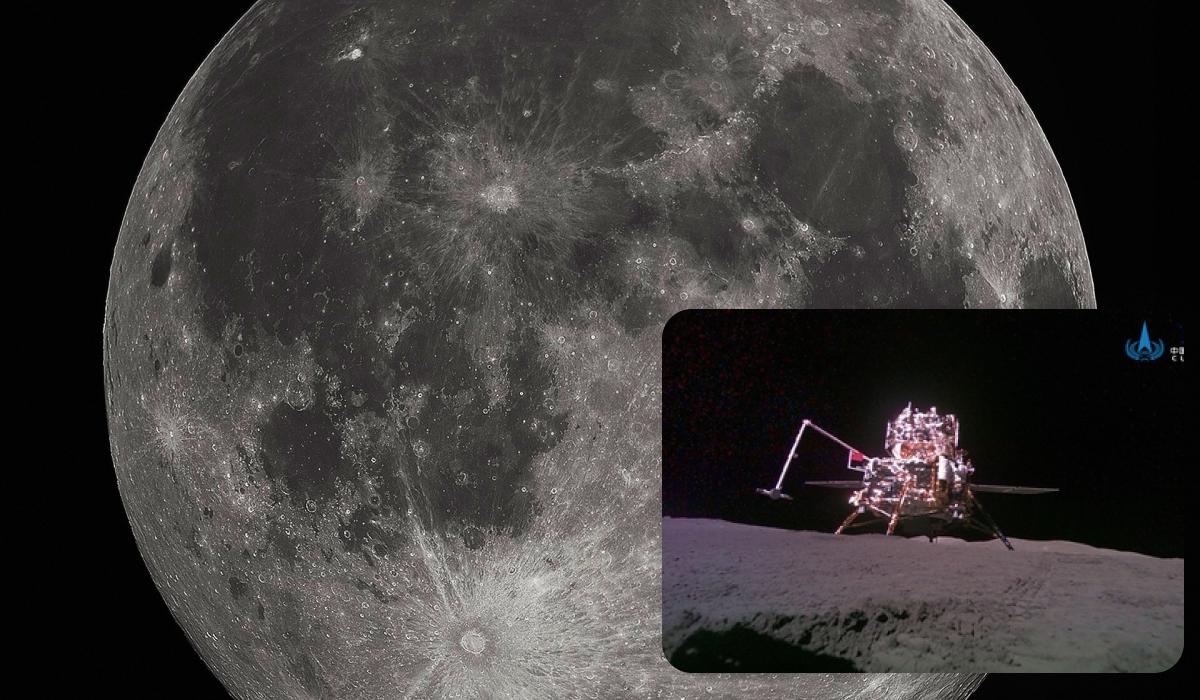
China announced on Sunday that it has postponed the planned launch of its Chang'e 7 lunar mission from the Wenchang spaceport on Hainan island. The ambitious spacecraft was scheduled to lift off in the coming days to search for water ice on the Moon, according to a report by the Associated Press.
The China Manned Space Agency stated that the mission did not meet launch conditions and cannot take place during the planned window for this year. Officials said the decision followed a comprehensive assessment based on principles of caution, reliability and absolute mission success. The agency did not provide further details regarding the specific reasons for the delay.
Preparatory work for Chang'e 7 had been underway at the coastal Wenchang space launch site on southern China's Hainan island over recent weeks. Official news agency Xinhua previously reported that the goal of the mission was to achieve major breakthroughs in key technologies.
Lunar South Pole Exploration
Journalists noted that the mission aimed to explore permanently shadowed craters and conduct environmental and resource surveys of the lunar south pole. The south polar region has become a key target for international space exploration because water ice deposits trapped in shadowed craters could provide vital resources for future long term missions.
The delayed spacecraft is the seventh probe in China's Chang'e lunar exploration program, which takes its name from the traditional Chinese goddess of the Moon. China previously achieved a major space success in 2024 when its Chang'e 6 probe returned rock and soil samples from the far side of the Moon in a world first.
Related Astronomical Discoveries
The announcement comes following other notable astronomical discoveries highlighted in recent reports, including the identification of a four billion year old Genesis stone on the Moon featuring prominent visible crystals. Astronomers also recently discovered the fastest known star in the Milky Way, named S301, which travels at approximately 25,000 kilometers per second, roughly 100,000 times faster than a commercial airliner.


