


China has postponed the launch of its Chang'e-7 robotic lunar probe after safety and reliability evaluations delayed the mission while the spacecraft was already on the launch pad. Chinese media announced that the spacecraft will not lift off within its scheduled window for this year from the Wenchang spaceport.
The mission had been prepared to launch aboard a Long March 5 rocket to explore the south pole of the Moon. Officials put the launch on hold following a review of safety protocols, though the overall strategic goals of the program remain unchanged.
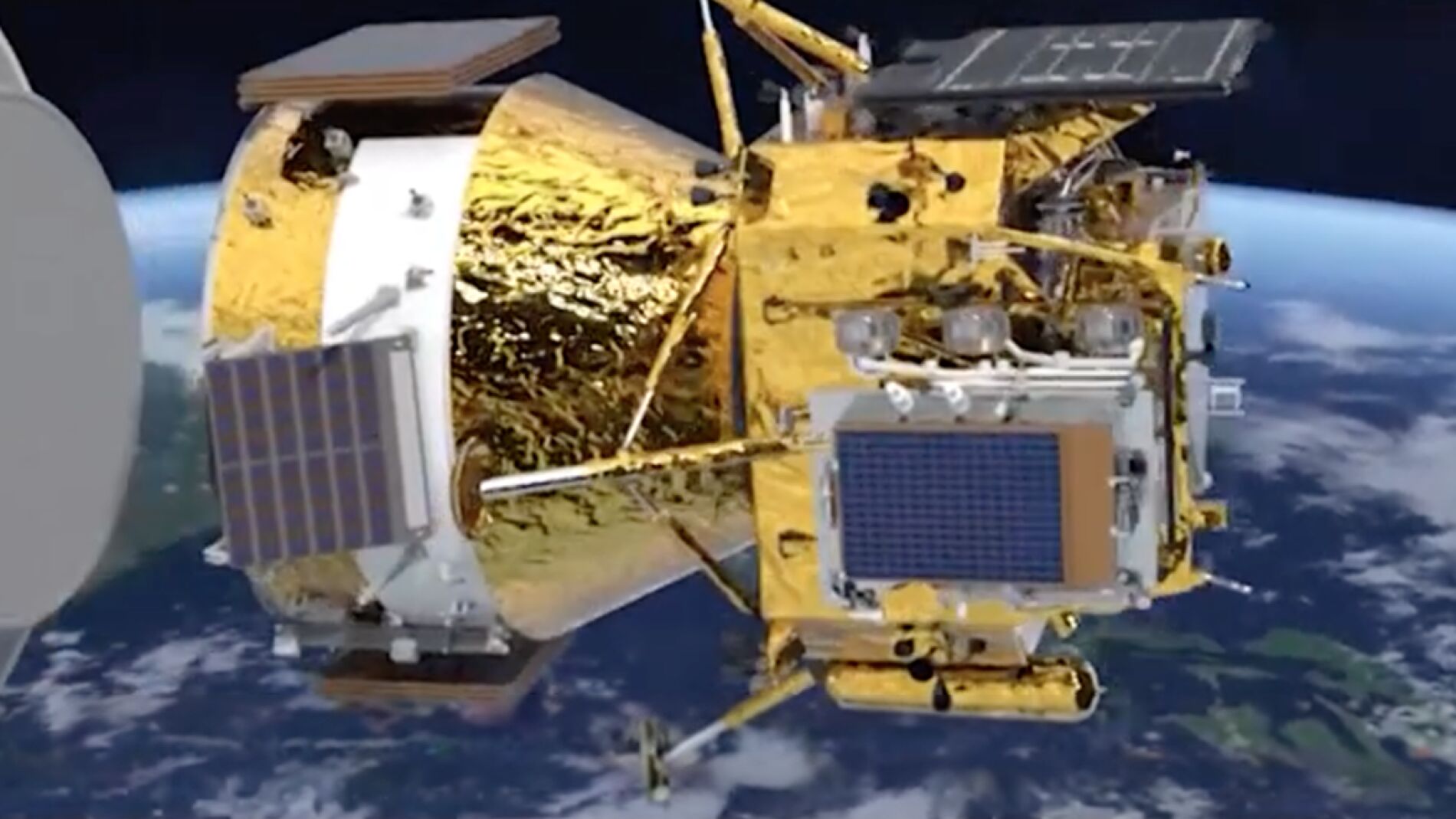
The Chang'e-7 probe is designed to search for water ice and other volatile compounds trapped in permanently shadowed regions of the lunar surface. The spacecraft consists of four main components: an orbiter, a lander, a rover, and a small hopping craft.
Together, the spacecraft carries 18 scientific instruments to study the surface, subsurface, and environment of the lunar south pole. The payload includes cameras, ground-penetrating radar to scan the terrain, and sensors specifically designed to detect volatile molecules.
Exploring shadowed lunar craters
For decades, scientists considered the Moon to be a completely dry body. Recent space missions have changed that view by discovering deep craters at the lunar poles where low solar angles prevent sunlight from ever reaching the crater floors. Inside these permanent shadows, temperatures drop close to absolute zero, preserving ice and volatile materials trapped since the early history of the Moon.
Water at the south pole represents a critical strategic resource for future human space exploration. If ice exists in sufficient quantities and can be extracted, it could supply drinking water and agriculture for astronauts. Through electrolysis, water can also be split into hydrogen and oxygen to manufacture rocket fuel, eliminating the need to haul heavy propellant from Earth for deep space missions.
The hopping probe strategy
Exploring these dark regions poses a technical challenge because traditional exploration vehicles rely on solar power. To overcome this, Chang'e-7 includes a small hopping probe capable of leaping directly into permanently dark crater floors.
Once inside a shadowed crater, the hopping craft will use specialized instruments to analyze water molecules and volatile compounds while conducting drilling and sample extraction operations. After completing its work in the dark, the probe will hop back out into a sunlit area to recharge its solar batteries.
Mission planners chose a landing site near Shackleton crater because the area combines two essential features. It contains deep, permanently shadowed terrain where volatile compounds may be preserved, alongside elevated rims that receive extended sunlight to generate power for the lander and rover.
China's long term lunar goals
Chang'e-7 forms a key part of the fourth phase of China's lunar exploration program, which aims to lay the foundation for a permanent human scientific presence on the Moon. China plans to follow the mission with the Chang'e-8 probe and eventually establish an International Lunar Research Station.
The data gathered by Chang'e-7 will determine the location, quantity, and accessibility of lunar resources. Scientists hope the mission will answer whether future explorers can live off the natural resources of another world.


