


Chinese renewable energy company Envision has unveiled the Envision Galaxy Campus, a complex it says aims to become the largest data center for artificial intelligence in the world. The project plans to deploy up to 1 million AI accelerators and run on a direct supply of wind and solar power, rather than drawing from the traditional electrical grid.
For years, the race in artificial intelligence centered on who could design the best chip. Then came a second contest over who could train the most powerful model. A third, quieter battle has now begun, one that may prove more decisive: electricity.
Bringing Computers to the Energy
A large data center can require as much power as a mid-sized city, and technology companies are increasingly finding it hard to secure enough electricity in some locations. Most data centers have followed a similar pattern until now: build near major metropolitan areas, then reinforce the electrical grid to supply them.
Envision is proposing the opposite. Instead of bringing electricity to the computers, the company wants to bring the computers to where electricity is abundant. That is why the Galaxy Campus will be built in Inner Mongolia, a region with large wind and solar resources. There, Envision plans to connect the data center directly to renewable energy parks, storage systems and a microgrid designed specifically to power AI workloads.
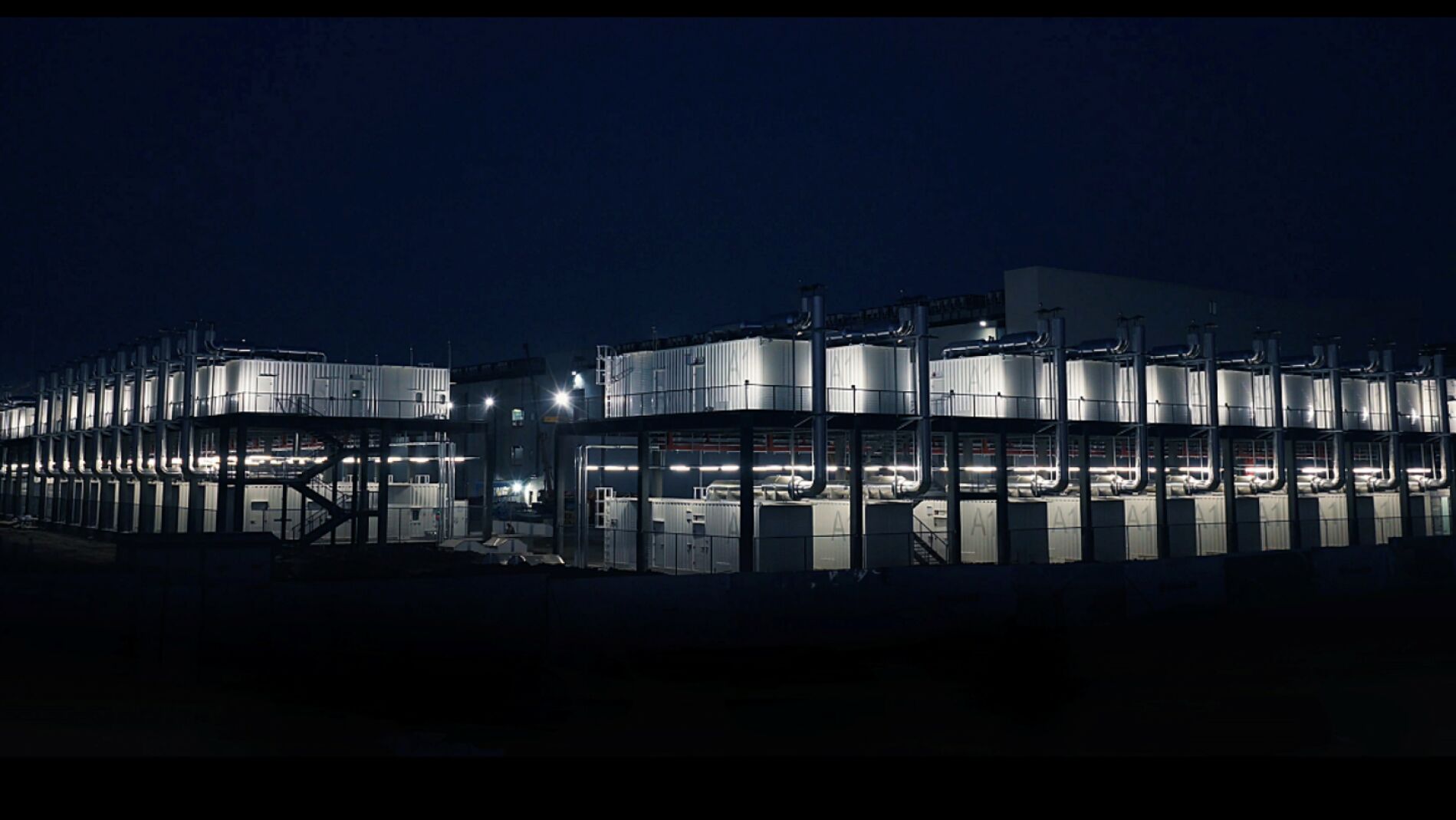
Mission Gobi's 5-Gigawatt Target
The project follows the same approach as Envision's Mission Gobi initiative, which aims to develop 5 gigawatts of capacity for green data centers in desert regions before 2030. That is roughly the output of five nuclear reactors, enough to supply a city of millions of people, according to Envision.
The company has not disclosed the size of the Galaxy Campus site, but the project's energy scale gives a sense of its magnitude. The 5-gigawatt target for Mission Gobi is about three times the approved power capacity of Galaxy's Helios campus in Texas, which covers nearly 9 square kilometers. If both complexes maintain a similar density, the Chinese project could extend across several dozen square kilometers.
Why the Desert
A desert may seem like an unusual choice, but deserts offer several advantages that are hard to match elsewhere. They have vast stretches of land, abundant solar radiation and, in many cases, strong wind resources, allowing large energy facilities to be built far from urban centers.
A Shift in Global Tech Strategy
The Chinese project also reflects a broader shift in international tech competition. While some American companies are seeking to secure electricity supply through new gas plants, nuclear power or small modular reactors, Envision is betting on a different model: building ecosystems where renewable generation and computing are developed together from the outset.
The approach is not only about cutting emissions. Envision also says it is designed to avoid one of the biggest bottlenecks facing modern AI: long waits for new grid connections.



