


Casio has unveiled three new LF-40W digital watches in Japan, blending 1980s styling with an unusual segmented display while maintaining a longstanding budget price tag. The Japanese electronics manufacturer continues to price the series at 4,400 yen, which equals roughly 27 euros including taxes and approximately 25 euros without tax.
That retail figure matches the launch price of the earlier LF-20W model introduced in 2023. The decision freezes the entry price for the product family across three and a half years, following the release of the LF-30W at the identical 4,400 yen price point in May 2025.
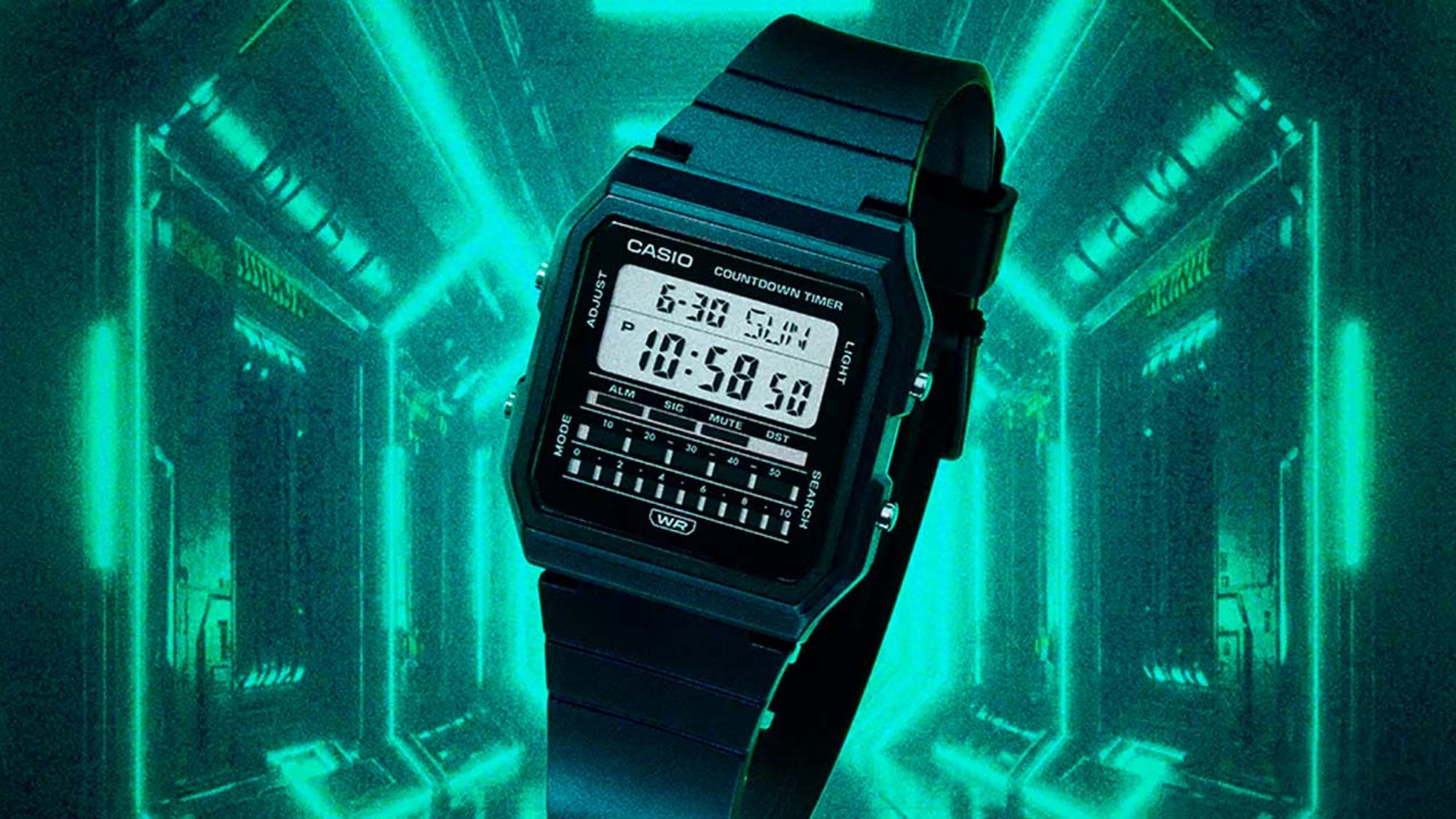
According to a report by technology publication Notebookcheck, the three watches will arrive in Japanese retail stores during November, with advance pre-orders already open to shoppers. Casio has not yet confirmed an international rollout or announced when the models might reach Spain, leaving potential European pricing unconfirmed.
Founded in Tokyo, Casio Computer Co. built a global following during the 1970s and 1980s by producing durable quartz watches and handheld electronic calculators. While contemporary watchmakers have increasingly turned toward expensive mechanical pieces or high-tech fitness trackers, compact digital timepieces retain widespread appeal for their utilitarian simplicity, light weight, and accessible price points.
Retro Styling and Segmented Screen Layout
The visual presentation of the LF-40W draws clear inspiration from the brand's vintage catalogue, particularly the rectangular calculator watches that defined early personal electronics in the 1980s. Casio has regularly tapped into that heritage for recent releases, having previously adapted the shape of its classic A168 digital watch into a wearable finger ring.
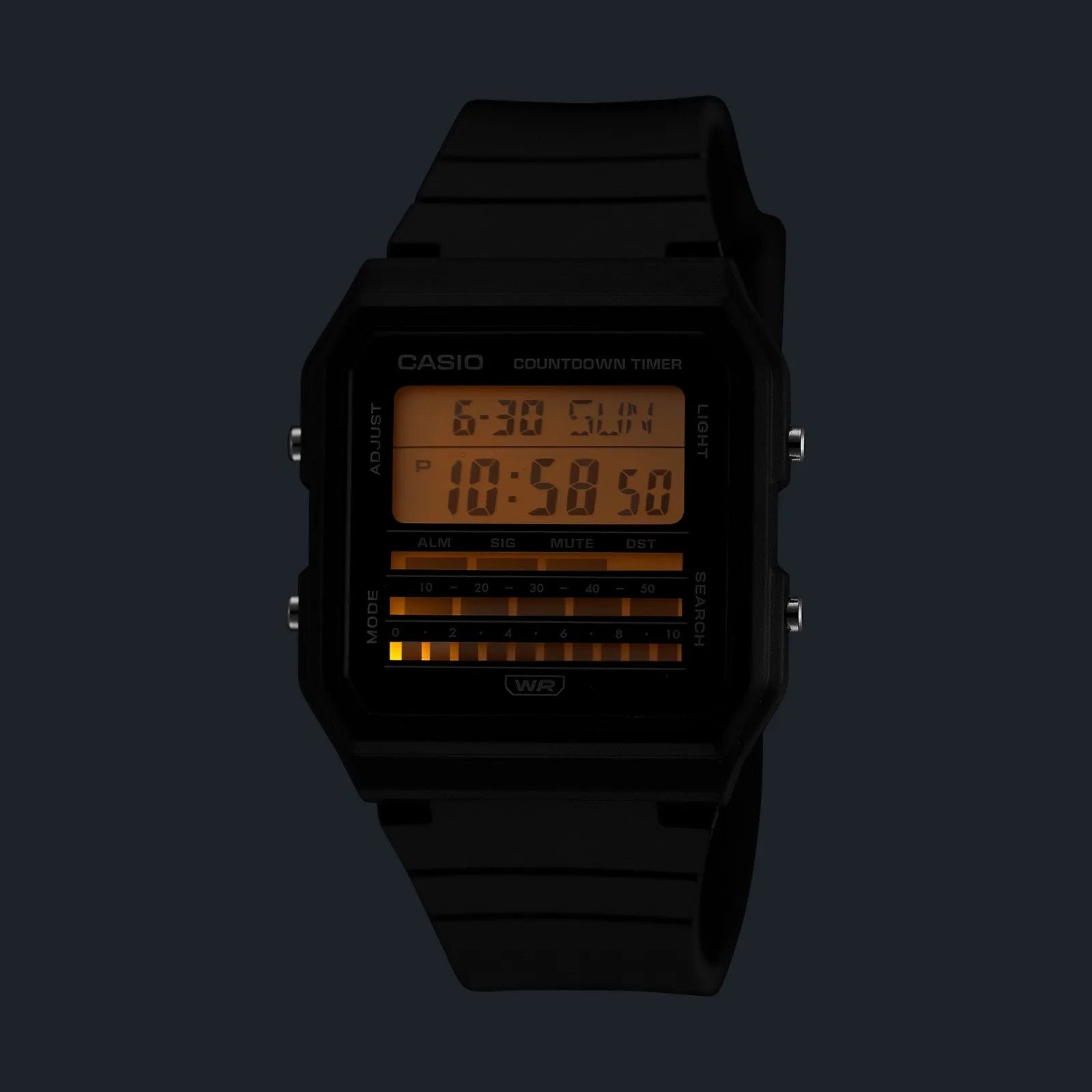
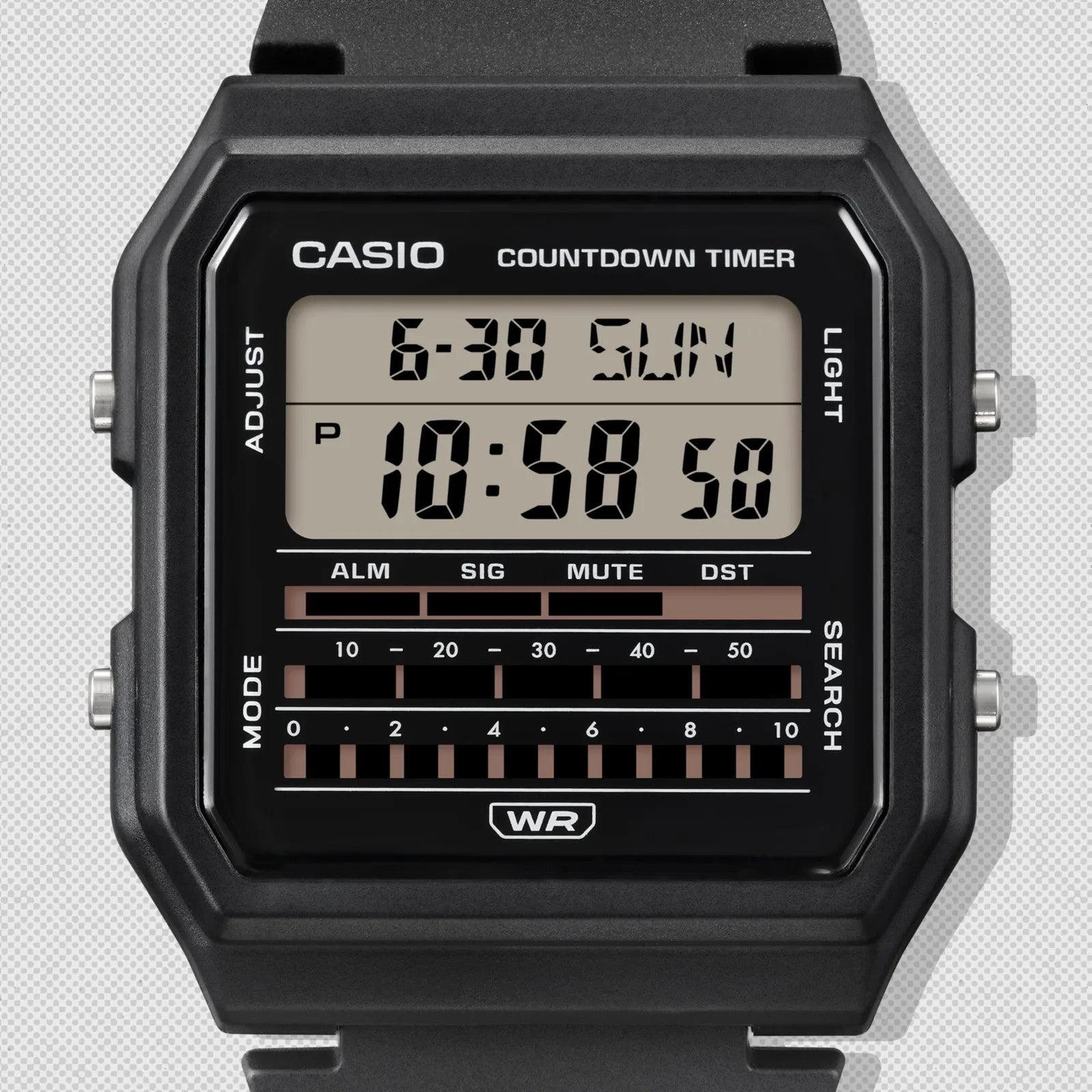
The watch face features an angular resin case framing a liquid crystal display divided into two separate sections. The upper portion functions as the primary digital clock, presenting the current time, the calendar date, and the day of the week in standard numerals.
Below the time readout, the lower half of the screen contains three stacked horizontal bars that give wearers a direct visual check on watch operations. The top bar indicates which internal functions are currently active, showing whether the user has turned on the daily alarms, the hourly chime signal, button mute mode, or daylight saving time.
The two remaining bars track the passage of time graphically. One row fills across in ten-second intervals, while the third row marks each individual second as it passes. Both indicators function continuously on the main screen without requiring the user to press any pushers.
Casio uses the Japanese term gajetto-kan to describe the look of the series, a phrase evoking the visual character and charm of a small electronic gadget. While the underlying display hardware relies on conventional liquid crystal technology rather than advanced graphics, the segmented arrangement reorganises everyday timekeeping data into a distinct instrument panel format.
Lightweight Biomass Build and Dimensions
The exterior dimensions of the LF-40W remain compact and unobtrusive. The rectangular case measures 37.8 millimetres by 33.7 millimetres across, with a slim thickness of 8.6 millimetres. Weighing just 23 grams, the watch is engineered to sit light on the wrist for daily wear without creating bulk under clothing.
A resin glass crystal protects the LCD screen from surface contact. For the band, Casio has fitted a strap made from biomass plastic, a material produced partially from renewable organic resources. Consumer electronics and watch manufacturers have increasingly adopted bio-based plastics as an alternative to purely petroleum-derived polymers to reduce overall environmental impact.
Water resistance is provided for routine daily situations, shielding internal components from light splashes and rain. However, Casio does not assign the timepiece a depth rating that would permit recommended use for water sports or swimming.
Digital Functions and Battery Performance
Beneath the retro exterior, the LF-40W incorporates a standard set of digital utilities. The module features world time tracking across 48 international cities, five independent daily alarms, a 24-hour countdown timer, and a precision stopwatch. For viewing in the dark, the display includes an amber-tinted LED backlight.
The internal mechanism runs on a single CR1616 coin cell lithium battery. According to Casio, the cell is estimated to last approximately three years before requiring replacement. That lifespan is modest compared with other digital watches in the brand's lineup, such as the steel-bracelet W-221H, which provides up to ten years of operation from a single battery.
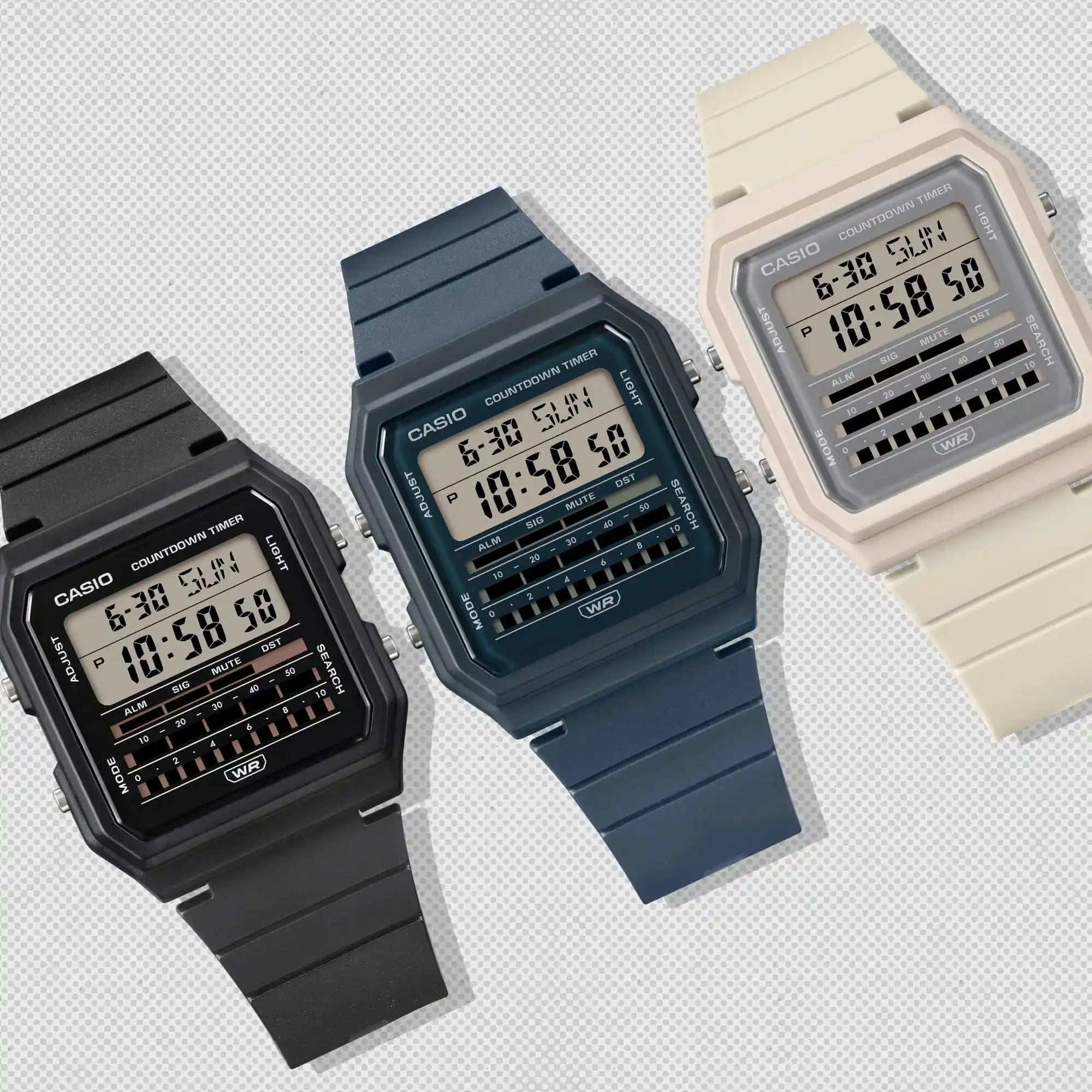
Unlike modern smartwatches, the LF-40W requires no daily charging cables or smartphone synchronization, running autonomously as an independent quartz device. Casio is issuing the model in three colourways: black under the reference LF-40W-1A, grey under reference LF-40W-8A, and navy blue under reference LF-40W-2A.


