

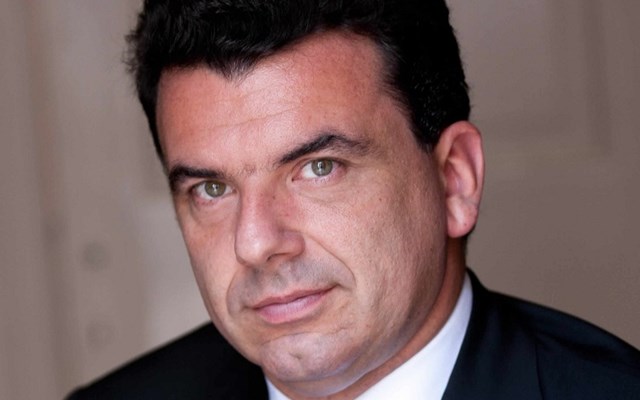
Polish police officers stormed the country's Constitutional Court, an incursion that stunned the European political scene, according to an analysis by Georgios I. Matsos, a Greek lawyer, published in Capital.gr on 12 November 2026.
Matsos wrote that despite images evoking a "banana republic" and violent government interference with the judiciary, Poland's record since the fall of communism in 1989 has in many ways been exemplary, placing the country today ahead of Greece on several economic, social and political measures.
A rising power with a troubled past
Poland has a population comparable to Spain's, putting it in the European Union's second tier of large member states, behind only Germany, France and Italy. Matsos described a country with strong industrial infrastructure, an educated and hard-working population, and, by European standards, unusually strong religious observance. Combined with what had, until recently, seemed an excellent standard of governance, he said this made Poland look almost like an ideal country, especially given the poverty from which it began rebuilding after communism collapsed in 1989.
That is why, Matsos asked, had the world suddenly been confronted with images of police bursting into the Constitutional Court, images that spontaneously evoke violent government intervention against the judiciary. To understand Poland fully, he argued, one has to know its history.
From regional power to three partitions
Poland, either on its own or as the main part of the Polish-Lithuanian Commonwealth, was a powerful state in the region until the late 17th century, at times stronger than Austria. Polish cavalry played a decisive role in lifting the second siege of Vienna by Ottoman forces in 1683, defeating the besieging army and resolving the siege in Europe's favour.
Poland's power gradually declined, worn down by constant wars with stronger neighbours, chiefly Russia but also Sweden, and by internal rivalries. Russia played the central role in weakening Poland militarily, with Polish defeats beginning as early as the reign of Peter the Great in the early 18th century.
In 1772 the rising Kingdom of Prussia, which in 1871 became the political core of a unified Germany, together with Russia and Austria, agreed to divide roughly a third of Poland's territory among themselves in what became known as the First Partition. A second partition followed in 1793, this time involving only Prussia and Russia, leaving the remaining Polish state in effect a Russian protectorate.
Poles tried and failed to win back their independence from Russia in 1794. The following year, 1795, brought the third and final partition, dividing the last of Polish territory among Prussia, Russia and Austria. Matsos noted the historical irony that although Poland had no hostile relations with Prussia or with Catholic Austria, both powers cooperated with Russia whenever the chance arose to seize Polish land.
Occupation and Soviet rule
Apart from brief interludes during the Napoleonic wars, Poland did not regain independence until 1918, when the Polish state was re-established following the end of the First World War and the Bolshevik revolution, which removed Russia from the ranks of the war's victors.

That independence proved short-lived. In 1939 Adolf Hitler's Germany invaded Poland after secretly agreeing with the Soviet Union on a fresh partition of the country. While Poland still mounted heroic resistance against the Germans in the west, Soviet forces attacked from the east and completed the country's defeat. Both the German and Soviet occupations were especially harsh, Matsos wrote, adding that "Soviet" in this context also meant Ukrainian, since Ukrainians belonged to the same state as Russians at the time, the USSR, and that Ukrainians of that era bore responsibility for many Soviet atrocities against Poles.
After the Second World War, Poland fell entirely under Soviet influence, having lost its eastern territories to the USSR. It was compensated with German territory in the west, shifting its borders several hundred kilometres westward. Eastern Poland was ethnically cleansed of its Polish population and became part of Soviet, and later independent, Ukraine.
Independence regained, then EU membership
The fall of communism in 1989 finally freed Poland from the Russian influence it had endured through the USSR, restoring the Western-oriented status it had enjoyed only briefly since the 18th century, during the turbulent interwar years. Poland joined the European Union in 2004.

Russia's invasion of Ukraine in 2022 gave Poland renewed military and strategic importance for the West, Matsos wrote. It became not only the main overland gateway for weapons and other supplies reaching Ukraine, but also a significant political member of the anti-Russian coalition, particularly given the historical damage Russia has inflicted on the country.
Not simply an anti-Russian country
Yet Matsos argued that Poland's own history shows it would be a mistake to view the country as uniformly anti-Russian. He said Poland carries a lasting historical anxiety about again being "sandwiched" between more powerful neighbours.
Many Poles today feel greater hostility toward Ukraine than toward Russia, Matsos wrote, because the ethnic cleansing of eastern Polish territories during the Second World War was carried out by Ukrainians. And while Polish antipathy toward Russia is clearly stronger than toward Germany, the historical involvement of Germany and earlier German states in the repeated partitions of Poland has left Poles with reduced trust in their western neighbour too. Poland, he concluded, feels somewhat as though it stands alone against everyone.

Matsos said he had found no reliable international reporting explaining how these historical roots shape today's political divisions inside Poland, but suggested it was likely that they lie, at least in part, at the root of the country's current internal dispute.


