A total of 850 university students are spending their summer working in rural municipalities across Spain under the government-funded Campus Rural internship program.
Organized by Spain's Ministry for the Ecological Transition and the Demographic Challenge, the scheme provides monthly grants of 1,000 gross euros alongside Social Security coverage for placements lasting between two and five months.
The program requires students to live in their assigned villages to experience rural life firsthand and help address depopulation, population aging, and reduced local services. In the Madrid region, several participating towns in the Sierra Norte mountain range sit less than an hour from the capital yet face typical rural demographic challenges.
Since Campus Rural began, 28 students have completed placements in Madrid municipalities including Venturada, Navalafuente, Torremocha de Jarama, and Zarzalejo, with Lozoyuela and Lozoya added for the 2026 edition.
Government strategy and rural realities
Adrian Muelas Gil, deputy director general of coordination and initiatives at the ministry's Directorate General for Policies against Depopulation, said Madrid presents a unique rural landscape. He explained that although many villages are located close to one of Europe's largest metropolitan areas, they continue to face challenges similar to remote rural regions.
Muelas Gil noted that this proximity allows young people to discover a reality that is often completely foreign to them despite being only a few miles away. He said the main objective is not to force every participant to stay permanently, but to alter perceptions and help students incorporate rural options into their future career decisions.
He added that some participants secure job opportunities with host municipal entities, while others return to rural towns after graduating. He emphasized that the initiative helps students stop viewing rural areas as distant or secondary locations.
Now in its fifth edition, Campus Rural has moved past its experimental phase, following a record 2025 cycle that involved 657 students, 45 universities, and 400 municipalities. Across its first four editions, 2,202 undergraduates completed internships under the scheme. Ministry survey data indicates that 98 percent of 2025 participants would recommend the program, 87 percent expressed a desire to work in a rural area, and 13 percent intended to move to the countryside after completing their studies.
Marine biology placement in Lozoyuela
Maria, an Argentine student reading Marine Sciences at the University of Las Palmas de Gran Canaria in the Canary Islands, spent her summer in Lozoyuela working for Red Terrae, an intermunicipal association promoting rural development through ecology. She learned of the opportunity through a university email notification, with her institution being one of 45 public universities participating this year.
She chose Lozoyuela after finding that marine science placements were scarce and that the only alternative offered no accommodation. Lozoyuela Town Hall provided her with free housing, which Maria noted was decisive because she would otherwise have spent her entire monthly grant on rent.
During her placement, which began on June 10, Maria conducted a land inventory and studied cartography to support her future career. Working alongside the local mayoress and the municipal environmental technician, she said she gained independence while learning how municipal administration works and interviewing local residents.
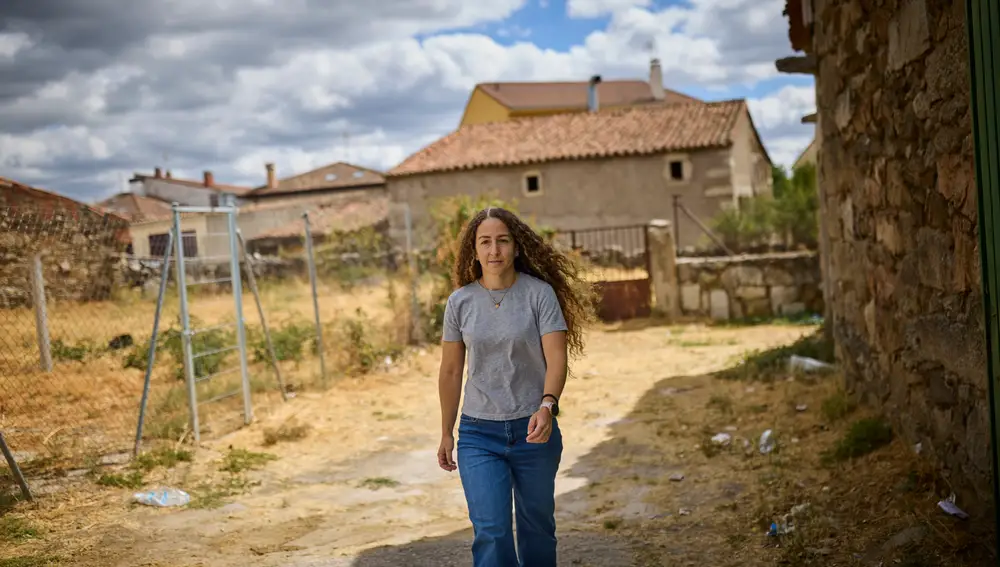
Lozoyuela forms part of a municipality comprising three small population centers with a total population under 2,000 residents. Maria said her primary difficulty was traveling without a car due to infrequent public transport, though she used her spare time to explore nearby villages and hike in the Sierra Norte.
As she prepares to return to the Canary Islands to resume classes, Maria said her three-month stay changed her view of rural living. She noted that although small local shops offer a narrower selection of goods, the mountains are two blocks away, wildlife sightings occur constantly, and the town square fills with social activity every evening.
Organic farming in Patones
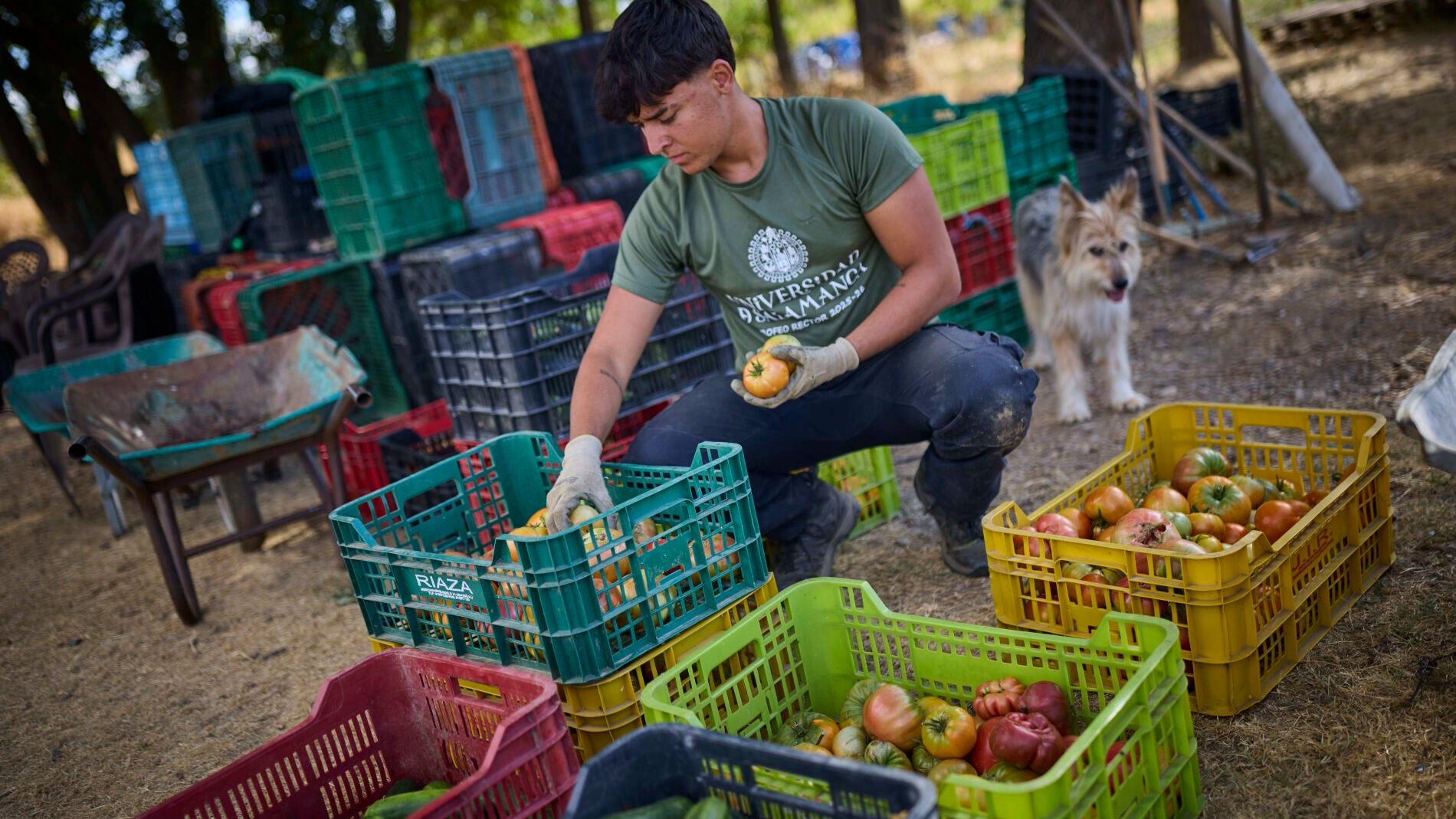
In the nearby municipality of Patones, Environmental Sciences student Lucas Romero completed an internship focused on agroecology and local development. Lucas, who studies at the University of Salamanca, selected Patones as his top choice after reading about the initiative in his university newsletter, preferring field training over summer hospitality work.
The placement provided free housing in La Cerrada, a settlement within Patones near Torremocha de Jarama, which Lucas highlighted as a major benefit. He began his placement on July 1 and finishes at the end of August.
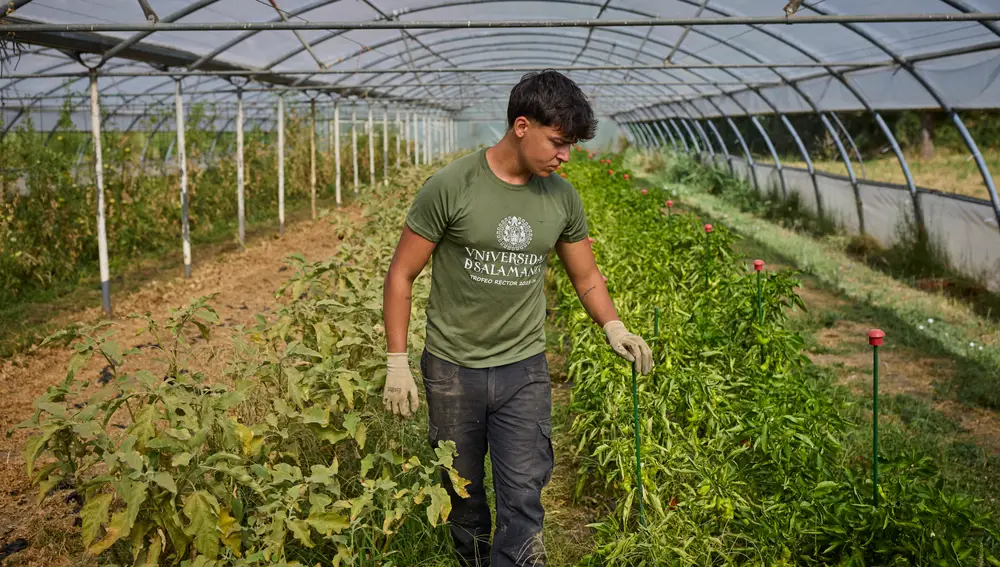
Lucas worked in an organic vegetable garden linked to a community agriculture project, handling planting, weeding, pruning, maintenance, and harvesting. The project operates a member model delivering periodic produce baskets, which Lucas helped prepare every Friday for subscribers in Torremocha de Jarama and nearby towns.
He explained that summer heat required physical work to begin early in the morning. Beyond his daily duties, Lucas said local residents treated him exceptionally well and praised the vibrant community life across the region, citing outdoor summer cinema and neighborhood events in surrounding towns like Torrelaguna.