CaixaForum Madrid will open a new exhibition dedicated to Spanish filmmaker Luis Garcia-Berlanga on November 25, showcasing previously unpublished items from his personal archive.
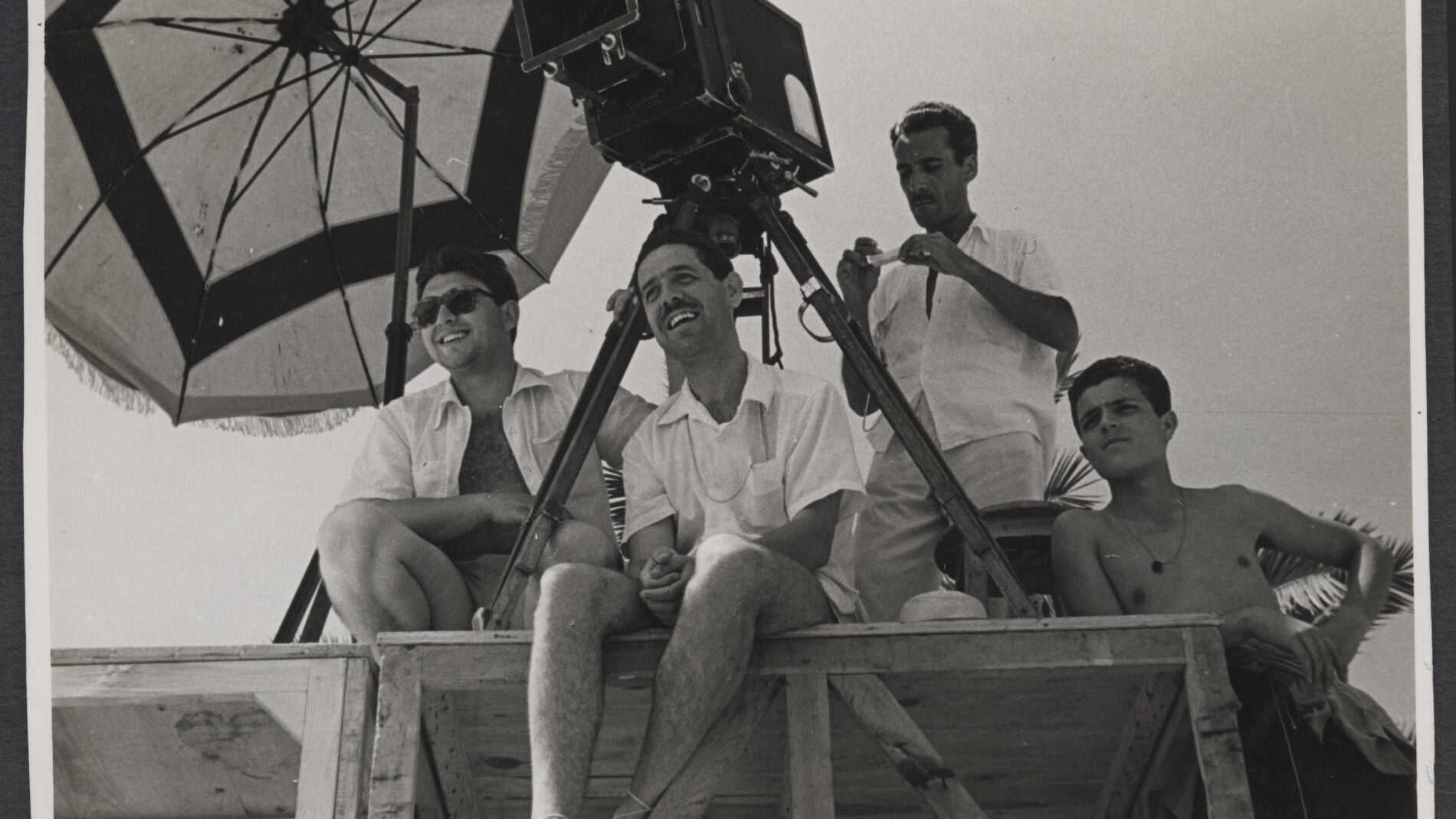
The exhibition, titled Interior Berlanga. Cine, vida y humor, offers a comprehensive journey through the career of the Valencian director using film projections and personal objects.
The display is conceived as a sequence shot in homage to the director's cinematic style. It presents previously unknown stories from his life following cataloguing, digitisation, and research work by the La Caixa Foundation in collaboration with Filmoteca Espanola.
Sol Carnicero and Bernardo Sanchez Salas curated the exhibition, with advisory support from Jose Luis Garcia Berlanga.
CaixaForum Madrid is a cultural centre located in the Spanish capital, operated by the La Caixa Foundation to promote art and public programming. Filmoteca Espanola serves as the official national archive responsible for preserving Spanish film heritage.
Exhibition Layout and Personal Legacy
The exhibition begins with the most intimate aspects of the filmmaker, including his home life, family, and early references.
Visitors will then trace his satirical interpretation of Spanish history before exploring the distinct techniques and nuances of his cinema.
The final spaces of the showcase are dedicated to Berlanga's legacy and the lasting imprint left by his work, highlighting how his distinctive laughter breaks the tension of a moment.
The Concept of Berlanguiano
The exhibition celebrates the unique style of Luis Garcia-Berlanga, whose name inspired the adjective berlanguiano. The source notes that only a select group of creators, including Dante, Franz Kafka, Francisco de Quevedo, and Ramon Gomez de la Serna, have entered the Spanish language in adjectival form.
The Real Academia Espanola defines berlanguiano in its dictionary as having characteristic traits of the work of Luis Garcia-Berlanga. The academy does not spell out those traits, as the term widely evokes everyday scenes where entanglement, surrealism, costumbrismo, and humour occur in equal parts.
The source compares the concept to classic scenes in Berlanga films such as La escopeta nacional and La vaquilla.
Born in Valencia, Luis Garcia-Berlanga emerged as one of the most influential figures in Spanish cinema during the twentieth century, famed for his sharp social satire and long continuous camera shots. The Real Academia Espanola is the official institution responsible for overseeing and regulating the Spanish language.
Everyday Examples of the Term
To illustrate the term, the source describes a scenario where a one-eyed bus driver refuses to let a woman board because she is missing two cents. A fellow passenger offers to validate his own bus pass for her, only to discover he has lost his wallet and cannot board either.
In protest, a young woman steps off the bus and drags the remaining passengers with her, leaving the driver alone to continue his route while whistling a song by Antonio Molina.
Another example cited by the source involves people trapped inside a freight elevator in August during a heatwave. The group includes the building porter and an elevator technician who arrived specifically to inspect the lift.
All residents in the building are away on holiday except for a severely deaf neighbour living in apartment 7C. Meanwhile, a trapped passenger attempts to mediate a heated argument between the porter and the technician regarding a penalty in the previous night's football derby, while the technician suffers from bad breath.
The exhibition at CaixaForum Madrid will gather these elements of life and cinema when it opens to the public on November 25.