The British Museum has signaled that the Parthenon Marbles could return temporarily to Greece after more than 200 years in the United Kingdom.
Director Nicholas Cullinan indicated that a recent agreement to display France's Bayeux Tapestry in London could serve as a blueprint for resolving the long-standing diplomatic dispute with Athens.
Under proposed terms, London would lend a portion of the 2,500-year-old classical sculptures to Greece in exchange for prominent Greek antiquities being sent to the British Museum for exhibition.
Cullinan explained that the agreement reached with France demonstrated that high-profile cultural exchanges were achievable. He acknowledged that while every negotiation was distinct, securing the Bayeux Tapestry required multiple attempts, which he said provided a small ray of hope for negotiations surrounding the marbles.
Cullinan expressed hope that tangible progress could be made during upcoming discussions, adding that achieving an agreement would be wonderful.
Bayeux Tapestry exchange as a model
The Bayeux Tapestry, an embroidered masterpiece measuring approximately 70 metres in length and dating back nearly 1,000 years, will go on display at the British Museum on September 10 and remain in London until July 2027.

In return for loaning the tapestry, France will receive several notable artifacts from British collections. These include items recovered from the Anglo-Saxon ship burial at Sutton Hoo and selected pieces from the medieval Lewis chessmen.
Sutton Hoo represents one of the most significant archaeological discoveries in British history, featuring early medieval treasures from a 7th-century royal burial in Suffolk. The Lewis chessmen are a famous group of 12th-century gaming pieces carved from walrus ivory and whale teeth, discovered in the Outer Hebrides of Scotland.
Cullinan noted that the reciprocal arrangement with French authorities offered a potential path forward to break the stalemate over the Parthenon sculptures.
Political talks and British legal limits
Bilateral talks between British and Greek representatives commenced in 2021. Since then, British Museum Chairman George Osborne has held ongoing discussions with the Greek government in an effort to strike a deal.
Political leaders in Westminster have maintained a flexible stance on the matter. Former British Prime Minister Keir Starmer previously stated that he would not block a loan agreement if both institutions reached terms, while his successor, Prime Minister Andy Burnham, has declined to intervene, leaving all decisions to the museum's leadership.
Greece submitted its first formal petition for the permanent repatriation of the sculptures in 1983. The classical works were removed from the Parthenon temple on the Acropolis of Athens in the early 19th century by Lord Elgin, who was serving as the British ambassador to the Ottoman Empire, before being purchased by the British government and housed in the museum since 1816.
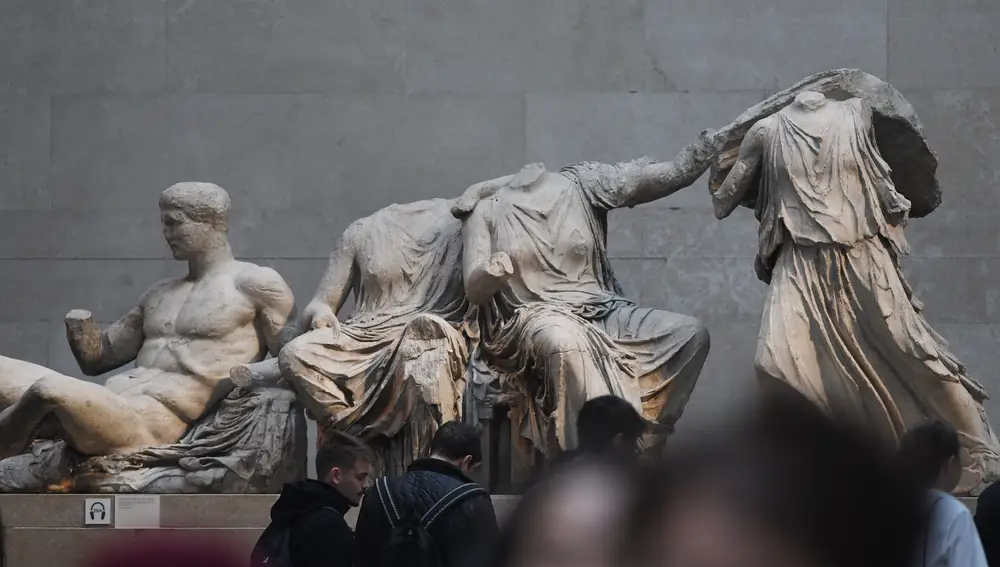
The Parthenon was constructed in the 5th century BC as a temple dedicated to the Greek goddess Athena and stands as a central monument of ancient Western civilization. The removed friezes and statues, often referred to as the Elgin Marbles, represent nearly half of the surviving architectural decorations from the temple complex.
Athens continues to demand the permanent repatriation of the sculptures. However, that demand conflicts directly with British legislation, which strictly prohibits the museum from permanently removing items from its national collection.
Cullinan stated that he did not support altering existing British legislation to resolve the conflict. He warned that changing statutory collection protections could create dangerous precedents for other artifacts held within national institutions.
Western galleries overhaul and future outlook
The British Museum is preparing to undertake a comprehensive 1 billion pound renovation of its western galleries, a major construction project expected to span nearly ten years.
The upcoming gallery refurbishment will require the complete closure of the wing where the Parthenon Marbles are currently exhibited. To accommodate the closure, museum officials are considering loaning select pieces to international institutions while construction takes place.
Although no formal agreement has been finalized for the sculptures to travel to Athens, Cullinan reiterated his expectation that lessons learned from the Bayeux Tapestry loan would help advance negotiations between London and Greece.