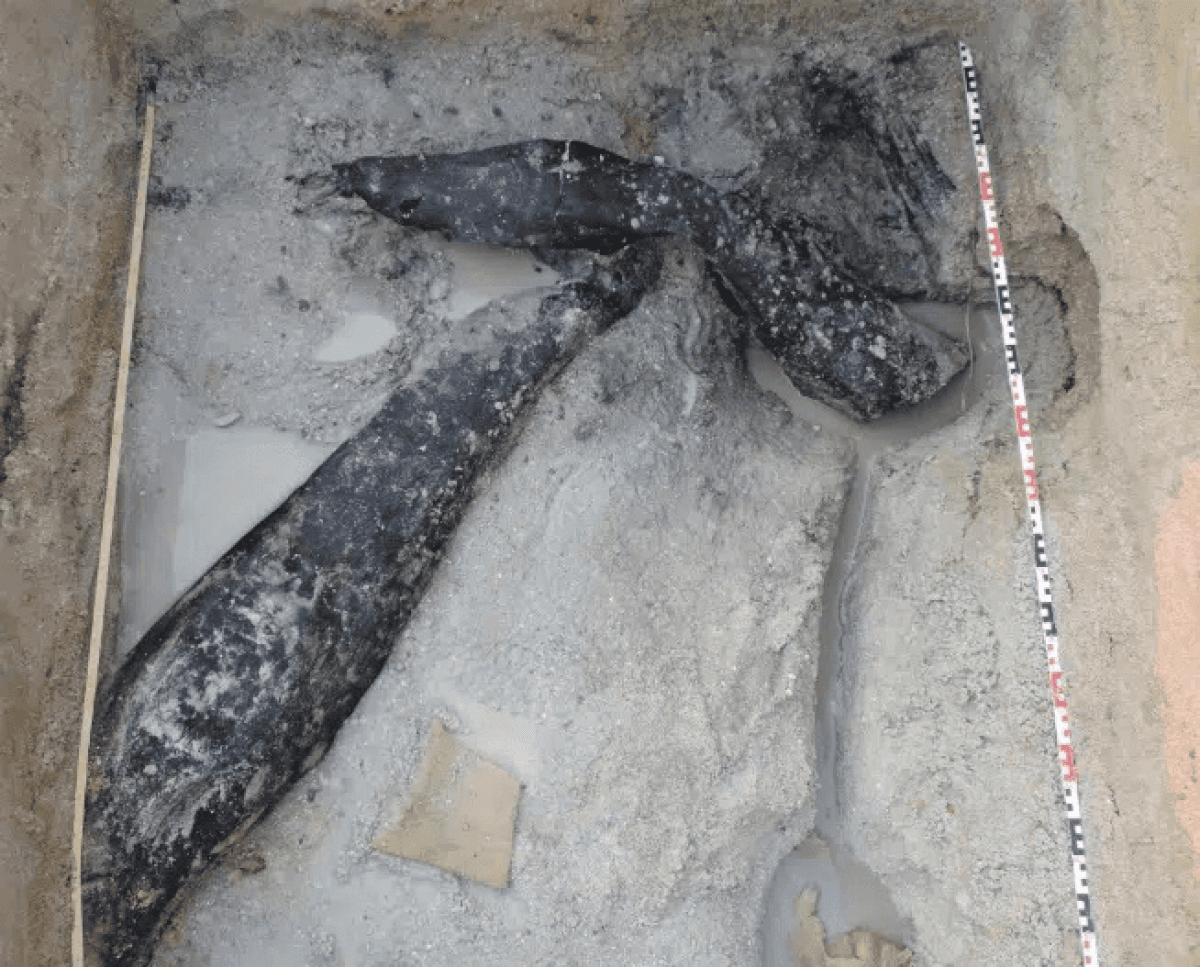
Archaeologists working in Zambia have discovered a 476,000-year-old wooden structure, revealing that ancient human relatives were building complex timber items far earlier than previously known.
The excavation team retrieved two interlocking logs from waterlogged sediment near Kalambo Falls in northern Zambia, an area where Africa risks splitting into two parts along a new geological rift, according to The Daily Galaxy.
Luminescence dating of the surrounding river sediments established that the wooden joint is at least 476,000 years old, placing its construction roughly 240,000 years before the emergence of Homo sapiens.
The findings, published in the journal Nature, were led by L. Barham of the University of Liverpool, who has conducted excavations across the Kalambo basin for many years to investigate the origins of human technological development.
Beside the main interlocking logs, researchers recovered four additional modified wooden tools from three distinct temporal layers, including a wedge, a digging stick, a notched log, and a notched branch, dated to between 390,000 and 324,000 years ago.
Unique architectural design
While ancient wooden artifacts are typically limited to simple sticks, the Kalambo logs demonstrate deliberate structural engineering created with stone tools.
The upper log, identified as the tree species Combretum zeyheri, measures 141 centimetres in length and features a carefully carved U-shaped notch measuring 13 centimetres long and 11 centimetres wide.
Archaeologists found that this notch was formed by scraping and working the wood using stone implements, allowing a second, larger tree trunk to fit underneath it.
Both timber elements display clear signs of intentional shaping, including surface scraping marks, chopping facets, and parallel grooves cut directly across the wood grain.
Researchers noted that no comparable structures have ever been identified elsewhere in the Palaeolithic archaeological records of Africa or Eurasia.
Although older single fragments of preserved wood exist, the site represents the earliest known instance of hominids intentionally joining two separate pieces of wood to form a structure.
Purpose and floodplain environment
The exact function of the wooden assembly remains unknown, but researchers suggested it may have served as an elevated platform, a walkway, or a foundation for a dwelling.
Such an elevated structure would have provided practical benefits on the periodically flooded river floodplain surrounding the site.
Between 470,000 and 274,000 years ago, dense forest covered the region, ensuring that local hominids had a continuous supply of large timber for construction.
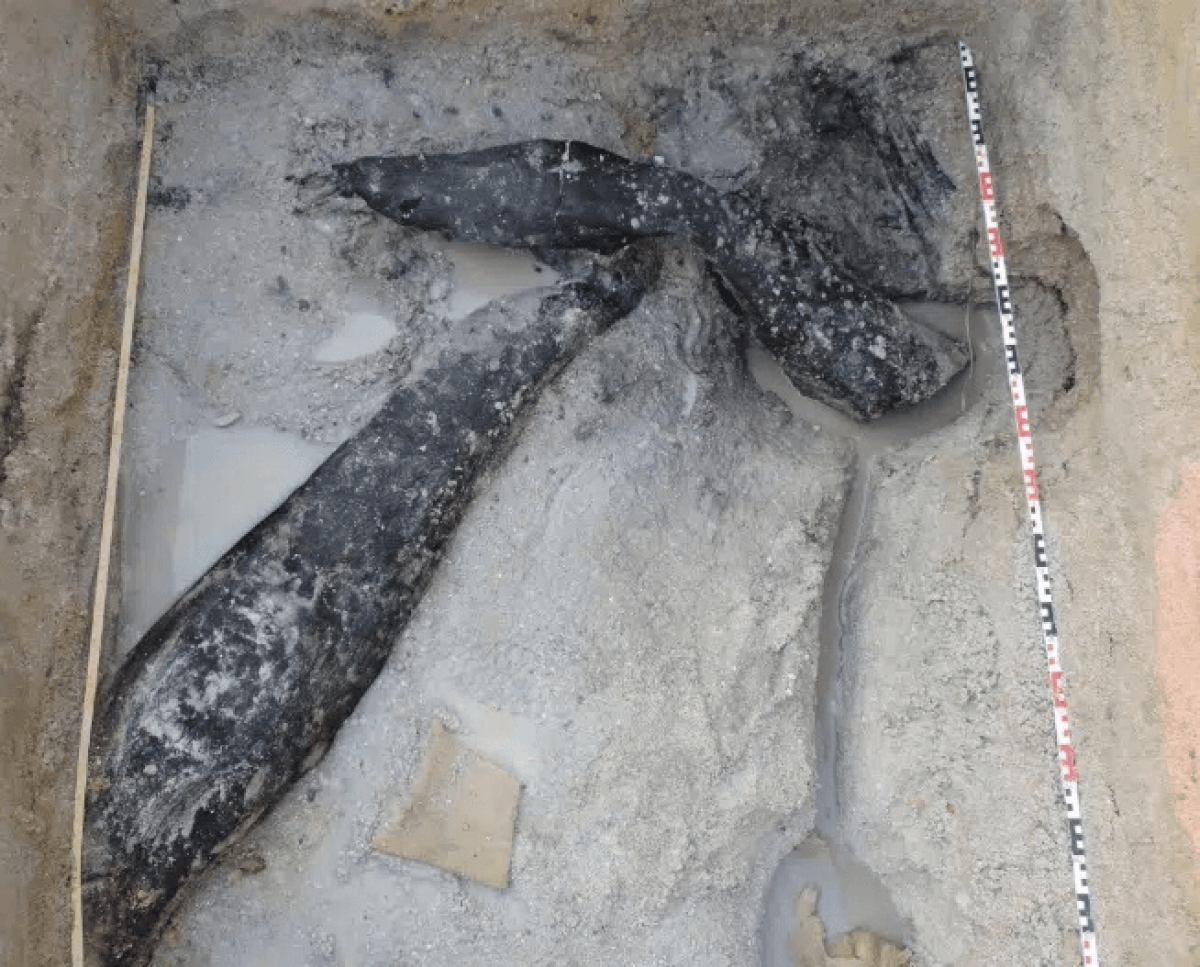
Waterlogged preservation conditions
Wood almost never survives for half a million years, requiring what the study abstract describes as exceptional conditions to prevent decay.
At Kalambo Falls, high groundwater levels created an anoxic environment by cutting off oxygen to the buried material, slowing decomposition so effectively that the cellular structure of the wood remains visible under a scanning electron microscope.
Scientists at the British Museum confirmed the tree species of each log through scanning electron microscopy and verified that the timber had not been washed into the deposit from a later historical period.
Initial radiocarbon testing on all samples yielded ages beyond the 50,000-year limit of that technique, prompting researchers to utilize luminescence dating on sand grains in the sediment layers above and below the objects.
Luminescence dating measures the amount of natural background radiation absorbed by mineral grains since they were last exposed to sunlight.
The team analyzed 16 sediment samples from the site, revealing that the oldest logs averaged 476,000 years in age, with uncertainty ranges indicating they could be even older when adjusted for feldspar signal fading.
Early hominids and cognitive development
The specific species of hominid responsible for constructing the Kalambo structure remains unidentified.
Potential candidates in Southern Africa 476,000 years ago include archaic forms of Homo, which may have been ancestors to both Neanderthals and modern humans prior to the evolutionary split of those lineages.
Acheulean stone tools discovered alongside the timber, including handaxes and cleavers, align with the technological tools typical of that era.
The research team emphasized that combining two separate components into a larger structure demonstrates advanced technical cognition rather than basic carpentry skills.
They stated that planning a structure, selecting proper materials, and producing a functional tool requiring multi-part assembly represents the same foundational logic that eventually led to hafting techniques hundreds of thousands of years later.
The presence of the additional wedge and digging stick in younger sediment layers indicates that woodworking at Kalambo was a sustained, diverse practice carried out by hominids who returned to the riverbank over multiple generations.
Shifting archaeological perspectives
Prior to the Kalambo Falls discovery, the oldest clearly modified wooden artifacts found in Africa dated to approximately 390,000 years ago.
Earlier evidence, such as a stick with potential impact marks from Amanzi Springs in South Africa and fragments from 1950s Kalambo excavations, had left early African woodworking uncertain.
The 2019 discovery resolved that ambiguity, as the precise alignment and shaping of the interlocking logs could not have been produced by natural water currents or chance.
The findings highlight a structural bias in prehistoric archaeology, where knowledge of early hominid behavior is disproportionately based on surviving stone artifacts while organic materials like wood, bone, hide, and fiber rot away.
Additional archaeological discoveries
In separate archaeological news reported alongside the Kalambo study, 130-million-year-old fossilized footprints discovered in Brazil's Botucatu Formation have been attributed to the largest known mammal of the dinosaur era.
The tracks indicate a creature measuring approximately 1.55 metres in length, roughly double the size of any previously identified Cretaceous mammal and potentially large enough to prey on young dinosaurs.