Brazil and India held talks in Brasilia on Friday to discuss expanding the commercial agreement between South American trade bloc Mercosur and the Asian country.
The discussions were the main focus of a meeting between government representatives in the Brazilian capital, following a series of encounters with business executives and officials.
Indian Commerce Secretary Rajesh Agrawal met with Tatiana Prazeres, the secretary of foreign trade at Brazil's Ministry of Development, Industry, Trade and Services, to address commercial relations between the two nations.
Márcio Elias Rosa, Brazil's Minister of Development, Industry, Trade and Services, stated that the current growth rate of bilateral trade is already approaching the target set for the end of the decade.
Bilateral trade growth
Rosa said that Brazil and India are experiencing a unique moment featuring a steady expansion in trade. He noted that trade flow between the two countries is currently 20 percent higher than it was a year ago.
Bilateral trade volume has already surpassed $15 billion, according to Rosa, as both nations work toward their shared goal of reaching $30 billion by 2030.
The effort follows a state visit by Brazilian President Luiz Inácio Lula da Silva to India in February, when both countries reaffirmed their commitment to expand the Mercosur-India agreement and broaden commercial ties.
Mercosur is a South American trade alliance that includes Brazil, Argentina, Paraguay and Uruguay. The current framework with India provides preferential trade terms for select goods, which both governments seek to broaden.
Key industrial sectors
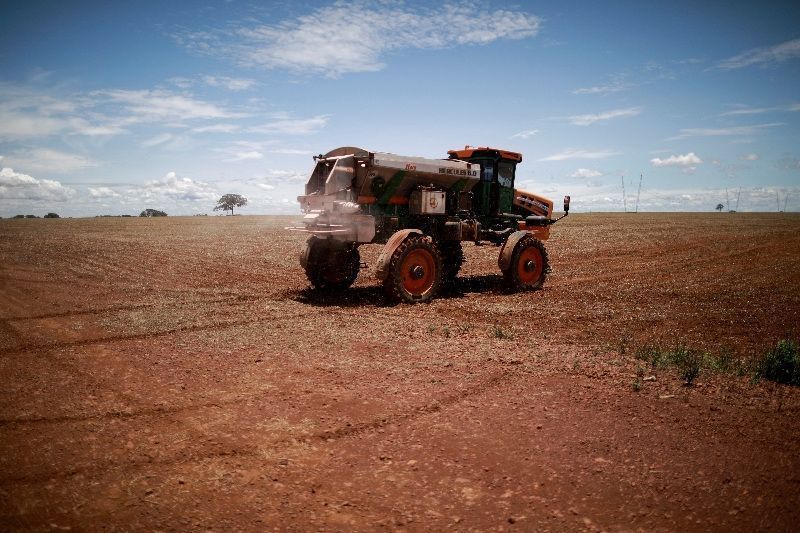
Beyond total trade figures, the Brazilian government identified opportunities to expand the presence of companies from both countries across key supply chains, including agribusiness, fertilizers, seeds, auto parts and pharmaceuticals.
To strengthen commercial links, the Brazilian Trade and Investment Promotion Agency, ApexBrasil, signed a memorandum of understanding with the Confederation of Indian Industry. The agreement aims to connect productive sectors and boost two-way trade and investment.
Critical minerals are also among the primary areas of mutual interest. The two governments signed a cooperation agreement in the critical minerals sector in February, placing mineral supply chains at the heart of their economic alignment agenda.