


Astrophysicist Fernando Jáuregui has advised observers across Spain to look away from the solar eclipse and focus on the surrounding landscape in the ten minutes leading up to totality on August 12, 2026.
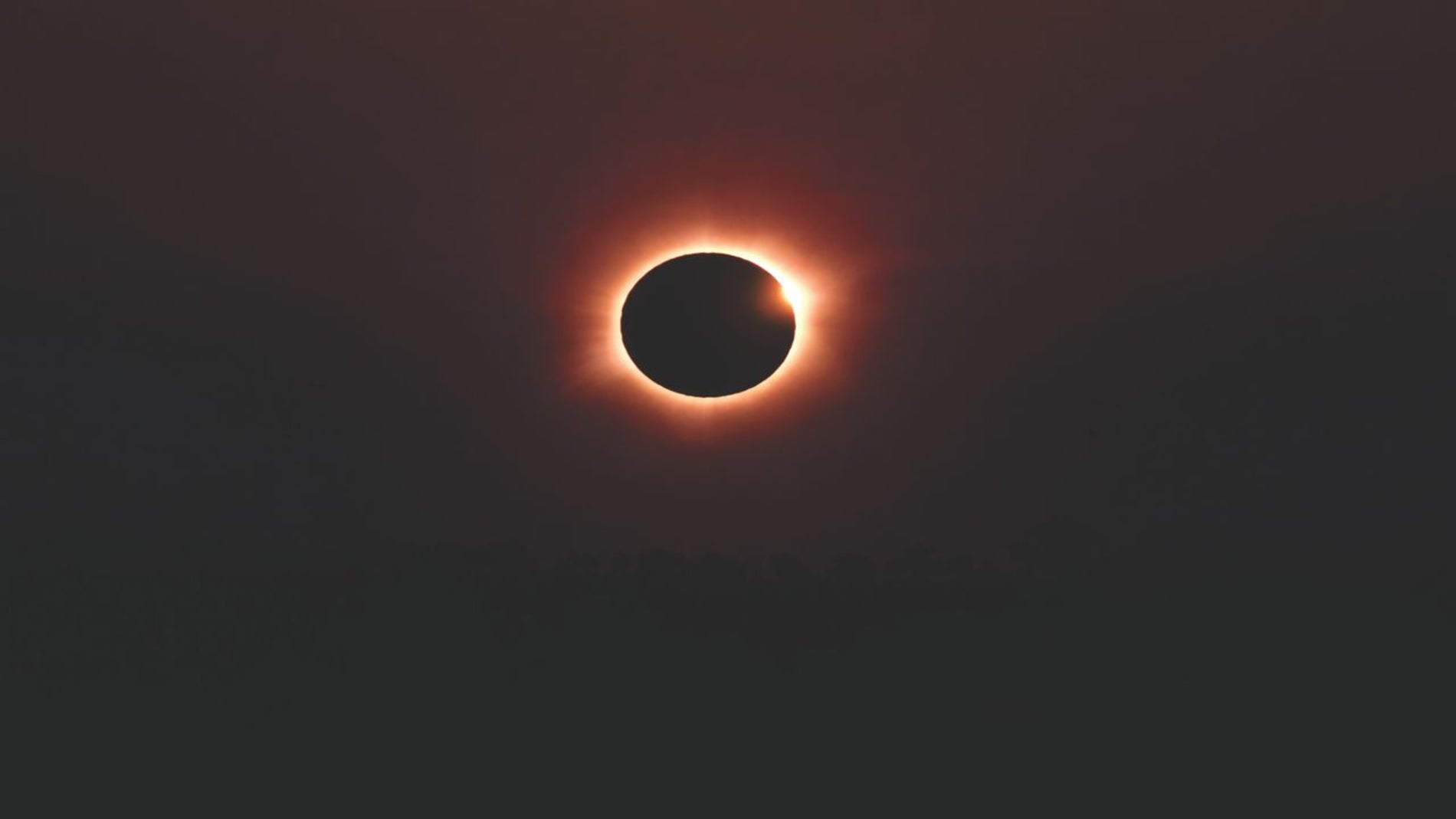
Speaking in an audio recording released by the Agencia SINC news agency, Jáuregui explained that the most unusual aspect of a solar eclipse takes place at ground level. He stated that the final minutes of the partial phase should be enjoyed without protective glasses by watching the environment rather than looking directly at the solar disc.
While the standard reaction during an eclipse is to gaze upward at the sky, Jáuregui noted that dramatic changes occur in the colors of the landscape, surrounding walls, the ground, and tree shadows. He emphasized that protective solar glasses must only be removed when turning away from the Sun to observe the environment, and never to view the solar disc during any partial phase.
Agencia SINC, Spain's public scientific news service operated by the State Foundation for Science and Technology, distributed the advice ahead of the major astronomical event. Jáuregui pointed out that as the partial phase nears its end, ambient lighting drops at an accelerated rate that human eyes cannot adapt to with normal speed.
This rapid dimming alters human visual perception. Jáuregui explained that the brain begins interpreting surrounding colors strangely, causing the landscape to take on a dull, leaden tone while red hues lose their vividness and the scene appears to lose its overall vitality, even as solar activity itself continues unchanged.
Visual changes before totality
Observers looking toward smooth surfaces during these final moments may also catch sight of shadow bands. These atmospheric phenomena appear as faint, fleeting ripples of light and dark moving across flat surfaces immediately before total coverage occurs.
Because shadow bands are subtle and difficult to distinguish, Jáuregui recommended watching a light-colored wall or spreading a white sheet on the ground to increase the chances of spotting them. He noted that such observations showcase how celestial phenomena, ranging from visual patterns on the lunar surface to terrestrial shadow bands, depend entirely on the interplay of light and shadow.
Shadow bands and crescent projections
Another optical effect occurs beneath trees, where small gaps between overlapping leaves function naturally as pinhole cameras. Instead of casting uniform shade, the foliage projects dozens of miniature crescent shapes across nearby walls or the ground, displaying the precise outline of the partially covered Sun.
Pinhole projection is a foundational principle of optics in which light passing through a narrow aperture forms an inverted image of the light source on an opposite surface. Under tree canopies during a partial eclipse, hundreds of tiny gaps between leaves create a natural gallery of crescent projections that can be viewed safely on any light surface without optical filters.
Safety guidelines for solar observation
To practice the technique safely, observers need a location with an unobstructed view of the western horizon. Observers must wear certified eclipse glasses whenever looking directly at the Sun, but may turn their heads toward the surrounding landscape during the final minutes before totality while keeping their eyes far from the solar disc.
Spain's National Geographic Institute has issued strict safety reminders stating that solar viewing without protection is safe only when the Sun is completely covered during the total phase. The institute warned that the moment the first flash of sunlight reappears, certified eye protection must be put back on instantly.
The National Geographic Institute, known as IGN, serves as Spain's official agency for astronomy, geophysics, and cartography. The institute emphasized that outside the narrow path of totality, protective filters are mandatory throughout the entire duration of the event, adding that regular sunglasses, X-ray sheets, and homemade filters offer no protection against permanent eye damage.
Historic eclipse path across Spain
The event on August 12, 2026, marks the first total solar eclipse visible from the Iberian Peninsula in more than a century. The path of totality will sweep across Spain from west to east, with maximum eclipse occurring at approximately 8:30 p.m. local time, though exact timing will vary slightly by municipality.
Because the Sun will be positioned very low in the evening sky during maximum eclipse, choosing a viewing spot with an unobstructed western horizon and proper geographic orientation is critical for seeing both the complete eclipse and the ground-level lighting shifts.
Jáuregui added that observing the surrounding environment allows people to experience the eclipse even if local cloud cover hides the Sun or if an observer is situated outside the central line of totality. Paying attention to the landscape, he said, reveals the least known aspect of an astronomical event that traditionally forces everyone to look up.



