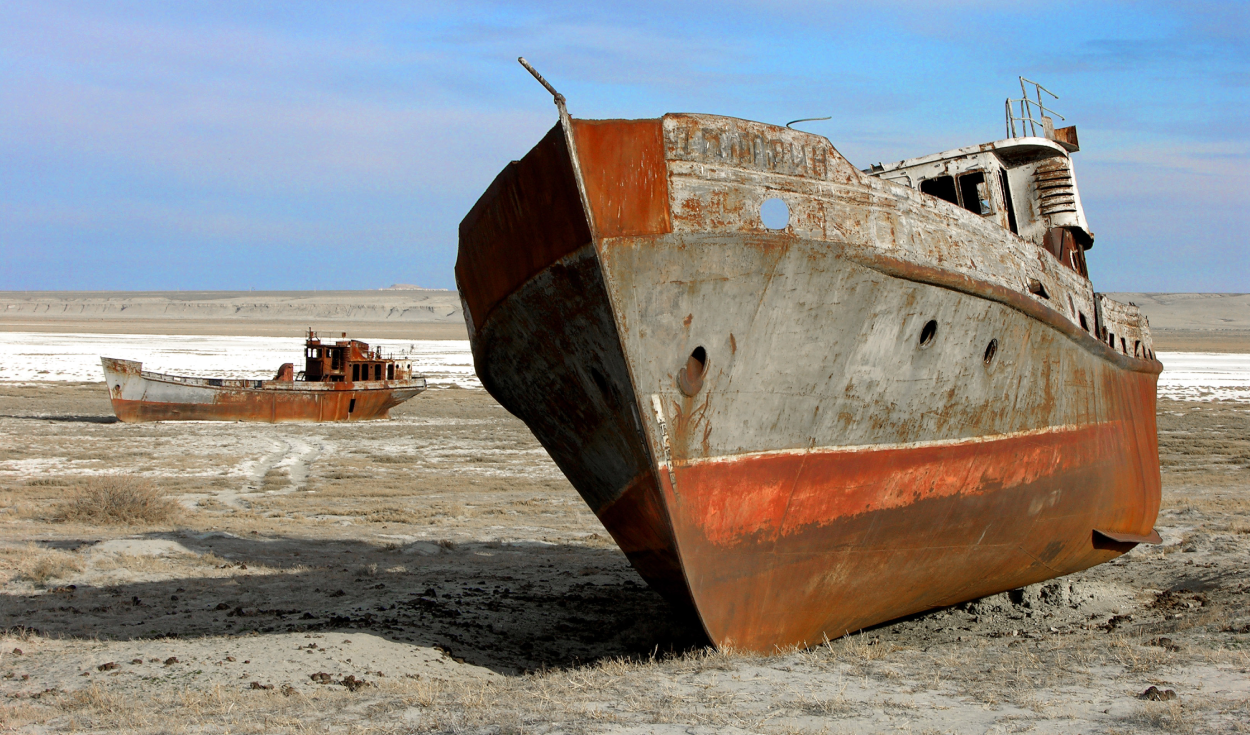
Exposed sediment from the shrinking Aral Sea in Central Asia has released about 748 megatons of carbon dioxide over six decades, researchers reported.
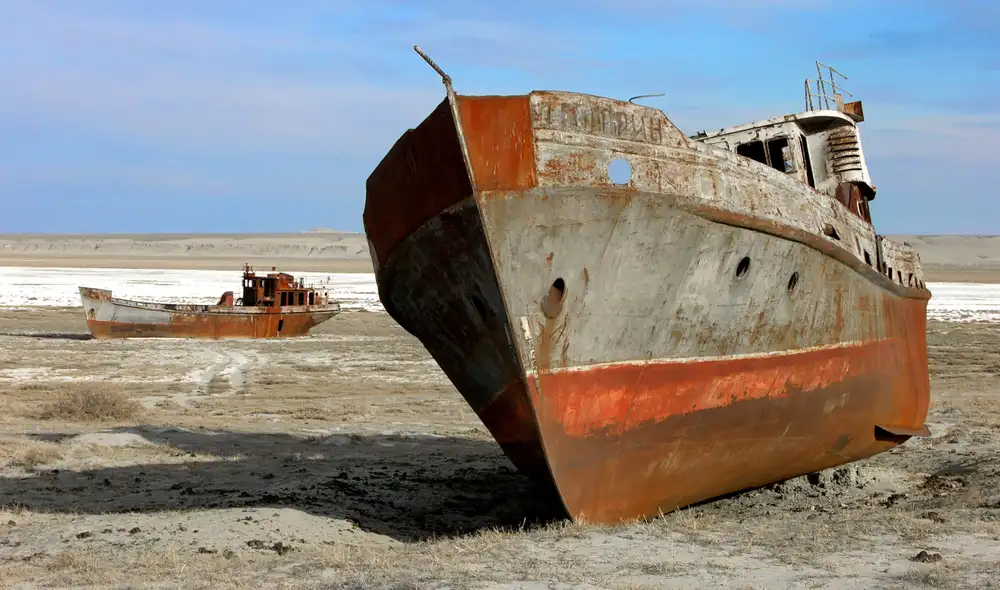
The disappearance of the Aral Sea, located between Kazakhstan and Uzbekistan, was considered one of the largest human-made environmental catastrophes. Once the fourth largest lake in the world, it lost nearly 90 percent of its volume since the 1960s and divided into separate bodies of water.
The deterioration began when the former Soviet Union diverted water from the Amu Darya and Syr Darya rivers to expand cotton and agricultural crops in an extremely arid region. Over time, the lake lost most of its surface area and volume, leaving vast areas of dry ground.
A new study published in the journal Science and led by researchers from the Center for Advanced Studies of Blanes in Spain focused on the exposed lake bed. Scientists analyzed sediments that had remained underwater for thousands of years, storing large amounts of organic matter and carbon.

When water levels dropped and exposed the sediments to air, the organic matter began to decompose and release carbon dioxide into the atmosphere. The researchers estimated that about half of the 748 megatons of emissions occurred in the first 15 years after exposure, before gradually decreasing as available carbon was depleted.
Dust Storms and Remaining Carbon
The research showed that not all carbon escapes directly as gas. Scientists calculated that about one-fifth of the carbon remains bound in dust particles. Strong winds and frequent sandstorms in the region lift the dry sediment and transport carbon over long distances.
Vegetation in the region plays a limited role in absorbing these emissions. Local efforts to plant saxaul trees (Haloxylon ammodendron), which survive extreme dry conditions, currently offset less than 1 percent of carbon losses.
The emissions threat is not over yet. Scientists calculated that about 605 megatons of carbon dioxide remain stored in sediments that have not fully dried out, which could reach the atmosphere if those materials continue to be exposed.
Restoration Plans and Carbon Credits
To prevent further emissions, researchers proposed partially restoring the Aral Sea or selectively rehydrating specific sediment areas. Covering carbon-bearing materials with water again would reduce their exposure to air and stop new carbon dioxide from escaping.
The study estimated that ecological restoration of the region could generate between 3.6 billion and 18 billion dollars through carbon credits in voluntary international markets. Selling credits to private buyers such as tech companies, airlines, oil companies, and financial institutions could help fund the project without relying solely on the budgets of Kazakhstan and Uzbekistan.
Researchers emphasized that the Aral Sea lake bed continues to interact with the atmosphere decades after the water receded. They noted that a critical opportunity remains to keep the remaining stored carbon from being released.