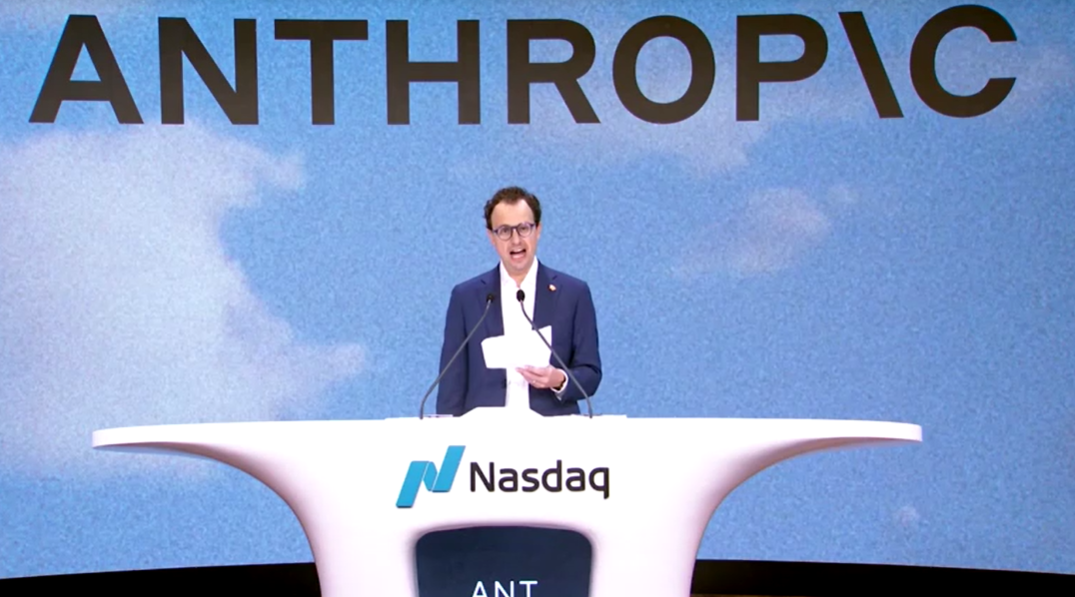
Anthropic's initial public offering, nicknamed internally "Project Lantern," eclipsed SpaceX's earlier listing on Thursday, November 19, with Wall Street bankers collecting more than half a billion dollars in fees, according to people close to the deal. It marked the second time this year that a record-breaking IPO left bankers with an astronomical payout, and the second time they privately complained about how complicated and unusual the process was.
In June, SpaceX's IPO brought banks half a billion dollars in fees, but bankers were frustrated by the rigid control Elon Musk's company exercised over a process that lasted months and kept financial and other information confidential, making the advisers' job harder.
People close to the Anthropic process pointed to a tight timeline marked by last-minute changes and delays in sharing financial projections, rushed document approvals, and unusual restrictions imposed on bankers, as well as persistent worry about leaks, especially after Reuters reported extensive details from a draft of Anthropic's IPO filing weeks before it was made public.
Anthropic, for example, told some of its 22 underwriting firms to limit the number of bankers working on the deal to four, and asked that they be senior employees, according to several people familiar with the matter. One of those people said the restriction likely stemmed from fear of information leaks, and that the banks found a way around it.
A new balance of power
Behind the complaints lies a shifting power dynamic between technology companies and Wall Street. Companies such as SpaceX and Anthropic, and potentially OpenAI in the future, have gained enormous leverage as the transformative potential of artificial intelligence fuels frenzied demand for their shares, and they are using that leverage to do things their own way. That is unsettling some bankers, but banks and investors appear to have little choice but to play along.
Jay Ritter, professor emeritus at the University of Florida who studies IPOs, said these companies certainly had enough market power to tell underwriters it would not be like before. He added that he suspects the big Wall Street firms will go back to business as usual, except perhaps for OpenAI, after these two deals.
Ritter said both SpaceX and Anthropic negotiated to pay underwriters nothing for the additional shares sold through the over-allotment option. He said he does not think most companies will be able to demand a zero spread on those shares.
Anthropic, Goldman Sachs and Morgan Stanley, the two lead underwriters on both IPOs, declined to comment. SpaceX and OpenAI did not respond to requests for comment.
Both SpaceX and Anthropic debuted successfully, raising record sums and seeing their shares climb initially. Marketing the offerings was made easier by demand for artificial intelligence stocks, with both companies' order books far exceeding the shares on offer.
After those initial gains, the two companies' trajectories diverged. SpaceX shares peaked at $201.80 on June 16 after going public, before falling below their $135 IPO price for the first time in mid-July. Anthropic shares closed down 8.5% on Friday, after rising 17% on their first day of trading, reflecting a dramatic slump in the AI market and showing that even a blockbuster listing could not dispel the pessimism hanging over the sector.
Non-compete clauses and tight restrictions
In SpaceX's IPO, people close to the process said Musk's team dictated terms at every step, instructing the largest and most powerful U.S. banks, including Goldman Sachs and Morgan Stanley, on how to market SpaceX shares and to whom. Musk's team also told some banks the specific order sizes they needed to fill, in some cases several billion dollars, and gave instructions on the types of investors to target. The banks agreed to underwrite the IPO without knowing how much they would be paid, the sources said.
The undercurrent running through Anthropic's IPO process was what several people who spoke to Reuters described as extreme caution. According to sources, Anthropic asked some senior bank officials working on its IPO to sign legal documents restricting key members of the deal team from working with competing companies, including OpenAI, Cursor, DeepSeek and Hugging Face, for six months after the listing.
Banks routinely manage conflicts of interest and protect client confidentiality, but bankers and lawyers said it was rare for an IPO to impose such broad exclusivity, especially on individual bankers. In earlier IPOs, such as those of ride-hailing rivals Uber and Lyft, or real estate companies Trulia and Zillow, banks could simply pick a side, in part because the deals were smaller and required fewer banks.
Anthropic, by contrast, needed a wide consortium to raise the huge amount of capital it was seeking, which some people said explains why it tried to impose these restrictions on individual bankers. One banker who refused to sign the agreement said it was difficult to find people who could promise not to follow or actively engage with Anthropic's competitors, particularly since several of those companies are running their own initial or follow-on public offerings.
Leaks and late nights
Some of the restrictions were aimed at controlling information leaks. Nearly four weeks before Anthropic filed its S-1 form with the U.S. Securities and Exchange Commission, Reuters reported on the filing, revealing details about the company's finances, risk factors, negotiations with other technology companies and other information.
Anthropic also used a platform called NetRoadshow to share information with most of the banks underwriting the deal, instead of ordinary PDFs. NetRoadshow logs access details, including who viewed a document and which pages they accessed, and the documents carried bankers' names as watermarks. Leaks kept surfacing in the press regardless, but the use of NetRoadshow complicated bankers' work, in part because the platform did not allow copies of the documents to be saved, one source said.
Anthropic had planned to file an updated securities document, known as an S-1A, with the SEC setting out its price range and to launch marketing on November 10. That required sending a draft to every bank in its consortium for approval. The night before, a law firm involved in the deal sent banks a PDF about the sale of shares in Canada, then quickly sent another email asking that the document be disregarded because it "contains incorrect information about the price range and the shares," according to the email, which was seen by Reuters. The correct S-1A was then sent through NetRoadshow at around 2 a.m. New York time, and banks were told they had a few hours to approve it before it was filed with the SEC.
Test yourself
How much did bankers reportedly earn in fees from Anthropic's IPO?
What did Anthropic ask some senior bank officials to sign?
What happened to Anthropic's share price on the Friday described in the article?
Have your say
Should fast-growing tech companies be allowed to set strict terms for the banks underwriting their IPOs?
Where it happened
New York, United States