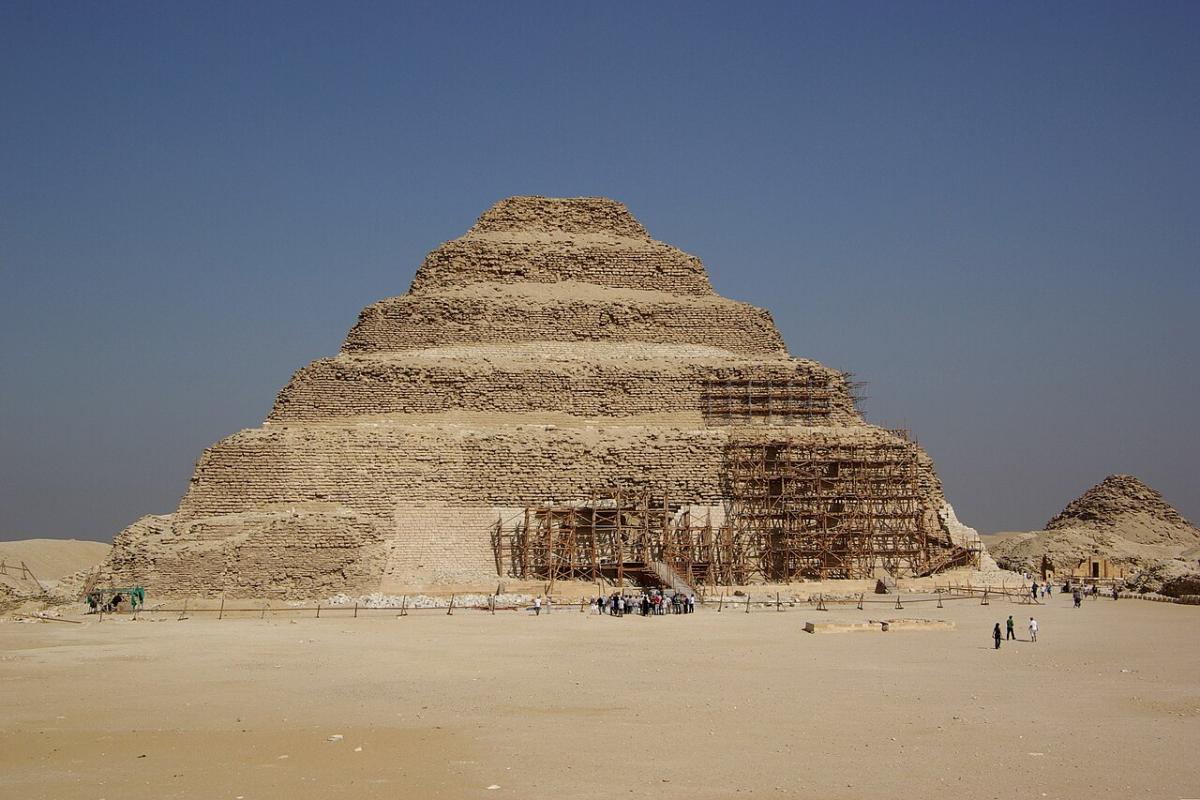
A limestone trench surrounding the Step Pyramid of Djoser in Egypt may have been part of a hydraulic system used to help lift the massive stones that built the ancient monument, according to a new study published in the journal PLOS ONE and reported by Daily Galaxy.
The trench, up to 20 metres deep, stretches for three kilometres around the pyramid and was cut with remarkable precision. Since the 1930s, archaeologists have argued over whether it was a simple quarry or a spiritual monument.
The new analysis proposes a third possibility: Egyptian builders may have used the trench, and the water it carried, to raise the pyramid's stone blocks from within the structure itself. Researchers said they hope the theory offers a definitive explanation of how the Egyptians raised heavy stone blocks to a height of about 60 metres, a question that has produced competing ideas including ramps, cranes, rope-and-pulley systems and wooden crossbeams, none of which has become a generally accepted model.
A dam and river feeding the system
Water for the system could have come from the bed of the Abusir river, aided by the ancient Gisr el-Mudir dam, situated about 400 metres from the pyramid. Researchers said the dam's structure resembles a cross-section of known Old Kingdom dams, with outer limestone surfaces surrounding an inner embankment of coarse rubble, fine sand and silt. According to the study, the Gisr el-Mudir dam held back floodwater, allowed larger particles to settle, and released cleaner water eastward toward the pyramid complex.
Filtering water through the Dry Moat
The researchers suggest the water then made its way into the so-called Dry Moat encircling Djoser's complex, in particular a narrow, deep channel in its southern section known as the Deep Trench. This channel is about 27 metres deep and 3 metres wide, and connects at least three large, precisely cut underground compartments. Of its estimated 410-metre length, only about 240 metres have been excavated so far.
According to the study, the compartments may have formed a water purification system. A first settling basin let large suspended particles sink to the bottom, followed by a storage basin, while a side purification basin was likely used for drinking water. Four surface wells gave workers access to water, and researchers say the trench would have supplied the pyramid's internal shafts with sediment-free water.
Shafts, a granite box and a wooden float
Inside the pyramid complex are two large vertical shafts: one beneath the structure itself, known as the north shaft, and a second about 200 metres to the south. Both end in granite boxes sealed with multi-tonne stone plugs, and researchers recently discovered an underground tunnel connecting the two shafts at depth.
The architecture of the north shaft, the researchers said, is especially significant. A permeable limestone backfill surrounds the granite box, with a mortar-reinforced ceiling above it, and a hemispherical vault extends upward into the body of the pyramid. Archaeologists documented lifting ropes and a wooden beam at the site in the 1930s. The study's author, Landreau, and colleagues argue that the granite box was not simply funerary furniture but a valve for supplying and draining water.
Under their theory, water from the Deep Trench could enter the north shaft and lift a large wooden float, connected by ropes running through pulleys to a platform below. As the shaft filled with water, the platform would lower to a loading area at ground level, where workers placed stone blocks on it. When the shaft drained, the descending float would lift the loaded platform to each new level of construction.
The oldest of Egypt's monumental pyramids
The Step Pyramid of Djoser was built about 4,700 years ago and is the oldest of Egypt's seven monumental pyramids. It was also the first structure in the world built entirely of dressed stone. Constructing it required more than 2.3 million limestone blocks, each weighing about 300 kilograms.
Separately, researcher Sefi Levy has suggested that a secret code was built into the design of the Great Pyramid of Khufu at Giza, relating to the ratios between elements such as its height, the width of its base and the slope of its faces.