


British physicist Philip Johnston plans to launch a $15 million space probe called Fermi Explorer to Alpha Centauri using existing space technology.
The mission aims to demonstrate that interstellar travel does not require revolutionary technology or billions of dollars in funding, while testing proposed explanations for why humanity has not detected alien civilizations.
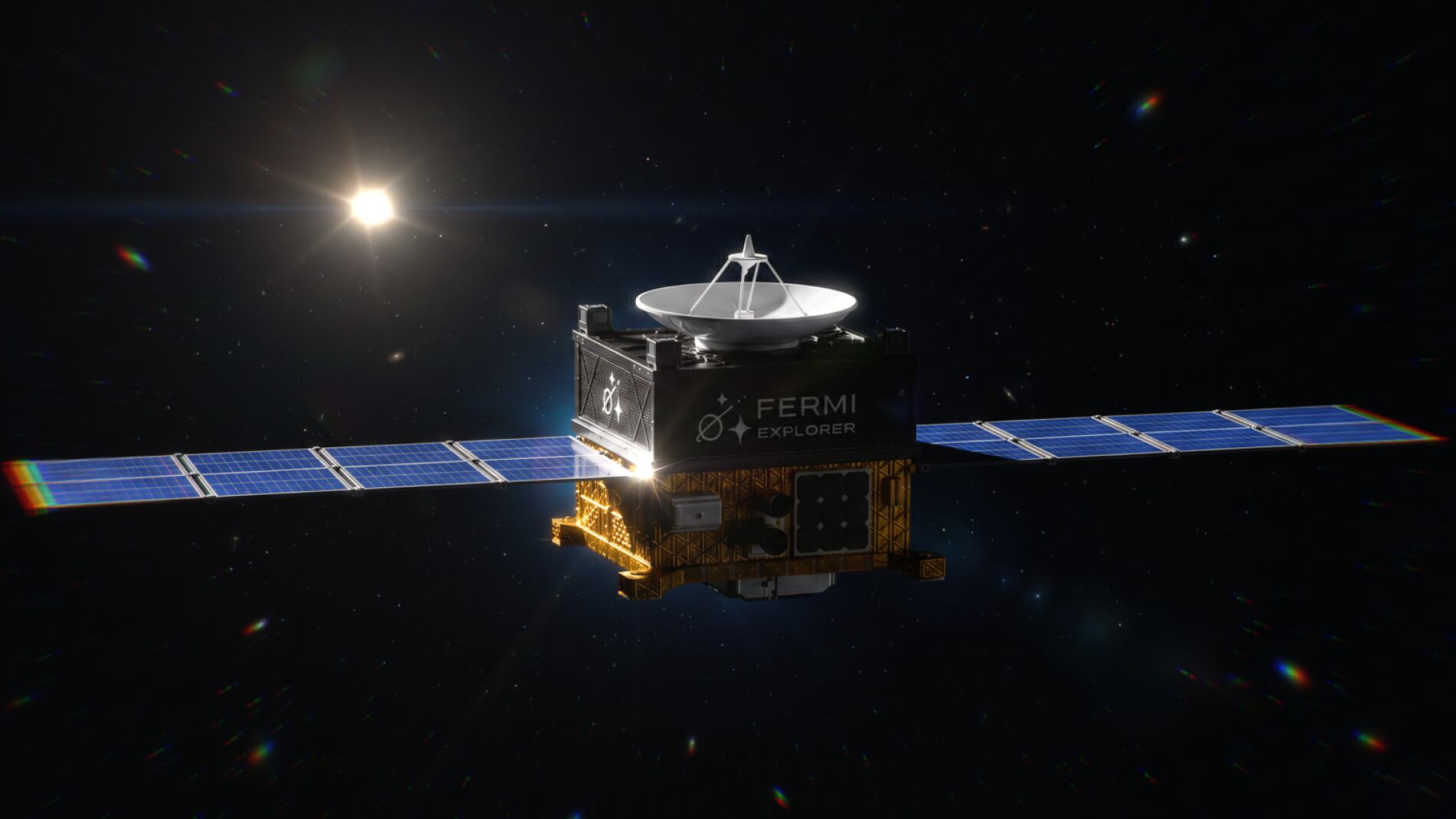
According to a report by Ars Technica, Johnston co-founded the orbital data center company Starcloud in 2024, which is currently valued at $2.3 billion. While expanding Starcloud, the British mathematician and physicist designed the project to evaluate how difficult it really is for an advanced civilization to send a spacecraft beyond its home star system.
Testing the Fermi paradox
The mission directly addresses the Fermi paradox, named after Italian-American physicist Enrico Fermi. The paradox notes the contradiction between the high mathematical probability of extraterrestrial life existing among billions of stars and the complete absence of detectable alien signals or spacecraft.
Scientists have suggested that hypothetical evolutionary or technological barriers, known as great filters, may stop civilizations from expanding across space. The Fermi Explorer project is designed to test two specific filter hypotheses: that advanced species lack interest in sending spacecraft beyond their own star, or that interstellar travel is simply too difficult and expensive.
If a small team successfully launches a probe toward Alpha Centauri using conventional equipment for $15 million, those two barriers will become far less convincing as reasons for the silence of the universe. Other potential explanations, such as technological civilizations being extremely rare or destroying themselves before expanding, would remain untested.
Flight profile and Oberth effect
Alpha Centauri is the closest star system to Earth, located approximately 40 trillion kilometers away. To reach it, the main technical challenge for the Fermi Explorer probe is achieving sufficient velocity.
The proposed spacecraft will carry a scientific payload weighing around one kilogram. Its primary hardware consists of a xenon fuel tank, solar panels, and an electric propulsion system.
Under the flight plan, the probe will launch into low Earth orbit as a secondary payload aboard a commercial rocket. It will then spend roughly 12 years performing orbital maneuvers to move progressively closer to the Sun, reducing its perihelion from Earth-distance to about 0.42 astronomical units.
During each solar pass, the increased solar radiation will supply extra power to the solar panels, energizing the electric engines to expel xenon particles at high speed for small, continuous acceleration. The trajectory takes advantage of the Oberth effect, a physical principle where rocket engines produce more useful kinetic energy when fired at high speeds near a massive gravitational body like the Sun.
After completing 12 years of solar maneuvers, the probe will reach an escape velocity of about 25 kilometers per second, or roughly 90,000 kilometers per hour. The engines will then shut down, and the vehicle will coast on a ballistic trajectory through deep space for 77,000 years until it arrives at Alpha Centauri.
Artificial intelligence design and launch timeline
The 12-year flight profile was developed after Johnston consulted physicist Alex Wissner-Gross, founder of the artificial intelligence company Physical Superintelligence. The team submitted mission parameters into an AI system, which generated an 18-page technical feasibility report outlining the solar maneuver trajectory.
Johnston told Ars Technica that the team decided to launch a minimum viable, fully conventional mission to Alpha Centauri for the lowest possible cost.
The Fermi Explorer team aims to secure the necessary funding and launch the probe in 2029. Communication with the spacecraft will only last for about 18 months after launch. Ground-based telescopes will be able to track the probe for a short period afterward, but scientists will have no way of confirming from Earth whether the probe eventually reaches its destination.



