Algeria has severed diplomatic relations with the United Arab Emirates and closed its airspace to Emirati aircraft over allegations of regional interference.
The Algerian Ministry of Foreign Affairs announced the decision after stating that it had exhausted all avenues to preserve bilateral relations, accusing Abu Dhabi of multiplying provocative and hostile actions that interfere in the domestic affairs of regional nations.
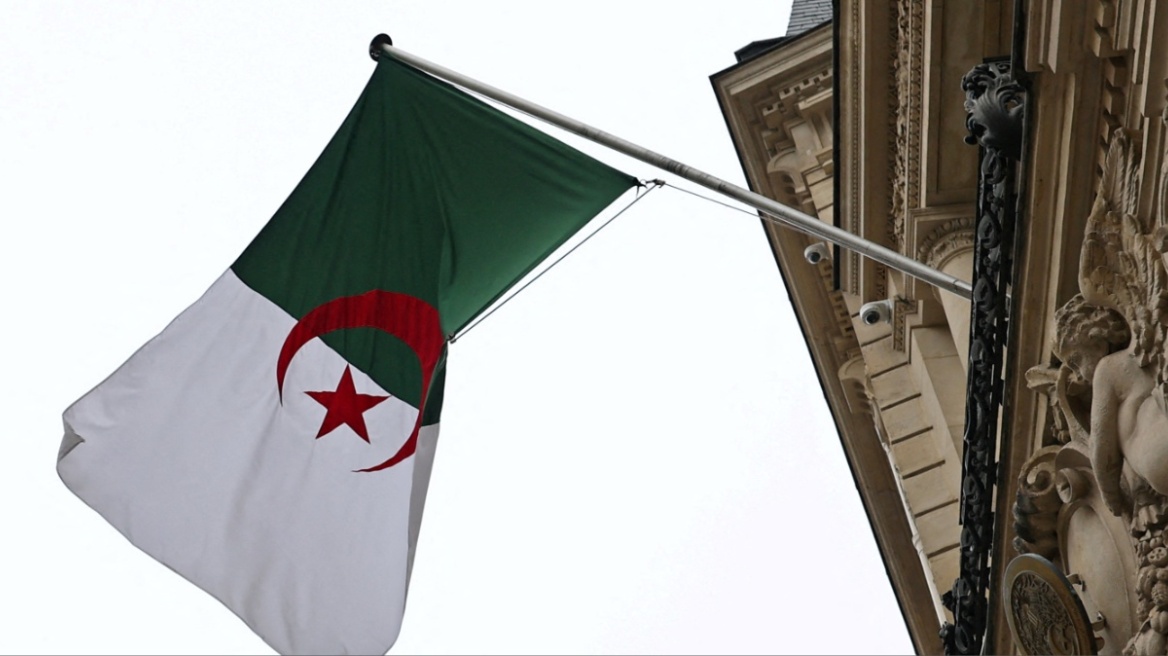
The diplomatic break marks a severe escalation in long-running political friction between the North African nation and the Gulf federation. The two sovereign states have increasingly aligned on opposing sides of conflict zones across North Africa and the Sahel region.
Diplomatic Ultimatum and Airspace Ban
Algerian diplomats formally notified the ambassador of the United Arab Emirates of the rupture, giving him 48 hours to comply with the decision and leave the country.
Following the diplomatic notification, the Algerian Ministry of Defense confirmed that a total airspace closure for Emirati military and civil aircraft came into effect at midnight local time, corresponding to 1:00 a.m. Greek time.

The Ministry of Defense clarified that the measure currently applies to commercial flights operated by the United Arab Emirates traveling to and from Algiers International Airport. The flight ban is scheduled to remain enforced at least until the end of 2026.
In response to the severance, the Foreign Ministry of the United Arab Emirates expressed hope that the decision by Algiers would prove temporary. The ministry highlighted its ongoing appreciation for the brotherly Algerian people and reaffirmed its commitment to the enduring ties between the two populations.

Accusations of Regional Destabilization
The rupture follows public warnings from Algerian President Abdelmadjid Tebboune, who has repeatedly accused the United Arab Emirates of conducting destabilizing policies across North Africa and the Sahel, specifically highlighting foreign involvement in Libya, Mali, and Sudan.
In a recent television interview broadcast on Algerian public television, Tebboune stated that wherever the Gulf state steps foot, blood is spilled. He described the United Arab Emirates as a microscopic state exerting a very negative impact on regional security.

Tebboune added that Algeria only desires for the Gulf country to step away so that ongoing bloodshed across the region can cease. He noted that Algiers could have severed formal ties much earlier, but had deliberately refrained to avoid worsening political divisions within the Arab world.
The Algerian president emphasized that his administration had previously warned Abu Dhabi regarding the serious consequences of its regrettable and unjustifiable behavior. However, he stated that Emirati leadership persisted in actions that exceeded acceptable and tolerable limits between sovereign nations.
Threats to Security and Regional Conflict
Analyzing the strategic division, Geoff Porter of North Africa Risk Consulting stated that Algeria seeks to maintain stability across the Sahel and Sahara regions. Porter noted that Algiers views Emirati activity as directly opposing that goal, regarding Abu Dhabi's intervention not merely as a standard foreign policy dispute but as an indirect threat to Algerian national security.

Tensions between the two countries have intensified due to conflicting strategies in several African nations. Algeria has accused the United Arab Emirates of supplying support to General Khalifa Haftar, the military commander controlling eastern Libya, as well as providing backing to the Rapid Support Forces in Sudan, a paramilitary group accused of widespread human rights violations.
Government officials in Abu Dhabi have consistently rejected all allegations of meddling in the internal governance or conflicts of Libya and Sudan.

Media Disputes and Broader Alignment
Friction between the two governments previously surfaced in 2025, when Algerian public television condemned what it characterized as a campaign of hostile propaganda by the United Arab Emirates. The dispute followed a broadcast by Sky News Arabia featuring an interview with historian Mohamed Amin Belghith, whose remarks regarding Amazigh identity triggered widespread public outrage in Algeria.
The diplomatic rupture also reflects deeper strategic disagreements over Middle Eastern diplomacy. Algeria remains strongly opposed to the normalization of diplomatic relations between Arab nations and Israel, a policy framework that the United Arab Emirates formally embraced with support from the United States.

Algeria, located in North Africa along the Mediterranean coast, maintains a strict policy of non-intervention and regional sovereignty. The United Arab Emirates, a federation of seven emirates on the Arabian Peninsula with its capital in Abu Dhabi, has expanded its military and economic footprint across Africa in recent years.