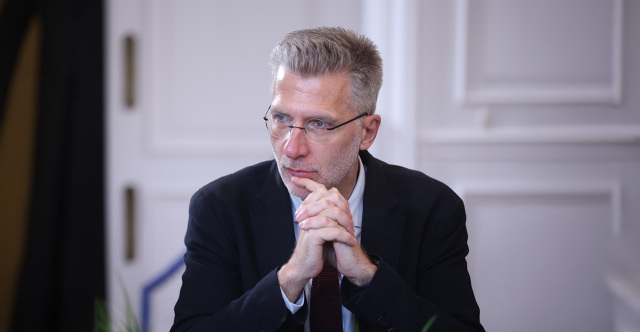
Greek Minister of State Akis Skertsos has stated that recent German election results boosting political extremes on the right and left raise valid concerns for Europe.
In a social media post published on September 22, 2026, Skertsos highlighted the contrasting political and economic situations of Greece and Germany following the German vote.
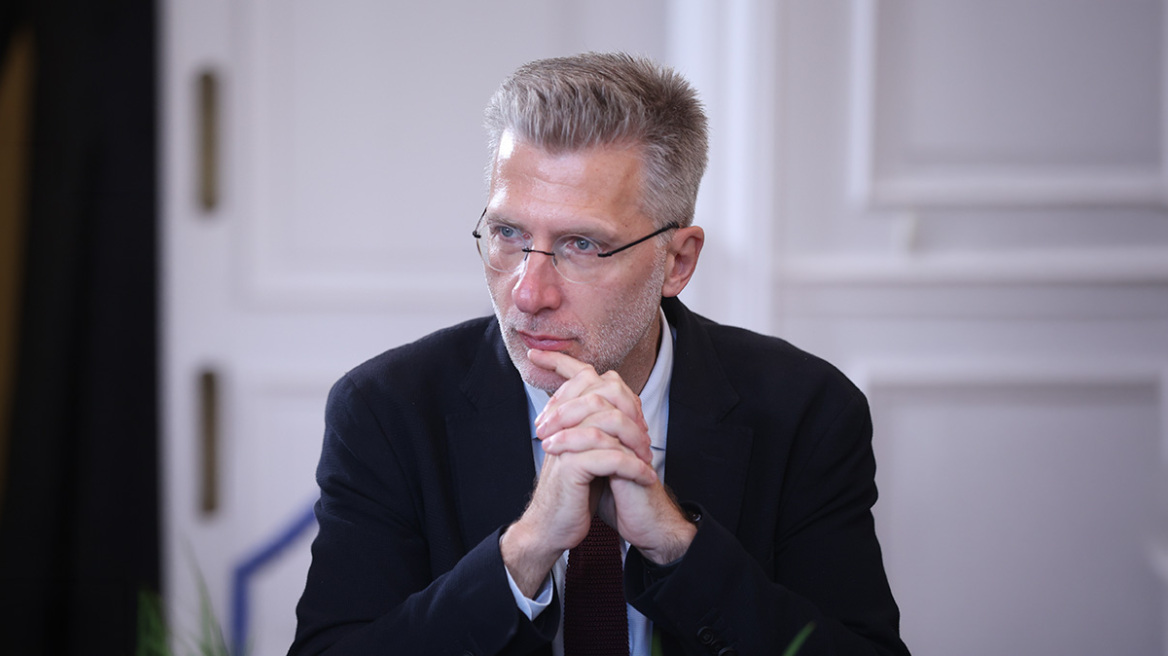
Skertsos cautioned against drawing hasty political conclusions or sweeping generalizations about what the German election outcome signifies for the wider continent. He stressed the importance of assessing the underlying social and economic conditions that shape how citizens vote.
According to Skertsos, politicians must examine whether policies are effective before assigning labels of center, right, or left. He emphasized that political extremes gain ground in societies when governing authorities fail to deliver convincing solutions to the everyday problems citizens experience.
Economic comparison between Greece and Germany
Skertsos identified several key factors explaining why Germany in 2026 faces a different political and economic reality from Greece. He cited political instability, economic trajectory, deindustrialization, accompanying job losses, integration challenges with large migrant populations, and resulting strain on social cohesion.
To illustrate the divergence between the two nations between 2019 and 2026, Skertsos presented specific economic indicators. Real gross domestic product in Greece grew by 12.2 percent over the period, compared with 2.2 percent growth in Germany. Unemployment in Greece dropped from 17.3 percent in 2019 to 7.9 percent in 2026, while German unemployment rose from 5.5 percent to 6.5 percent.
Industrial production in Greece expanded by 25 percent against a 12 percent contraction in Germany, while Greek manufacturing employment increased by 19 percent compared with a 7 percent decline in Germany. Additionally, Germany saw its refugee and migrant population rise by 50 percent relative to the previous decade, whereas Greece recorded a 16 percent decrease.
Political stability and government structure
Skertsos attributed much of the economic variance to political stability, arguing that Greece's single-party New Democracy government managed major crises effectively and achieved growth rates above the European Union average. In contrast, he noted that Germany has been governed by three separate coalition governments during the same period, creating policy instability.
Skertsos serves as Minister of State in the Greek cabinet under Prime Minister Kyriakos Mitsotakis. New Democracy, a centre-right political party, won a parliamentary majority in Greece, whereas Germany has relied on multi-party coalition administrations to form working majorities in the Bundestag.
Both Greece and Germany are member states of the 27-nation European Union, where economic performance and voter sentiment have increasingly influenced national debates. In Germany, recent electoral shifts have seen increased support for opposition groups, including the far-right Alternative for Germany party.
Skertsos concluded that the ultimate test of political effectiveness is whether governments can improve the lives of citizens and restore confidence that the future will be better than the present.