

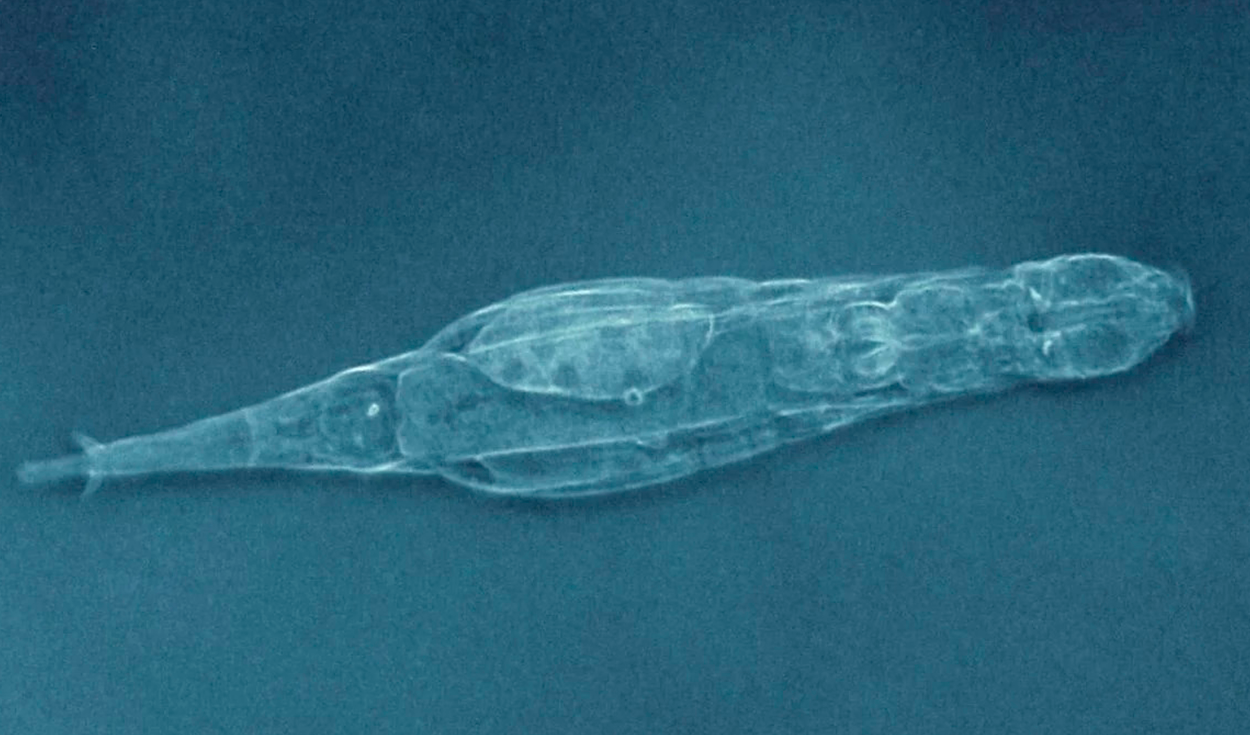
Scientists have discovered that a microscopic freshwater animal, Adineta vaga, can survive massive doses of radiation by passing shattered DNA fragments to its offspring, allowing severe genetic damage to be repaired across multiple successive generations.
The findings, published in the peer-reviewed journal Science Advances, document a type of genetic repair never previously observed in any other organism. The microscopic invertebrate does not need to fix all of its genetic material before reproducing. Instead, it allows the complex healing process to continue in its descendants.

Researchers exposed specimens of Adineta vaga to intense proton radiation in a laboratory experiment. They then collected a single egg from the irradiated animals and used it to establish a population of genetic clones.
The scientific team had expected to find a uniform pattern of DNA damage across all the individual clones in the newly established population. Instead, they discovered that the major losses of genetic material varied significantly between the individuals, and that the missing genetic sequences appeared to be recovering progressively over time.
By conducting new cellular analyses, alongside detailed DNA sequencing and chromosome counts, the researchers were able to reconstruct the process. They found that fragments of broken chromosomes were able to survive into the subsequent generation of the animal, where the genetic repair process continued unabated.
Surviving massive radiation doses
The sheer magnitude of the genetic damage survived by the animals surprised the research team. The specimens of Adineta vaga were subjected to radiation doses of 100, 250, and 500 gray. The gray is the standard scientific unit used to measure the absorbed dose of ionizing radiation.
To put this extreme exposure into perspective, a dose of just five to ten gray is generally fatal to a human being. The researchers estimated that these high radiation levels caused around 88, 220, and 440 double-strand breaks in the animal's genome, respectively. A double-strand break, where both strands of the DNA double helix are severed, is considered the most severe and lethal type of genetic damage. At the highest experimental dose of 500 gray, a single chromosome in the microscopic animal could be divided into between 30 and 50 separate fragments.
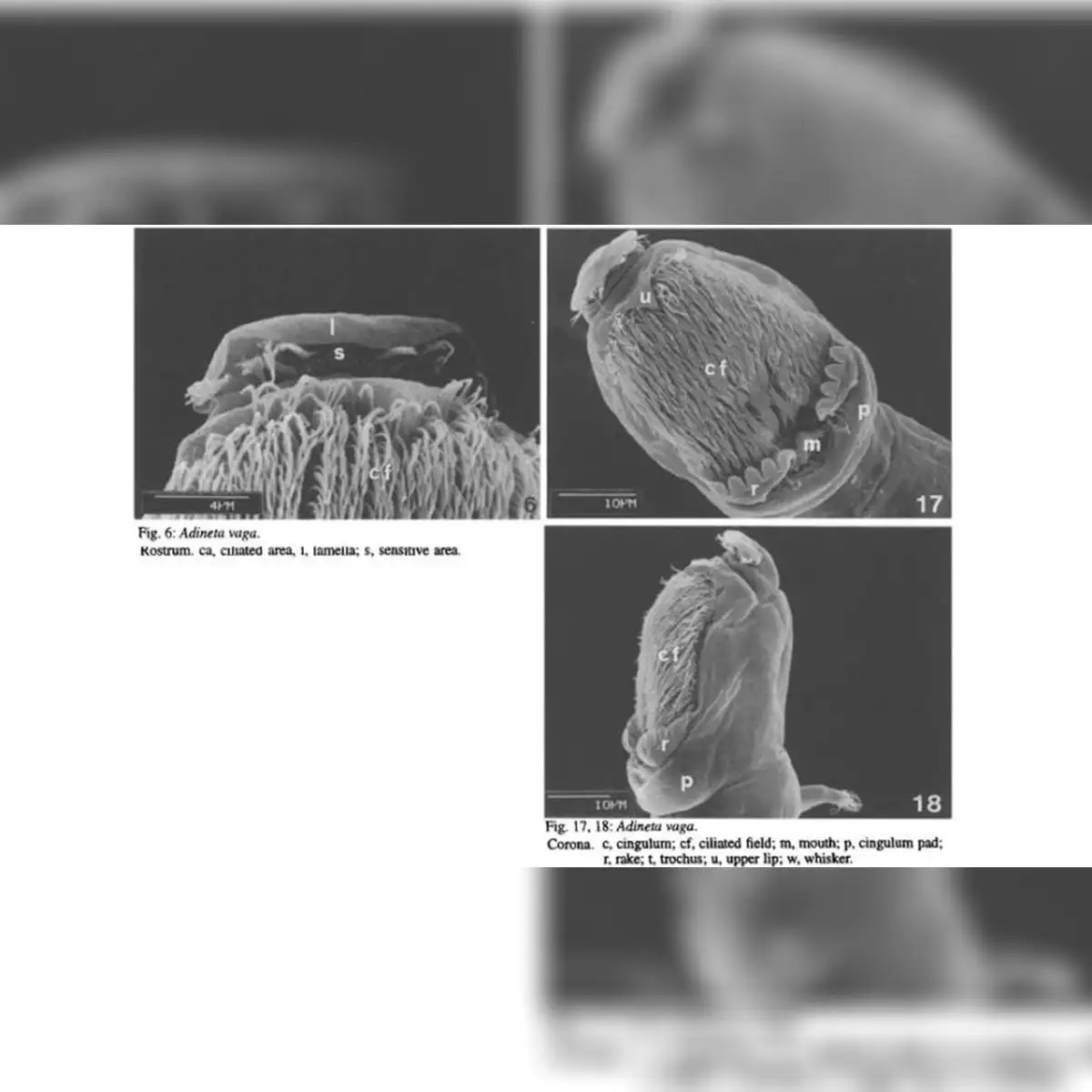
In the vast majority of living organisms, this degree of severe fragmentation would make it impossible to correctly distribute genetic material during cell division. Chromosomes typically rely on a specific central region called a centromere, which acts as an anchor point allowing them to separate and move into new daughter cells as they divide. Without an intact centromere, broken DNA fragments are usually lost during cell division, leading to cell death.
However, the study results indicate that Adineta vaga possesses holocentric chromosomes. This specific evolutionary cellular structure distributes the key components of the centromere along different regions of the entire chromosome, rather than concentrating them in one central spot. Because of this unusual dispersed structure, multiple broken fragments of the shattered chromosome retain the functional elements necessary for segregation, allowing them to remain viable in the resulting daughter cells.
Evolutionary biologist Karine Van Doninck, of the Université Libre de Bruxelles, explained that the truly exceptional aspect of the discovery is that the animals somehow stabilize the chromosome ends and the DNA fragments, and can then transmit them to the next generation to continue the repair process.
Repairing genetic code through cloning
The species is able to repair its broken DNA over several generations because it possesses a diploid genome, meaning its chromosomes are organized in pairs, just as they are in humans. Each member of the pair contains the same genes in equivalent positions, although the specific versions of those genes can present differences. This paired characteristic provides a relatively intact copy of the genetic code that can serve as a reference template when a lesion or break occurs on the other chromosome.
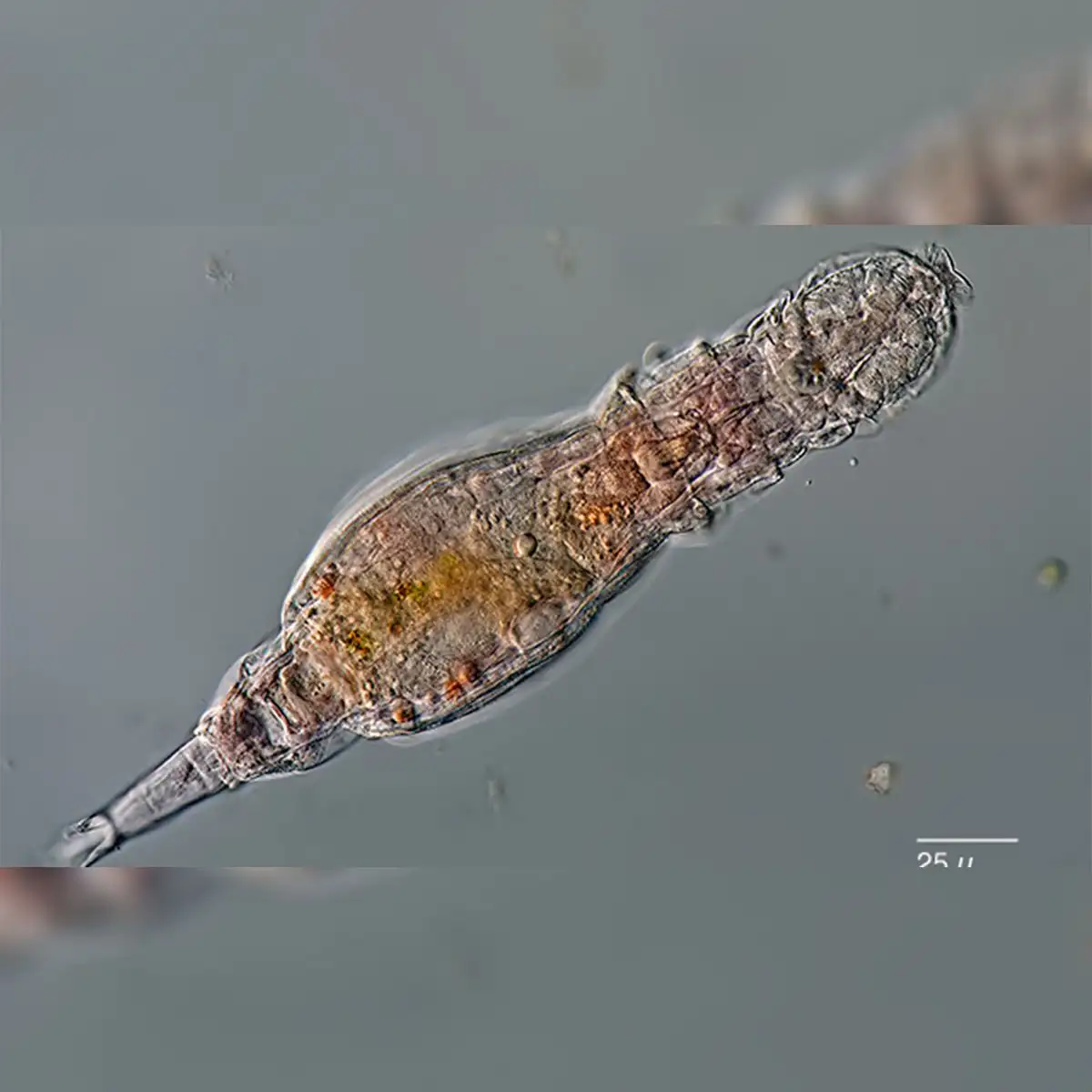
Bdelloid rotifers, the class to which Adineta vaga belongs, are microscopic aquatic invertebrates found in freshwater environments and damp soil worldwide. They are particularly known to science for reproducing entirely asexually, producing genetic clones of themselves without mating.
Despite this asexual reproduction, Adineta vaga conserves a specific form of meiosis, the specialized type of cell division that typically produces egg and sperm cells. In this modified process, the homologous chromosomes still pair up.
When a DNA strand is broken by radiation, the damaged end can locate the equivalent region on the paired homologous chromosome and use it as a molecular mold to accurately reconstruct the lost genetic sequence. The scientific team named this specific mechanism break-induced homologous extension repair, or BIHER.
When the genetic lesions are extremely extensive, as seen in the 500 gray exposures, this rebuilding process requires several generations to complete. Molecular biologist Bernard Hallet, of the Université Catholique de Louvain, noted that this mechanism can recover the original structure of a chromosome and eliminate some genetic deletions entirely after a certain number of generations. Hallet added that, given enough time, the lost sequence can be restored progressively.
An adaptation to extreme environments
The researchers believe the explanation for this extraordinary resistance to radiation lies in the natural habitat of these microscopic animals. Bdelloid rotifers frequently live in mosses and lichens, environments that often undergo unpredictable and prolonged periods without water.
To survive these harsh environmental conditions, the animals can enter a state of extreme desiccation, drying out completely and suspending their metabolism until water returns to the environment. This profound lack of water can also cause severe cellular stress and damage, including double-strand breaks in the DNA that are very similar to the injuries caused by ionizing radiation.
Consequently, Van Doninck suggested that the radiation resistance of Adineta vaga likely emerged as a direct evolutionary consequence of its adaptation to surviving desiccation, rather than developing as a specific response to environmental radiation itself.
The research team is now seeking to identify the specific molecular machinery that makes this generational genetic repair possible. They also plan to investigate what happens to the repair process when both homologous chromosomes suffer severe damage at the exact same point in their genetic sequence.



