Zaragoza is preparing to host its annual Fiestas del Pilar from October 10 to October 18, bringing thousands of visitors into the streets of the Aragonese capital.
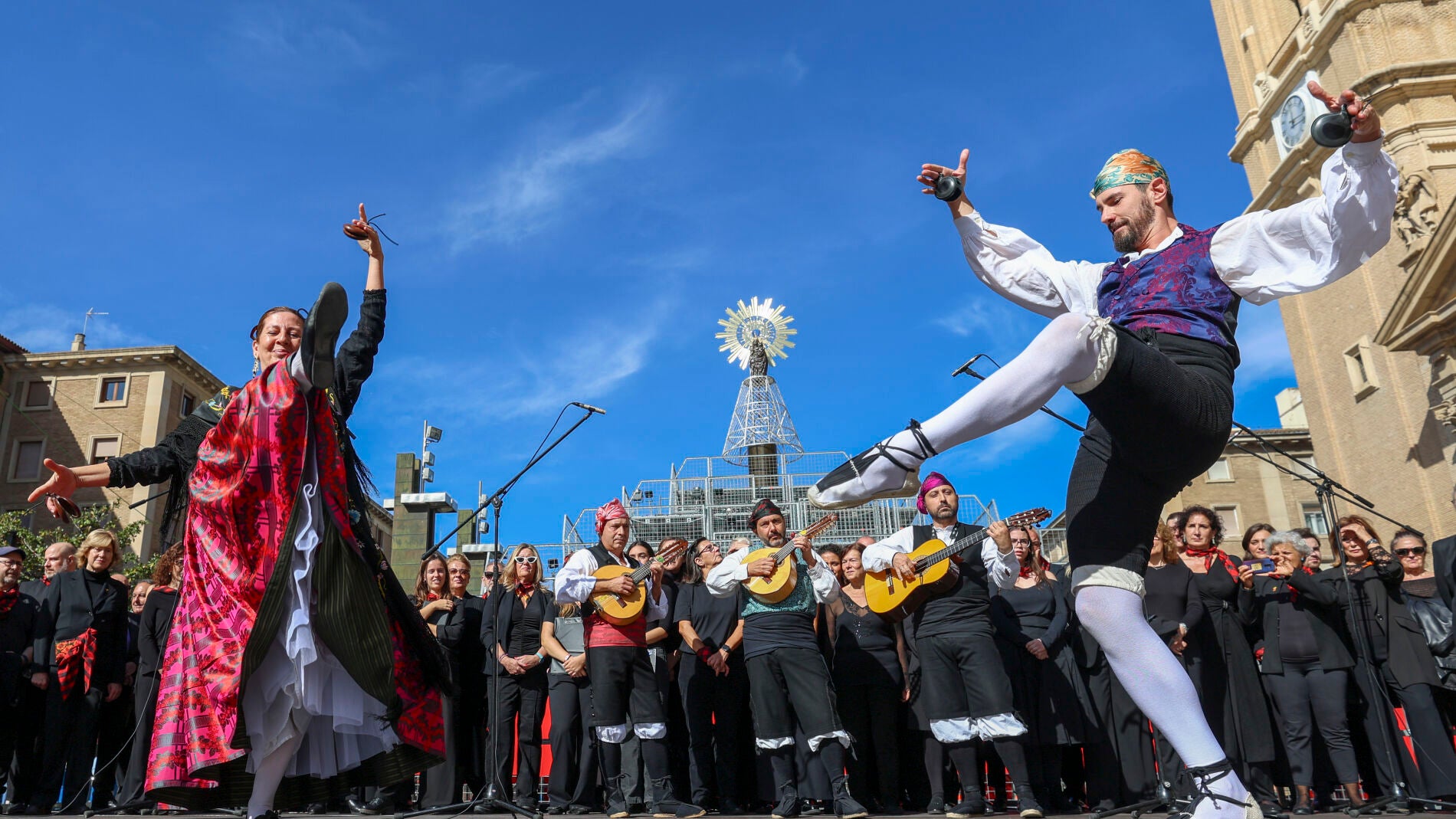
The celebrations center on October 12, the feast day of the Virgen del Pilar, who is the patron saint of both Zaragoza and Spain. Crowds gather in front of the Basilica of Our Lady of the Pillar in traditional regional dress to offer flowers and participate in festive groups known as peñas.
A central motif of the festival comes from traditional jota song lyrics asking where the small statue of the Virgin is located. The tiny figure presides over a massive gathering in the main plaza, where families and local groups assemble amidst floral offerings and regional costumes.
Traditional Parades and Gastronomy in El Tubo
Beyond the religious offerings, the festival features the traditional parade of cabezudos, large papier-mache big-headed figures including El Morico, El Boticario, El Robaculeros, El Torero, La Pilara, El Verrugón, and La Forana. Children run through the streets ahead of the figures during the procession.
Author Sergio del Molino described the annual event as a form of festive brutality, noting that children flee from papier-mache creatures that resemble a Goyaesque nightmare produced on a municipal budget. The tradition reflects a long heritage of regional costumbrismo spanning from the classic film Nobleza Baturra to the narrow tapas alleys of El Tubo.
Located above the ancient Roman ruins of Caesaraugusta and alongside the Ebro River, the El Tubo district forms the heart of local dining during the celebrations. Visitors often stop for a mushroom pincho at El Champi before continuing through the neighborhood's tapas bars late into the night.
Cultural Figures and Sporting Heritage of Zaragoza
Zaragoza's cultural identity is tied to prominent artistic figures across generations. Musician and politician José Antonio Labordeta drew inspiration from the nearby Monegros Desert and the Moncayo mountain range, while rap artists Kase.O and Violadores del Verso established the city as a major center for Spanish hip-hop. Novelist Ignacio Martínez de Pisón chronicled domestic life across Zaragoza's working-class neighborhoods.
In sports, local football fans maintain long memories despite Real Zaragoza currently experiencing less successful periods than in past decades. Supporters frequently recall former player Porta, who also played for Granada, as well as midfielder Nayim's long-range goal that defied expectations to win the 1995 UEFA Cup Winners' Cup.
In October, the La Misericordia bullring hosts the Feria del Pilar, marking the final major event on the national Spanish bullfighting calendar.
Regional Landscape and Personal Memories of the City
The geographical character of Zaragoza is defined by contrasts of dry terrain, heavy rain, and the strong cierzo wind blowing along the Ebro River basin toward Navarre. Romantic poet Gustavo Adolfo Bécquer drew on the nearby Veruela Abbey and regional landscape for his literary legends, echoing themes of regional identity.
The city's climate and urban evolution were highlighted during the 2008 Water Expo, held in a newly developed area during extreme summer heat. The author recalled visiting the exposition with his grandmother Tere, who complained that their hotel was located far out in the middle of nowhere, in a district that initially lacked shade trees before later visits brought heavy rainstorms.
During a previous October 12 celebration, the author recalled meeting a woman named N. dressed in traditional baturra attire, whom he described as possessing a very ternasquito beauty in reference to the region's famous ternasco roasted lamb dish, though she declined his invitation. Looking ahead to this year's events from afar, the author noted that the city's distance and spirit remain central to its identity.