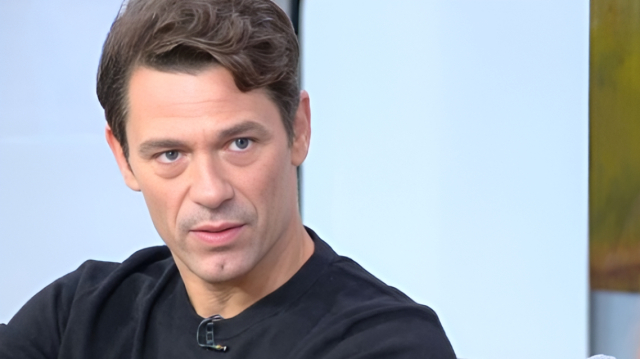
Greek film director and screenwriter Yannis Smaragdis has criticized British director Christopher Nolan's film adaptation of "The Odyssey," saying it altered the psychological essence of the Homeric hero. Smaragdis made the comments in an interview with Viktoras Montzelli on Newsbeast's Networking programme, filmed at the Aigli Zappeiou venue in Athens.

Smaragdis said the psyche of Odysseus is the psyche of the Greek people, and that it was missing from Nolan's film. He said Nolan turned the hero's defining trait, described in Greek as "polymechanos," meaning resourceful and cunning, into "amichanos," meaning helpless, while turning the hero's longing to return home, or "nostos," into an abandonment of his homeland.
Nolan accused of distorting Odysseus
Smaragdis said the true star of the film was Odysseus, not Nolan, and that making him helpless rather than resourceful did not make him thoughtful, but instead gave him the traits of an ordinary American with postwar trauma and no homeland, which he said bore no relation to the real Odysseus.
He said Greeks survived repeated conquests and now face what he called cultural imperialism, and that they survived because the soul of Hellenism was never altered. He cited a remark he attributed to former United States Secretary of State Henry Kissinger, saying the Greek people were unruly and that their cultural roots, including religion and their spiritual and historical reserves, needed to be struck deep in order to neutralize them and stop them developing. Smaragdis said Nolan's film served that same line.
Director defends state funding for the production
Despite his criticism, Smaragdis said the Greek Film Centre, EKKOME, and the Ministry of Culture were right to award a 6.5 million euro grant for Nolan's production. He said Greece must not become like Iran and isolate itself from the international market, adding that if Nolan had not filmed in Greece he would have gone to Slovenia or Bulgaria, as he had done in other countries.
He said Hollywood films sometimes distort the soul of the subjects they take on, pushing them in a particular direction, which he said is what happened with the Odyssey. He said Greece should stay open to international productions while also countering Hollywood's approach to Hellenism by strengthening Greek productions carrying Greek feeling.
Kapodistrias and El Greco
Smaragdis pointed to his own films "Kapodistrias" and "El Greco," about Greece's first governor, Ioannis Kapodistrias, and the Cretan-born Renaissance painter, noting both rank very high on all-time Greek box office lists. He said that what a filmmaker sends out, they receive back, and that he sends his love and respect for what Greeks inherited from the past.
He said audiences recognized their own soul in Kapodistrias, describing him as the model of a Greek leader who could have brought happiness and leadership to Greeks, which he said is why Kapodistrias was assassinated. He said Greeks are made for great things, not small ones, adding: "As Greeks we are not made to imitate, we are made to open paths."
A final film on Kolokotronis
Smaragdis, who is 80, said his next and final project would be a film about Theodoros Kolokotronis, the general who led Greek forces during the war of independence against the Ottoman Empire. He said he wanted to speak to younger generations and help them set goals rather than imitate trends, so they might create original work.
He described Kolokotronis as the alter ego of Kapodistrias, with Kapodistrias supplying the strategic mind and Kolokotronis, whom Kapodistrias reportedly called "the new Odysseus," representing the ordinary man who grasped his responsibility to the homeland. He noted Kolokotronis began as an outlaw, a klepht, before becoming a national hero, and said the film's message is that anyone can become a Kolokotronis regardless of where they start.
He referenced a text by the poet Odysseas Elytis describing two paths toward light or holiness: moving from light to light, as he said writer Alexandros Papadiamantis and Kapodistrias did, or starting in darkness and arriving at the light. He said Kolokotronis remains largely unknown in Greece today, and that he was left speechless when he began researching the historical record, which convinced him Kolokotronis had a more strategic mind than Kapodistrias.
On whether a director should follow historical events faithfully, Smaragdis said a director is not a historian but must respect real events and interpret them in a way that elevates rather than diminishes them. He said the audience, not critics, would judge his work, describing Greek film critics as "corralled" and as paid agents.
Left-wing dominance and the "woke agenda"
Asked whether Greece today lacks great figures, Smaragdis said many exist but remain scattered, lacking the kind of network that united Greeks of the diaspora before the war of independence.
He said that since the Greek civil war, left-wing figures had gradually taken control of criticism, funding and public discourse in the arts, creating what he called a myth that only leftist artists count. He linked this to what he described as a "woke agenda," saying it operates through newspapers, websites, paid articles and financing controlled by informal power centers rather than elected government. He said this was changing as state funding rules changed, forcing those centers to shift course.
Preserving the Greek psyche
Asked whether Greeks sometimes hold an inflated idea of themselves, Smaragdis said Greeks view their own past superficially, "touristically," rather than substantively, and that this had cost the country its balance. He said the way to recover was to strengthen what he called the Greeks' psychic culture, the popular character he said no historical conquest had erased.
He said Odysseus endured his trials because he held a higher purpose, and said that peoples who lose their historical memory and cultural depth fade away and merge into others, something he said Greeks were not made to do.