Spanish labor lawyer Ignacio de la Calzada warned that striking workers face wage cuts, while staff blocked by pickets can demand full pay.
In guidance published on social media during Spain's Nov. 11 general strike, De la Calzada explained that employees who turn up for work but find their access blocked by picket lines remain legally available to work. Because the employer cannot provide access or duties, affected staff hold solid legal grounds to collect their regular daily pay.
De la Calzada, widely known on social media under the handle Un Tio Legal (@laboral_tips), addressed common misconceptions in a TikTok video explaining the financial stakes of industrial action. He urged employees to study labor rules carefully ahead of strike days, noting that many people forfeit money unnecessarily due to a lack of legal knowledge.
Wage Deductions for Striking Workers
Under Spanish employment law, walking out on strike temporarily suspends the contractual relationship between the worker and the company. As De la Calzada summarised, the contract is paused for the duration of the stoppage, meaning that if an employee does not work, they do not receive wages.
The financial impact of a walkout extends well beyond the basic daily salary. De la Calzada detailed that employers also deduct the proportional share of annual extra payments, known in Spain as pagas extraordinarias, along with a proportional deduction from paid weekly rest days.
While companies can reduce pay for missed work, employers cannot discipline workers for exercising their constitutional right to strike. De la Calzada noted that companies are legally prohibited from issuing formal sanctions, firing workers, reducing annual vacation allowances, or counting strike days as absenteeism to deny attendance bonuses. He underlined that retaliatory actions of this type could be deemed unlawful and discriminatory.
Under the Spanish Workers' Statute, known locally as the Estatuto de los Trabajadores, workers are typically entitled to 14 payments a year, including statutory summer and Christmas bonuses. When an employee takes part in a strike, the employer calculates the payroll reduction by factoring in both the daily salary and the fractions of the upcoming bonus payments and mandatory rest periods that would have accrued on that day.
Rights When Pickets Block the Workplace
De la Calzada identified a common dilemma that he called the trap case, in which an employee decides not to strike but arrives at their workplace only to be turned away by a picket line. In such instances, the lawyer clarified that the individual has reported for duty and is fully available to perform their job.
If an employer fails to provide access to the workplace or cannot assign duties because of picketing outside, the responsibility does not fall on the willing employee. De la Calzada stated that workers caught in this situation have very solid legal arguments to claim their full wage for the day, as they never chose to withhold their labor.
Spanish labor legislation recognises the role of informational pickets, or piquetes informativos, who are permitted to assemble outside workplaces to publicise strike goals and persuade colleagues to join. However, labor statutes prohibit pickets from using physical obstruction, coercion, or intimidation to block workers who choose to exercise their freedom to work.
Commuter Disruptions and Transit Cancellations
A separate set of legal conditions applies when an employee wishes to work but cannot reach their workplace because public transport has been halted by strike action. In this scenario, De la Calzada explained that employers cannot penalise or sanction workers as long as the travel impossibility is formally justified, though regular pay is not automatically guaranteed.
Compensation for missed work caused by travel disruption depends on the specific collective bargaining agreement governing the company, alongside individual arrangements negotiated with management. De la Calzada outlined three potential solutions: making up the missed hours on subsequent shifts, requesting a contractual personal business day, known as a dia de asuntos propios, or accepting a salary deduction for the lost hours.
In both scenarios, whether facing picket lines or transit closures, De la Calzada stressed that employees must leave an irrefutable written record proving they did not willingly join the strike. He urged workers to notify their employers in writing immediately, take photographs of picket lines or closed stations, retain transport tickets and service cancellation alerts, and preserve evidence showing they were prevented from working. Without written proof, companies may presume the employee participated in the walkout and deduct the day's pay.
General Strike Disruptions Across Spain
The legal advice arrived amid significant disruption during Spain's nationwide general strike on Nov. 11, known as 11N. The day of protest featured road blockages, picket lines outside commercial hubs, and police charges against demonstrators in major urban centers, including large gatherings along Gran Via in central Madrid.
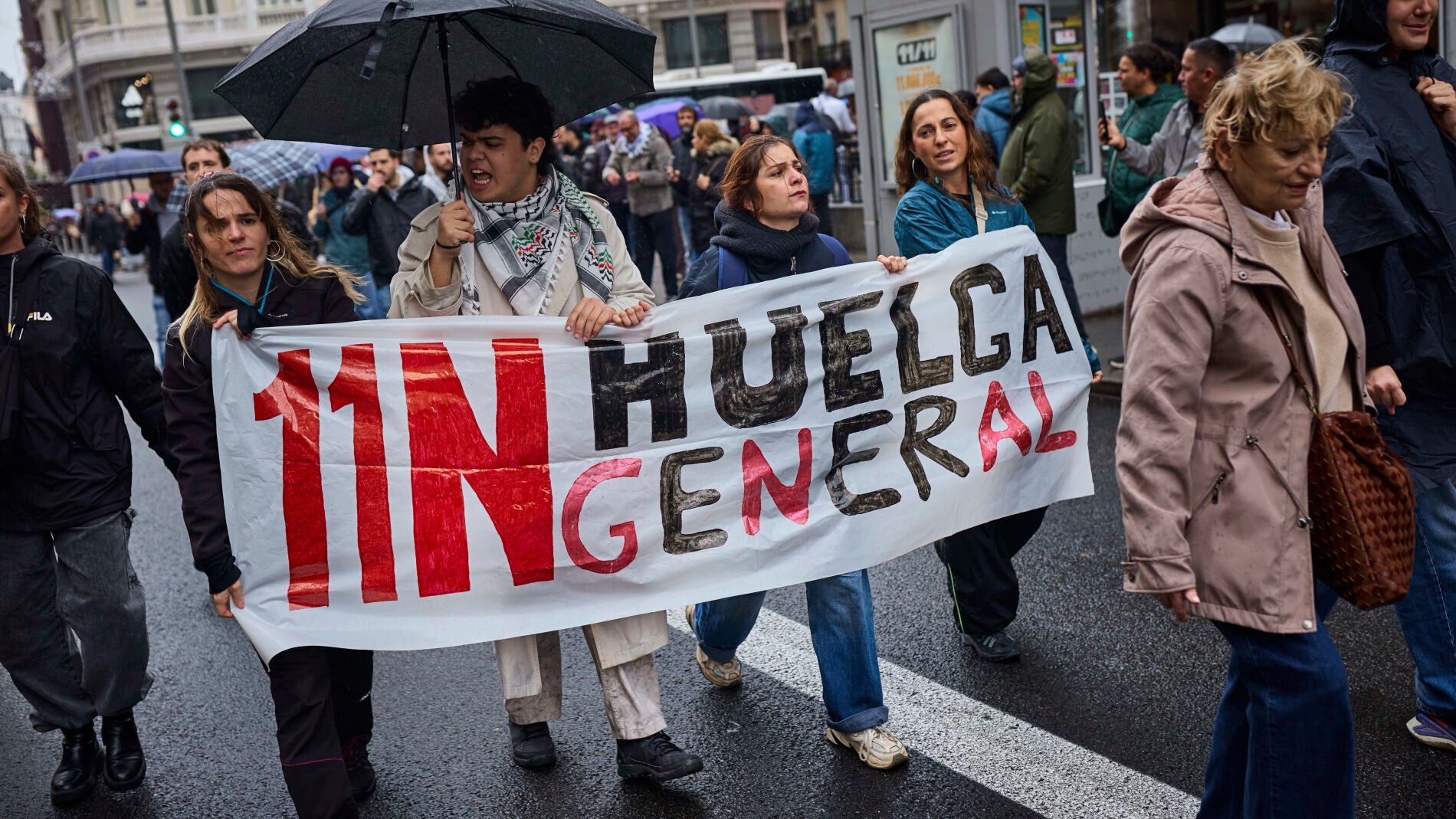
Despite street demonstrations, the strike had limited impact across Spain's long-distance transport networks. State airport operator Aena reported that it cancelled barely 5% of scheduled flights, while national passenger railway operator Renfe estimated employee strike participation at 6.8%.
Aena operates 46 airports and two heliports across Spain, serving as the backbone of the country's commercial aviation system. Renfe operates the national passenger rail network, running high-speed AVE services, intercity trains, and regional commuter lines that carry millions of passengers daily across the Iberian Peninsula.
De la Calzada concluded that employees navigating general strikes must remain proactive in communicating with managers and human resources departments. Clear documentation and timely written notices remain the most effective safeguards against unwarranted payroll cuts when industrial disputes disrupt the working day.