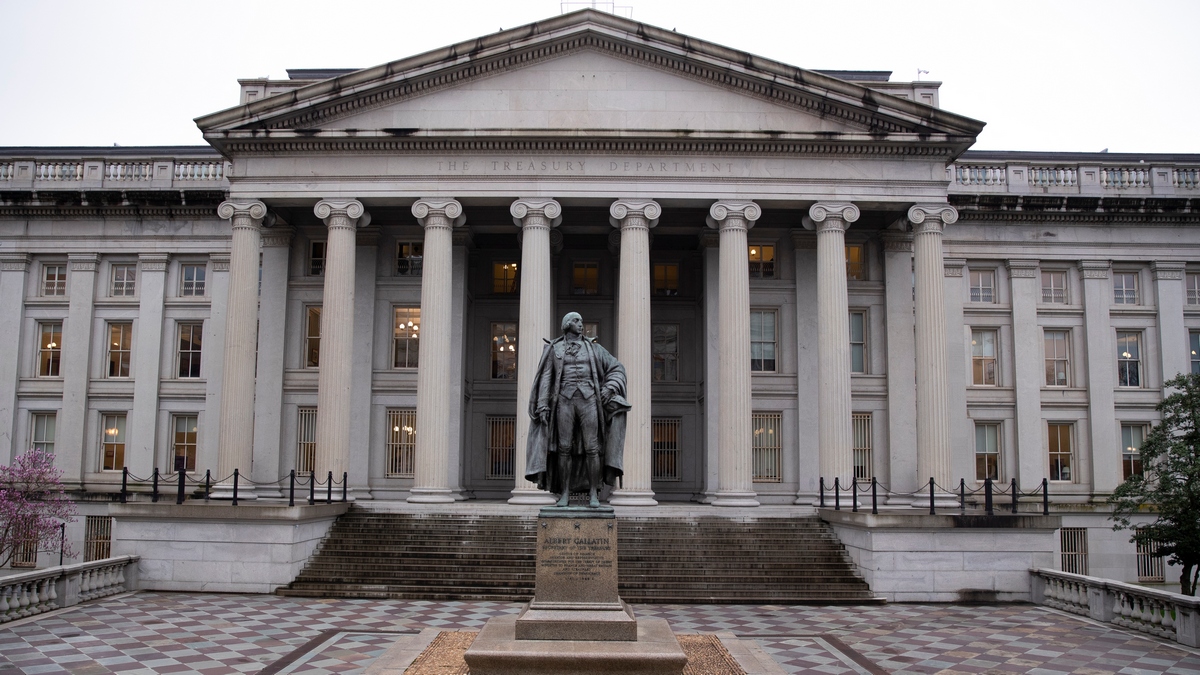
The United States Department of the Treasury borrowed $25 billion on Thursday, August 13, by selling 30-year bonds at a 5.216 percent yield. The rate represents the highest yield paid on the government's longest-maturity debt in a quarter of a century, according to NBC.
The yield on the new issue reached its highest level since 2001, when the Treasury Department stopped issuing super-long-term bonds. Federal officials later reversed that decision and resumed selling 30-year debt obligations in 2005.
The US Department of the Treasury is the federal executive agency responsible for managing government revenue, issuing sovereign debt, and financing federal budget deficits. Long-term Treasury bonds serve as a core benchmark for global borrowing costs and reflect investor expectations for long-term inflation and economic stability.
High borrowing costs for the American government are already straining the economy following years of elevated inflation and heavy public spending, Fortune reported. Yields on long-term bonds surpassed 5 percent earlier this year as investors grew concerned that rising energy prices would intensify inflation and force the Federal Reserve to maintain elevated interest rates for years.
Heavy supply volumes of government bonds and declining demand among traditional buyers of long-term debt have added to the upward pressure on yields. At the same time, corporate borrowing has surged sharply as technology companies seek capital to finance the artificial intelligence boom.
Producer Prices and Federal Reserve Rate Expectations
Despite the high auction yield, bond yields across all maturities fell by 2 to 3 basis points on Thursday following the release of US producer price data. The economic report indicated that wholesale inflationary pressures were easing.
Following the producer price report, market expectations for a Federal Reserve interest rate hike in September shifted. Financial traders now estimate the probability of a September rate increase at approximately 35 percent, down from 50 percent at the start of the week.
The Federal Reserve operates as the central bank of the United States, charged by Congress with maintaining price stability and maximum employment. It adjusts short-term benchmark interest rates to influence borrowing costs throughout the economy.
10-Year Bond Sales and Growing Federal Deficits
Interest payments on public debt remain a primary driver of the expanding US federal budget deficit. Since the start of the current fiscal year, interest payments on national debt have reached $1.17 trillion, representing a 15 percent increase due in part to higher Treasury yields.
Upward pressure on government borrowing costs was also visible on Wednesday, August 12, when a Treasury sale of 10-year bonds produced the highest yield for that maturity since 2007.
The mounting fiscal pressure comes as tariff policies under President Donald Trump hit the American economy in practice, according to the Kiel Institute for the World Economy. Calculations by the research institute show that foreign exporters absorbed only about 4 percent of the tariff burden, while American importers and consumers bore the remaining 96 percent.
Senate Budget Resolution and Federal Shutdown History
To avert a government shutdown ahead of the upcoming midterm elections, the US Senate passed a temporary budget resolution on August 8.
The most recent government shutdown occurred in early 2026, just 11 weeks after the end of a previous 43-day funding lapse. That earlier shutdown, which ran from October 1 to November 14, 2025, left hundreds of thousands of federal employees without pay for several weeks.
The federal budget deficit reached $432 billion in July 2026, setting a record for the month of July and marking the largest monthly deficit since March 2021, when pandemic economic support programs pushed the deficit to $660 billion.
Over the first 10 months of fiscal year 2026, the cumulative US budget deficit reached $1.799 trillion. That 10-month gap has already surpassed the $1.775 trillion deficit recorded for the entire 2025 fiscal year.