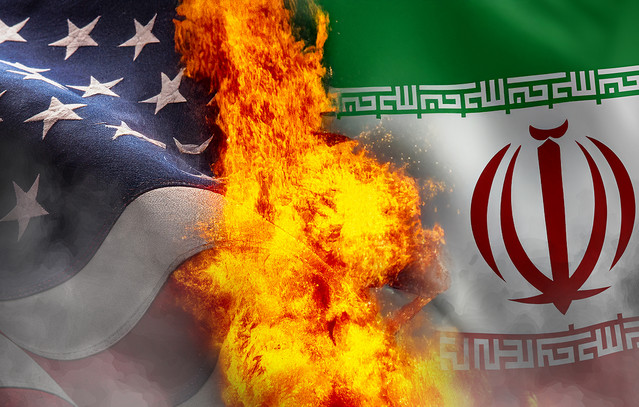
United States military operations in Iran have reached a six-month stalemate after joint American and Israeli strikes failed to force Tehran to surrender.
President Donald Trump had previously described the campaign as a brief excursion that would conclude within four weeks, but Washington is now shifting toward an economic pressure strategy after military action yielded no clear exit path.
US Secretary of State Marco Rubio told allies that new American attacks were unlikely for the time being, acknowledging that additional strikes would not compel Iranian concessions.
Political fallout in Washington
The prolonged conflict has damaged Trump politically, with public support for the President dropping from 40 percent to 33 percent since the start of the conflict, according to a poll by Reuters and Ipsos.
Overall approval for the war stands at just 31 percent. This is substantially lower than public backing for other recent American military engagements at a similar stage, such as the war in Afghanistan, which maintained approval ratings above 50 percent for years in Gallup polling.
Surging fuel prices have directly undermined Trump's 2024 campaign promise to reduce living costs for Americans. Although Trump campaigned on a platform of ending foreign conflicts, he argued that Iranian missile deployments and nuclear ambitions made military action necessary, though he has failed to convince a majority of voters.
Voter discontent over elevated prices presents a significant challenge for the Republican Party ahead of the November midterm elections, where Republicans must defend narrow majorities in both the House of Representatives and the Senate. The fighting has also widened a division between isolationist Republicans seeking a quick end to the war and party lawmakers who believe Trump must sustain military pressure on Tehran.
Global economic strain and resilience
The initial strikes by the US and Israel sparked immediate panic across international energy markets due to fears over the Strait of Hormuz. The 34-kilometer-wide waterway between Iran and Oman carries nearly one-fifth of global energy supplies.
Disruptions in the strait caused a sharp spike in crude oil prices and triggered fears of a global recession. While the economic impact has been significant, damage has proven less severe than many economists initially feared.
The International Monetary Fund cut its global growth forecast twice since the conflict began, and now projects the world economy to expand by 3.0 percent this year, down from the 3.3 percent growth predicted in January.
However, the global economy has shown greater resilience than during the oil crises of the 1970s. Modern major economies are less energy-intensive today, while high spending and capital investment, including ongoing development in artificial intelligence, have helped cushion the blow.
Iranian military damage and domestic impact
Six months of heavy bombardment have inflicted severe damage on Iran's armed forces and domestic economy, yet Tehran retains the ability to launch retaliatory strikes and keep the Strait of Hormuz closed.
In May, Admiral Brad Cooper, the top US military commander for the Middle East, informed Congress that American forces had destroyed 161 Iranian warships and neutralized 82 percent of Iran's air defense systems. Cooper added that the Iranian Air Force, which previously executed up to 100 sorties a day, no longer conducts flight missions.
Despite those losses, Iran retains an inventory of drones and missiles, which it has used to hit regional shipping and US military installations. In March, Reuters reported that US officials could confirm the destruction of only about one-third of Iran's missile arsenal, with sources telling the news agency that bombings likely damaged, destroyed, or buried remaining missiles inside underground tunnels and bunkers.
The war has killed thousands of people, deepened Iran's economic crisis, exacerbated inflation, and disrupted international trade. Data from the Iranian Statistical Center showed food inflation reaching 128 percent year-on-year in July. Nevertheless, the conflict has set aside political divisions in Tehran and triggered a harsher crackdown on domestic dissidents.
Regional instability across the Middle East
Although the US-Israeli campaign was intended to eliminate Iran as a regional threat, security analysts say the conflict has instead emboldened Tehran and rendered the Middle East less secure.
Iranian drone and missile strikes aimed at Gulf Arab states, which are key US allies, have struck American diplomatic and military facilities and caused major disruptions to air travel.
Iranian attacks on maritime traffic, combined with a Red Sea blockade enforced by Houthi forces targeting vessels linked to Saudi Arabia, have raised insurance and transport costs across the region. The impact has extended beyond individual ship attacks, disrupting commercial supply chains and increasing economic uncertainty for Gulf nations.
Status of the Iranian nuclear program
Preventing Iran from obtaining a nuclear weapon remains Trump's primary declared objective for the war. Joint US and Israeli strikes during an earlier operation in June 2025, along with the opening phase of the current conflict, heavily damaged three known Iranian enrichment facilities and factories suspected of weapons-related work. Israeli strikes also killed leading Iranian nuclear scientists.
US intelligence estimates in May calculated that Iran would need up to one year to produce sufficient fissile material for a bomb, up from a pre-war estimate of six months.
The true condition of the program remains uncertain because United Nations inspectors have not returned to Iranian nuclear sites. Since the 2025 strikes, the International Atomic Energy Agency has been unable to verify the location of approximately 440 kilograms of 60 percent enriched uranium, a stockpile that could potentially be enriched further at a secret site for weapons use. Iran continues to deny that it is seeking a nuclear bomb.
Strained US military readiness and stockpiles
The prolonged military campaign has taken a toll on US military hardware and ammunition supplies. A congressional report in May stated that 42 US military aircraft were lost during the conflict to enemy fire and accidents.
Ammunition reserves are a critical concern, with Reuters reporting that the military has used nearly all of its inventory of certain precision missiles. An estimate by the Center for Strategic and International Studies indicated that by July, the US had fired approximately 65 percent of its Patriot missiles and reduced its THAAD interceptor stock by at least 38 percent.
Washington has redeployed fighter jets, warships, and other assets to the Middle East from Europe and the Asia-Pacific region, stretching deployments and raising questions about military readiness in other regions.
The deployment of the aircraft carrier USS Gerald R. Ford lasted over a year, making it the longest continuous deployment since the Vietnam War. Lawmakers also raised concerns about conditions aboard the USS Abraham Lincoln after 200 consecutive days at sea. The USS Abraham Lincoln was replaced last week by another carrier from the Pacific, underscoring how the war is testing the limits of US armed forces.