


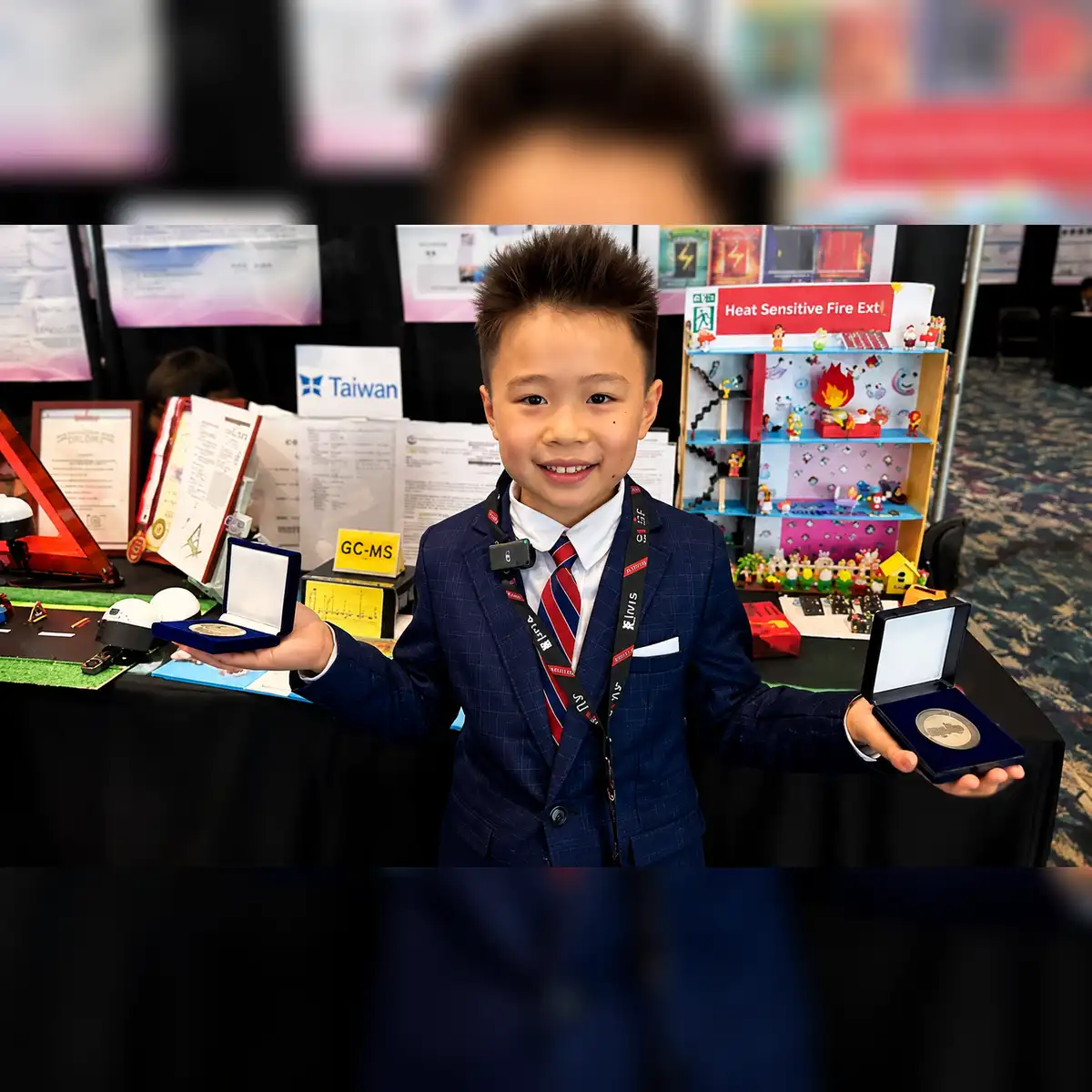
Ten-year-old Taiwanese student Hsu Ting-wei has won a gold medal at the Silicon Valley International Invention Festival for creating an artificial intelligence electronic nose designed to detect hidden airport contraband.
The Kang Chiao International School pupil also received the primary award from the International Federation of Inventors' Associations for his automated security system.
AI electronic nose technology
Hsu developed his intelligent platform under the name Novel Artificial Electronic Nose to conduct contactless security inspections in high-traffic transportation hubs.
According to the Taipei Times, the device integrates real-time air sampling with gas chromatography-mass spectrometry and a computational odor recognition system. The combined technologies process environmental air samples chemically to identify specific compound patterns associated with prohibited substances.
Gas chromatography-mass spectrometry is a standard analytical chemistry method that separates chemical mixtures and identifies individual molecules by measuring their mass. By pairing this laboratory technique with artificial intelligence algorithms, the platform can analyze vapor traces in seconds without physical contact.
Border security applications
The electronic nose is designed to operate directly alongside conventional X-ray machines inside airport passenger terminals. While traditional radiological scanners perform optical checks of luggage, Hsu's system adds an automated chemical analysis of ambient air surrounding the baggage.
Hsu said he hoped his invention would prevent the entry of pork products carrying African swine fever and assist United States authorities in intercepting illicit drugs such as fentanyl at international borders.
African swine fever is a severe viral disease that destroys domestic pig populations, while fentanyl is a potent synthetic opioid that presents major detection challenges at border checkpoints. Although the device earned top honors at the exhibition, current reports clarify that the prototype is not yet operating on a large scale within customs facilities or border points.
Silicon Valley awards and delegation record
Competition judges commended the project for offering practical solutions to real-world security challenges rather than presenting a simple academic concept.
Amin Ghafooripour, president of the competition jury, said the project left a very deep impression on the panel and justified its distinction through its practical applications.
Jury member Alireza Ghafooripour stated that the evaluation was not merely an encouraging gesture for a ten-year-old inventor, adding that the panel believed the invention held genuine practical value.
Hsu's award contributed to a historic result for Taiwan, whose delegation secured 24 gold medals, eight silver medals, and one bronze medal across 35 entries in general and youth categories. The tally represents the highest medal total achieved by the Taiwanese team since its debut at the event in 2018.
Matt Nuccio, a director of the festival, stated that Taiwan presented several excellent innovations, highlighting the strong performance of its young inventors. Event organizers noted that while the prototype demonstrated strong potential, its long-term effectiveness will require further testing outside the competition environment.


