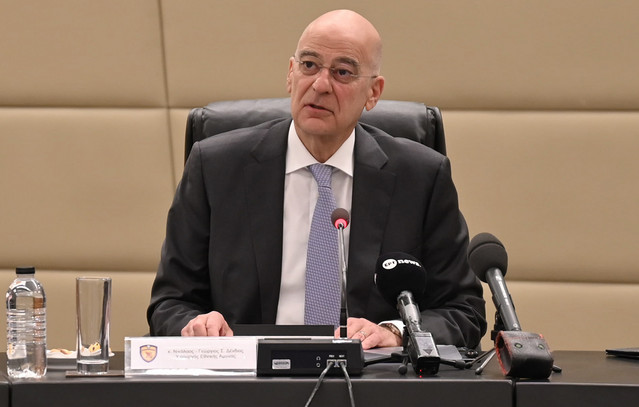
Deputy Minister of Development Stavros Kalafatis opened the European Clusters Meet Regions conference at the Athens Conservatory, presenting the Greek national strategy for research, innovation, and technological transformation.
Speaking before Attica Regional Governor Nikos Hardalias and European Commission official Anna Athanasopoulou, Kalafatis said that innovation-led sustainable growth served as an effective social policy that created resilient jobs and transformed brain drain into permanent brain gain.
He told attendees that research and innovation formed fundamental pillars of national and European strength, industrial resilience, and social cohesion.
The Clusters Meet Regions conference is a European Commission initiative designed to foster collaboration between regional authorities and industrial clusters across Europe. The event took place at the Athens Conservatory, a historic cultural institution located in central Athens.
Record spending on research
Outlining structural changes made under Prime Minister Kyriakos Mitsotakis, Kalafatis highlighted a record increase in research and development funding. Total national expenditure reached 3.66 billion euros, representing 1.54 percent of gross domestic product, a 67.7 percent rise compared to 2018 levels.
More than 300 million euros from the Recovery Fund is being channelled into modernising the building, digital, and scientific infrastructure of public research centres nationwide.
The Recovery Fund forms part of the European Union's pandemic recovery program, which allocates billions of euros to member states for green and digital initiatives. Research funding in Greece had historically lagged behind northern European averages following years of economic austerity.
Connecting science with industry
Kalafatis announced that 300 million euros is being allocated to the Research and Innovate program. Combined with targeted tax incentives for corporate research and development as well as artificial intelligence, the government aims to bridge the historical gap between academic research and commercial industry.
Institutional reforms have also been implemented, including the activation of the National Council for Research, Technology and Innovation, known as ESETEK, alongside specialized Sectoral Scientific Councils. Kalafatis described these bodies as a strategic compass connecting scientific research directly with market needs.
During the Greek debt crisis of the 2010s, hundreds of thousands of university graduates left the country in search of employment overseas, a phenomenon widely termed brain drain. The Greek government has launched various tax breaks and funding schemes in recent years to attract educated workers back to the domestic economy.
Regional expansion beyond Attica
Focusing on the main theme of the European conference, Kalafatis stressed that the national innovation strategy was polycentric. Attica remains the economic spearhead of Greece, generating 47 percent of national gross domestic product and hosting 12 of the country's 22 registered clusters.
However, Kalafatis emphasized that real innovation could not remain centralized. While Attica serves as the primary international gateway, its economic strength must multiply ecosystems across all 13 Greek regions.
He cited regional technology hubs in his home city of Thessaloniki, including the Thess INTEC technology park, as well as biotechnology ecosystems in Crete, green transition clusters in Western Macedonia, and emerging tech hubs in Western Greece and Epirus.
Thessaloniki is Greece's second largest city and a major economic center in northern Greece, home to the Thess INTEC project. Crete, the largest Greek island, hosts several prominent universities and research institutes specializing in computer science and biotechnology.
Attracting global talent and next steps
Kalafatis said Greece was no longer merely exporting scientific talent as it had in past years. Instead, he said the country was attracting young scientists, investors, and researchers, keeping skilled minds in Greece while exporting high-value technological solutions.
Closing his address, the deputy minister extended a direct call to action to Hardalias, Athanasopoulou, and participating European representatives. He invited them to build networks and reach agreements during the two-day event, emphasizing the importance of recording formal conclusions.
Kalafatis urged delegates to meet with him immediately after the conference to discuss turning their shared conclusions into actionable government policy.