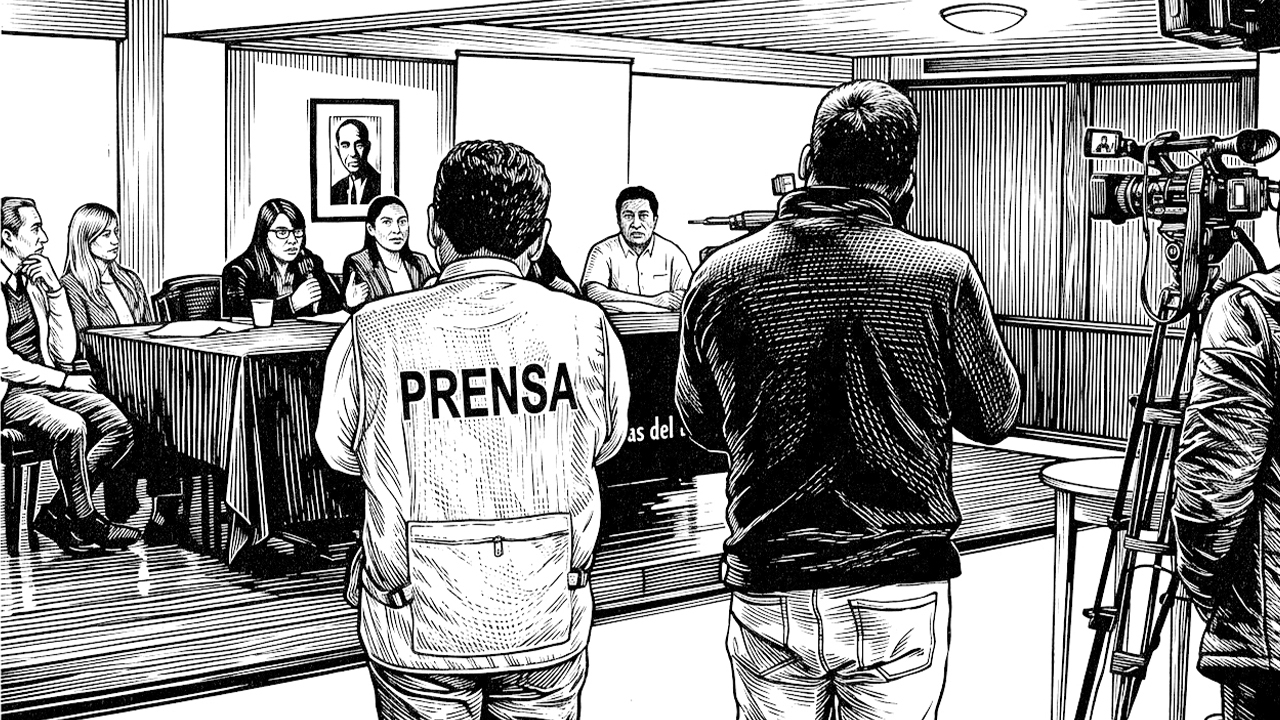
Spanish Cabinet ministers have delivered conflicting testimony to a Congressional committee over whether the government received advance intelligence regarding a massive border entry into Ceuta.
Minister of the Presidency Félix Bolaños supported Interior Minister Fernando Grande-Marlaska by stating that the executive received no prior information concerning the magnitude of the assault on the North African enclave.
The statement directly contradicted testimony given in the same parliamentary committee by Defence Minister Margarita Robles, who defended the performance of Spain's National Intelligence Centre during the border crisis.
Reporting on the parliamentary clash in the Spanish newspaper La Razón on Thursday, commentator Francisco Marhuenda stated that both ministers had prepared their statements in advance, ruling out media error or improvised remarks.
Dispute Over Intelligence Warnings
The dispute centers on warnings provided by the National Intelligence Centre, Spain's primary state intelligence agency, ahead of an influx of Moroccan migrants into Ceuta, a Spanish autonomous city located on the North African coast bordering Morocco.
Marhuenda noted that while Transport Minister Óscar Puente is known for outspoken social media commentary, Bolaños acted as a measured jurist by focusing specifically on the magnitude of the event. The columnist noted that intelligence agents would not provide an exact headcount, such as a hypothetical figure of 83,250 people, but would instead report an impending massive entry.
According to Marhuenda, the careful wording allowed Bolaños to defend Marlaska while simultaneously targeting Robles, who has faced criticism within the administration for not showing full personal loyalty to Prime Minister Pedro Sánchez.
Tensions Within the Cabinet
The public split has exposed severe internal friction within the Spanish government. Marhuenda described the administration's efforts to undermine Defence Minister Robles as an unprecedented spectacle, stating he could not recall a similar public breakdown within a Spanish cabinet since the nation's transition to democracy following the Franco dictatorship in the late 1970s.
The columnist argued that Robles should not risk her professional standing by aligning with what he termed unscrupulous mercenaries who merely echo their master's voice. He suggested that officials at La Moncloa, the official headquarters of the Spanish Prime Minister in Madrid, had sought to have Bolaños take a harsher stance alongside parliamentary spokesperson Patxi López and Marlaska, but Bolaños chose restrained language to avoid misrepresenting the facts.
Government Defense of Border Management
Marhuenda expressed greater confidence in career civil servants than in what he described as an unprincipled socialist-communist coalition government. He condemned ministers for delivering self-congratulatory speeches about their handling of the border influx, claiming the executive had managed the situation flawlessly.
The commentator added that the administration has effectively asked the public to treat media reporting of the crisis as imaginary, while continuing to promote Sánchez as an unmatched historical statesman.
Marhuenda is a professor of public law and history of institutions at UNIE University in Madrid. He is a full member of both the Royal Academy of Jurisprudence and Legislation of Spain and the Royal Academy of Doctors of Spain, as well as a corresponding member of the Royal Academy of History.