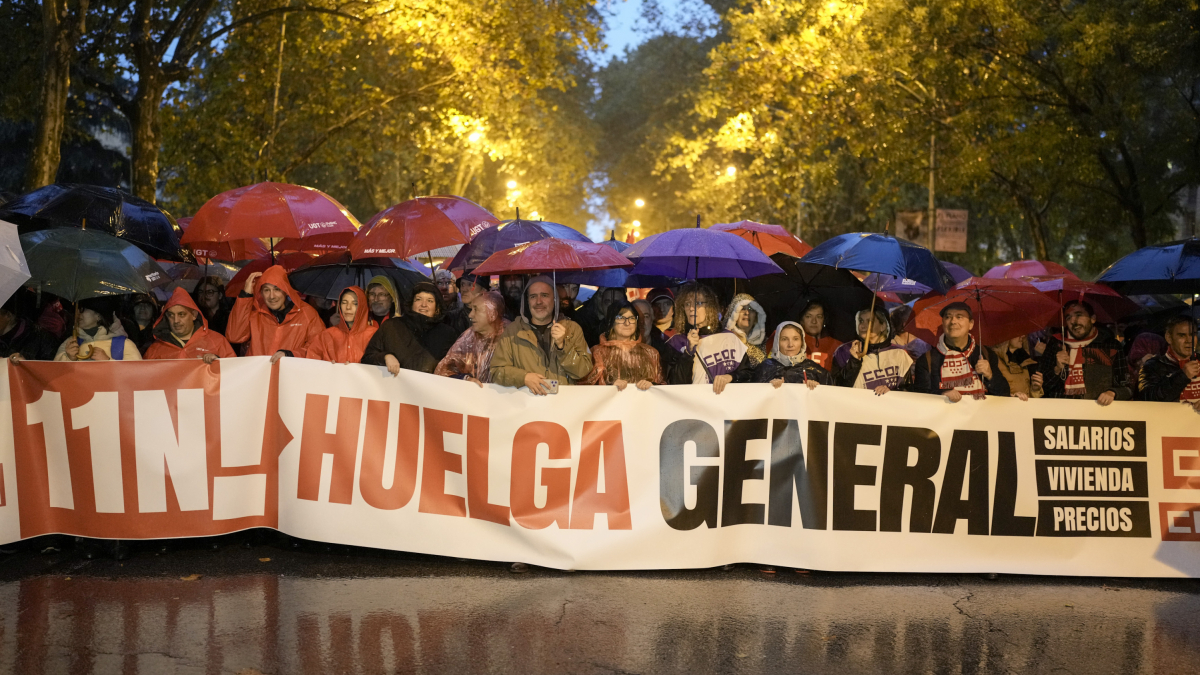
Spain's general strike on November 11 drew support from just 2% of banking sector employees, according to final figures released by employer associations CECA and AEB. Comisiones Obreras, the sector's largest trade union, put the real figure far higher, at 26.8%.
The gap between the two numbers underscores a pattern seen before in Spanish banking: staff tend to mobilise strongly for disputes that affect their own pay and conditions, but turn out in far smaller numbers for broader political or general strikes.
Banking is one of the most heavily unionised sectors among Spain's professional workforce, with a high proportion of staff affiliated to trade unions and a track record of walking out over workplace issues. Partial strikes called in 2024 during salary negotiations drew support from as much as 85% of the workforce in some regions.
A strike at CaixaBank last March, called to protest what organisers described as excessive commercial pressure and a serious deterioration in the working environment, shut as much as 90% of the bank's branch network, according to the unions that called it.
Transport disruption, not the strike, caused most delays
By contrast, participation in general strikes has traditionally stayed low in the sector, and November 11 was no exception. Turnout was even lower than in the general strike of March 2012.
Most of the disruption recorded at branches was linked not to staff walking out but to delays in opening caused by problems on public transport and road closures. In Barcelona, minimum transport services did not run, and for seven hours the metro, the city bus network, commuter rail lines and the Catalan regional government's railways were all paralysed.
Where branch participation was highest
Among branch staff, participation was highest in Catalonia, Andalusia, the Basque Country and the Canary Islands, according to union sources. Among employees at banks' central head office services, backing for the strike was minimal, and a very high proportion of staff chose to work from home that day.
Why banks expected a muted response
Human resources directors at Spain's largest banks had already anticipated low turnout. With around 170,000 employees across the sector, far more is at stake for staff in the upcoming negotiation of the next sector-wide collective agreement, covering the next three to four years, which is due to start between March and April and could run for months.
Union elections are scheduled for December 2 at CaixaBank, Abanca and most of Spain's former savings banks. At banks affiliated with the AEB employers' association and at Unicaja, those elections will be held in February.
Banks riding record profits into talks
Unions go into the talks from a strong starting position. The current agreement was negotiated at a time when Spanish banks were already posting record profits following a long period dominated by negative interest rates. The backdrop now is even more favourable: profits have kept rising, Spain is leading economic growth among the largest European Union economies, unemployment is below 10% and loan delinquency is at historic lows.
According to analysts' estimates, the six largest banking groups in the sector are set to earn a combined 38 billion euros in 2026, which would be the highest figure on record.
The pay rises already locked in
Banking employees have already received salary increases of 4.25% in 2024, 4% in 2025 and 2.75% in 2026, irrespective of whether they also received personal supplements, a distinction that employers have treated as a firm red line.
Unions previously secured a 4.25% rise to offset the loss of purchasing power caused by the sharp rise in inflation in 2022. That was an extraordinary measure that was written permanently into the salary tables rather than paid as a one-off.
Some banks added further benefits on top. Bankinter paid a flat bonus of 1,000 euros to staff, while BBVA raised its contribution to employees' pension plans by 48%.
What happens next
Negotiations on the next sector-wide collective agreement are due to begin between March and April and could run for months, while union elections take place on December 2 at CaixaBank, Abanca and most former savings banks, and in February at AEB-affiliated banks and Unicaja.
Test yourself
What participation figure did employer associations CECA and AEB report for the November 11 strike?
What mainly caused delays at bank branches on the day of the strike?
How much are Spain's six largest banking groups expected to earn in 2026, according to analysts?
Have your say
Do you think banking staff should prioritise sector-wide negotiations over general strikes?
Where it happened
Madrid, Spain