

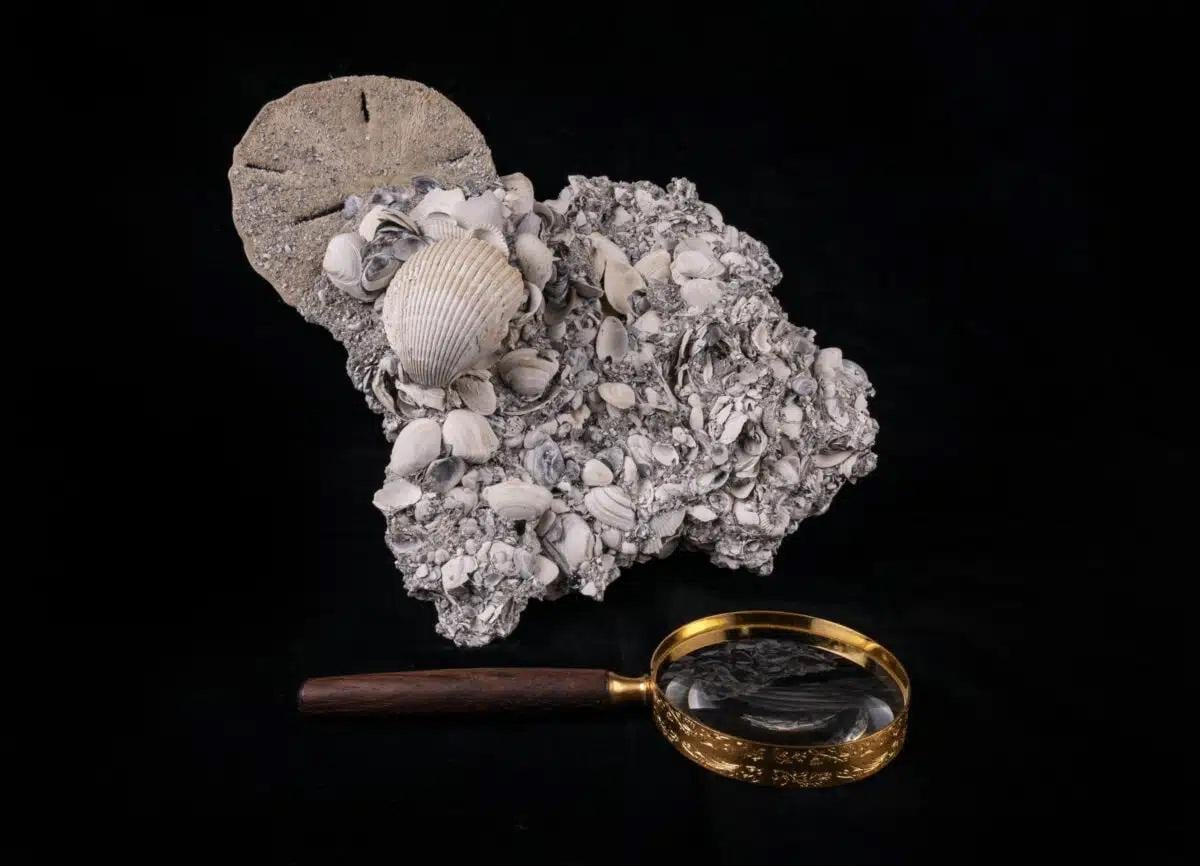
Scientists have spent two decades analysing more than 7,500 marine fossils to determine why remains from completely different eras are often buried together in the same rock layer, finding that the rate of sediment accumulation on the seabed is the dominant factor.
The Daily Galaxy reported that the phenomenon, known as time-averaging, makes it much harder for scientists to understand the history a rock layer tells when shells, bones and other remains from organisms living hundreds or thousands of years apart mix together.
Some fossil beds capture a single moment frozen in time, while others slowly accumulate remains over centuries, mixing different populations into what appears to be a single snapshot.
Daniele Scarponi, an associate professor at the University of Bologna, a public research university in Italy, said understanding the time period a fossil deposit represents must be achieved before interpreting it.
Scarponi compared some deposits to the ruins of Pompeii, the ancient Roman city buried quickly under volcanic ash to preserve a single moment, and others to a graveyard used by multiple generations, where remains from different eras slowly accumulate together.
He said both types of sites are useful to researchers but provide different types of data, making determining the degree of mixing a necessary first step before drawing conclusions from any fossil deposit.
Burrowing animals and decay
Time-averaging occurs for several reasons, including bioturbation, where burrowing creatures such as molluscs, shrimp, starfish, sea urchins, snails and worms mix sediment and skeletal remains.
One square metre of productive seabed can contain hundreds or thousands of interconnected tunnels.
The article noted that durability also plays a role, as most organisms do not survive long enough to fossilise before they decay or are scavenged.
Marine and terrestrial fossil records are largely made up of hard materials such as shells and bones, which also break down if they are not buried quickly enough.
Biological productivity is also a factor, as the number of fossils found at a site is closely linked to the number of organisms that initially lived and died there.
However, the research team found that none of these factors matched the impact of the sediment accumulation rate itself.
Decades of global collaboration
Gathering the evidence to test the theory was impossible for a single laboratory, as radiocarbon and amino acid dating are expensive techniques used to estimate the age of organic materials.
Most research groups can only afford to date a few dozen samples, falling short of the thousands needed to properly assess time-averaging on a global scale.
The project was made possible by an unusual coincidence, as research groups in Australia, Austria, the Bahamas, Brazil, Italy, Germany, Slovakia and the United States independently collected and dated fossils over many years using similar methods.
The teams did not initially realise how well their datasets would complement one another.
Michał Kowalewski, a co-author of the study and the Thompson chair of invertebrate paleontology at the Florida Museum of Natural History in Gainesville, said nothing on this scale had been done before because it was impractical.
He said the researchers were able to pool their data because many groups were working on similar topics and using similar methods.
Sediment rate drives fossil preservation
To determine the most significant factor, the team modelled the age distribution of fossils under different rates of bioturbation, sediment accumulation and fossil destruction, before comparing the models with the real age spread found in their radiocarbon-dated samples.
The research, published in the Proceedings of the National Academy of Sciences peer-reviewed journal, found that the sediment accumulation rate predicts the temporal resolution of fossil remains better than any other variable examined.
The faster shells or bones are buried under sediment, the less likely it is that the remains of multiple generations will be preserved alongside one another.
Rafał Nawrot, a paleontologist at the University of Vienna, a public research university in Austria, said he was still amazed by the time span a set of fossils collected from a single sedimentary layer could cover.
He said that in some cases, well-preserved fossilised organisms found next to each other could have lived hundreds or thousands of years apart.
Kowalewski said the result had exceeded all of their wildest dreams, adding that life sometimes turns out to be much more interesting than people think.
Montreal museum uncovers oldest crinoid
In separate archaeological developments, paleontologists have been stunned by a Crinoidea fossil found in a small museum in Montreal, Canada, that preserved soft tissues and delicate tube feet for 450 million years.
Crinoids, also known as sea lilies, are marine animals that make up the class Crinoidea.
Researchers at the University of Oklahoma said the discovery, which was made in the museum rather than in the field, is only the second crinoid specimen ever found with intact soft tissues, and is undoubtedly the oldest.



