Russia's prospective Bion-M No. 3 satellite will study cosmic radiation following its planned 2030 launch, state news agency TASS reported citing scientist Vladimir Sychev.
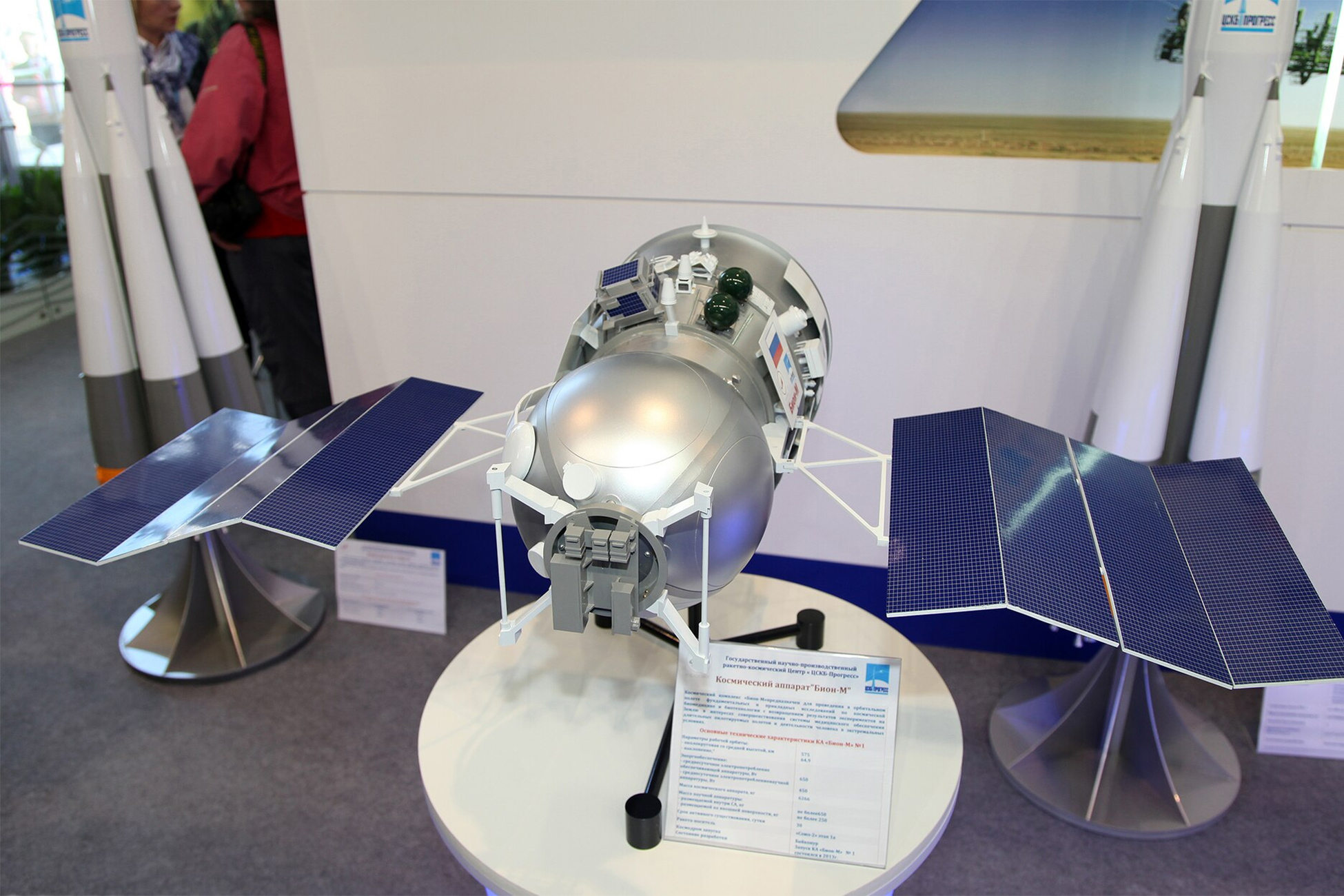
Sychev, chief scientific officer and head of scientific direction at the Institute of Biomedical Problems of the Russian Academy of Sciences, said the spacecraft is scheduled to enter an 800-kilometer polar orbit.
Sychev said the research is vital because cosmic rays, solar proton events, and their impact on the human body are key factors when planning long-term interplanetary crewed missions.
Previous biological satellite mission
In December, Russian Academy of Sciences Head Gennady Krasnikov reported that results from the Bion-M No. 2 biological satellite experiment made a significant contribution to world science.
The descent vehicle of Bion-M No. 2, which carried mice, landed in the Orenburg region in September.
Publication NSF noted that same month that Bion-M No. 2 was built using the Soviet Zenit reconnaissance spacecraft, an evolution of the Vostok craft that carried the first cosmonauts into space during the 1960s.