Peruvian Minister of Transport and Communications Rafael Rey has refuted claims by Lima Mayor Rafael Lopez Aliaga that imported American trains were donated to the capital city.
Rey stated during an interview with radio station RPP that the Metropolitan Municipality of Lima paid millions of dollars to California rail operator Caltrain for the locomotives and carriages brought to Peru. He emphasized that the transaction was a direct purchase rather than a charitable donation, directly contradicting assertions made by municipal authorities.

The minister explained that implementing a safe passenger rail service along the line connecting central Lima to the eastern district of Chosica requires substantial technical investment. He cited estimates indicating that necessary infrastructure upgrades for efficient operation would cost around 500 million dollars. Rey added that evaluating the technical viability of the railcars falls under the jurisdiction of Peru's Private Investment Promotion Agency, ProInversión, rather than the transport ministry.
Municipal council rejects minister statement
The Metropolitan Municipality of Lima issued a formal statement rejecting Rey's statements and denying that any municipal funds were used to purchase the rolling stock. City officials argued that the transport minister should review official technical documentation before issuing public comments that could confuse citizens.
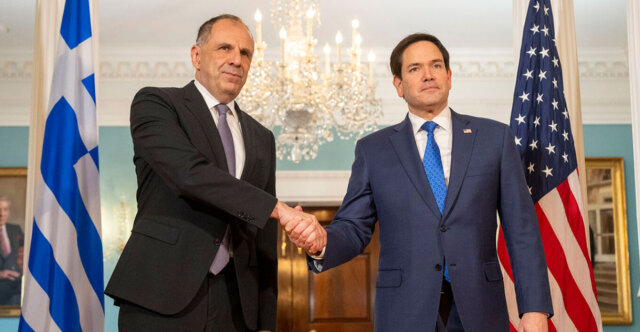
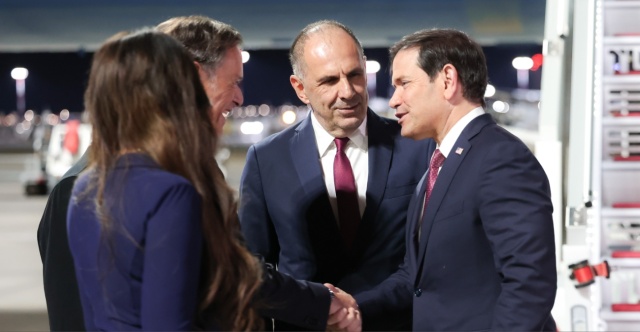
According to the municipal statement, the Peninsula Corridor Joint Powers Board, operating as Caltrain, is a United States government transport agency that transferred the equipment without cost to support the Lima to Chosica train project. Municipal representatives highlighted the direct involvement of high-ranking American officials and the US Secretary of State in facilitating the transfer, which the city defines as an act of donation.
The city administration also pointed to a legal review by Peru's National Elections Jury, stating that the electoral court analyzed the transaction and confirmed the municipal council acted within its legal authority when empowering Mayor Lopez Aliaga to handle the acquisition. To prevent misunderstandings that could impact bilateral relations with strategic international partners, municipal authorities called on the ministry to hold an urgent technical meeting to review project documentation.
Comptroller audit reveals multi-million dollar outlay
Despite public claims of a free donation maintained by municipal leaders including city official Renzo Reggiardo, official financial records detail multi-million dollar expenditures associated with the fleet. An investigative report by television program Punto Final in September of last year cited an internal audit conducted by the Comptroller General of the Republic.
According to the audit, the municipality's Office of Planning, Modernization and Financial Management calculated total project investment at 447,701,531 dollars, providing the financial justification for the municipal council to authorize the mayor to proceed with negotiations.
The project budget allocates nearly 24.5 million dollars to an initial acquisition and transport phase. That initial figure includes approximately 15 million dollars to transport the fleet to Lima, 2 million dollars for part removal, more than 5.4 million dollars for 93 passenger cars and spare parts, 1.06 million dollars for 20 locomotives, and 1 million dollars for early contract cancellation fees.
A second phase outlines a 30-year public-private partnership concession requiring an additional 423 million dollars in private and state funding to bring the passenger line into full service.
Former transport minister warned of safety risks
Questions regarding the operational readiness of the fleet predated Rey's tenure at the Ministry of Transport and Communications. Former Transport Minister Cesar Sandoval previously refused to approve operational transfers for the railcars, stating that strict administrative compliance and thorough technical evaluations were required before any service could begin.
Sandoval stated during his term that while he did not oppose rail development, launching operations under existing conditions posed severe safety hazards. He noted that the route lacked double tracking, four required stations, designated passenger stops, proper signaling systems, and safe level crossings.
The former minister stressed that citizen safety could not be guaranteed without comprehensive infrastructure upgrades and publicly called on Mayor Lopez Aliaga to approach municipal transit projects with greater responsibility and seriousness.
Inspectors find rusted parts and structural flaws
Municipal leaders originally celebrated the arrival of the train fleet at the port of Callao on July 12, 2025, presenting the delivery as an unprecedented historic gift from the United States. During the official reception, Mayor Lopez Aliaga stated that equipment he previously inspected in Stockton, California, had arrived in perfect condition following a successful logistical operation.
However, physical inspections conducted by newspaper La Republica following a public display on July 14 revealed widespread structural deficiencies across the fleet. Railcars stored out of public view in Callao warehouses and at the Monserrate station of the Ferrocarril Central Andino reflected their more than 40 years of service.
Journalists documented rusted wheel assemblies known as bogies, oxidized chains and bolts, extensive cobwebs, and bird nests inside retired equipment. Interior inspections revealed low ceiling heights on the lower level that could cause head injuries to average-height passengers, no designated luggage storage, and narrow staircases to the upper deck that would severely hinder emergency evacuations.
California pollution rules threatened train destruction
An investigation by news outlet La Encerrona revealed that the diesel locomotives brought to Lima were originally scheduled for destruction in California due to high pollution levels. In 2015, Caltrain participated in the Carl Moyer environmental program, receiving 20 million dollars in public subsidies to replace its aging diesel fleet with electric trains.
Under the terms of the environmental subsidy, Caltrain was legally required to decommission and permanently scrap the old locomotives due to their environmental impact, setting a mandatory destruction deadline of September 2024 at the latest.
To avoid dismantling the units and enable their export to Peru, officials from the United States Department of State, the Department of Commerce, and the US Embassy in Lima intervened with California environmental regulators. Following a virtual conference in October 2024, the California air supervisory agency approved a contract addendum on November 6, 2024, waiving the destruction requirement and permitting the fleet's transfer to Lima under diplomatic assurances of public benefit.