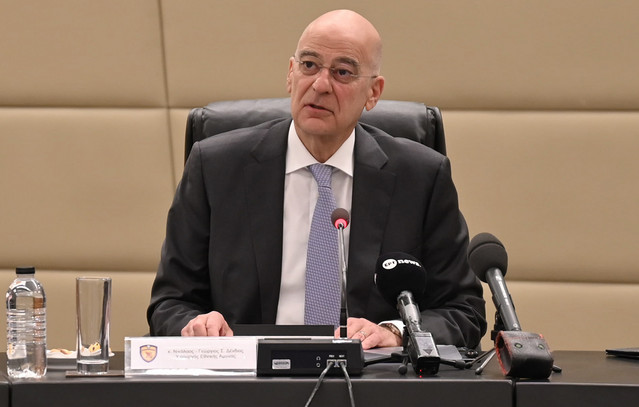
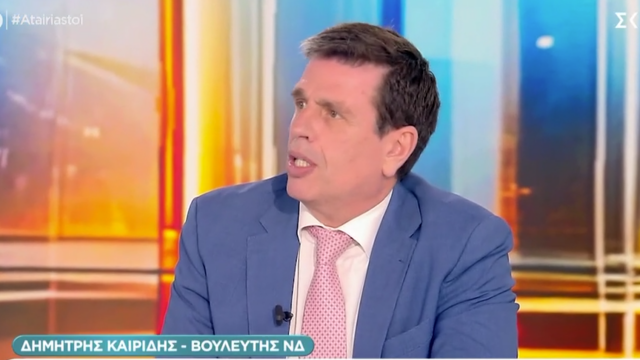
Thanos Plevris, Greece's Minister of Migration, said he knew Ilias Theodoropoulos, the doctor at the center of the investigation into the death of Giorgos Mazonakis, in an interview with Action 24 on the evening of Monday, September 14.
Plevris explained that he had come into contact with the doctor because of a serious health problem he had faced in the past. He said he knew the doctor accused over Mazonakis's death because of his own health ordeal, adding that he knew him in his capacity as an internist and haematologist.
How he met Theodoropoulos
Plevris said that during the period when he was dealing with a serious health issue and his blood test results were showing problematic values, he had consulted several doctors seeking medical guidance. He said Theodoropoulos was one of them.
He clarified, however, that the doctor had not prescribed or recommended any specific treatment for him. According to the minister, Theodoropoulos's involvement was limited to dietary advice linked to the results of his tests.
The phone call that never happened
Plevris revealed that after news broke of Mazonakis's death, he tried to contact Theodoropoulos to find out more about what had happened.
The conversation never took place, he said, because the doctor did not want to speak with him, and in the end there was no contact between them.
"They will obviously have to answer"
Plevris placed particular emphasis on the part of the investigation concerning inspections and the possible responsibility of those involved. He said it needed to be established whether all required procedures had been followed and whether the necessary checks had been carried out.
He also referred to the change in the charges, in particular the question of possible intent. He said those involved would obviously have to answer for the equipment they had, noting that the charges had already been upgraded to include possible intent.
He said the weight of the investigation should fall on establishing the actual facts, the equipment that was used, and whether the responsible authorities carried out the oversight they were required to.
The conference and Ioanna Gaka
Plevris also addressed his participation in a conference that was also attended by the doctor Ioanna Gaka, seeking to clarify his relationship with the event.
He rejected the suggestion that participants had been together, listening to one another's presentations, pointing out that the conference had a hybrid format. He said the impression that had been given, that they were present together at a talk, did not hold up, since the conference was hybrid: they gave their own presentations, after which 15 professors from the National and Kapodistrian University of Athens and about 20 doctors from abroad spoke.
Plevris said he did not personally know Ioanna Gaka, who has also been linked to the case under investigation.
"We need to deal with reality"
Plevris argued that public debate should not focus on whether political or other figures had social acquaintances or phone contacts with those under investigation.
Instead, he said, what needs to be established is whether the responsible officials did what was required and whether there is specific responsibility for failures in the checks. He said this needed to be said because they needed to face reality: to be held accountable for whether proper checks were carried out, not for whether people spoke socially or by phone.