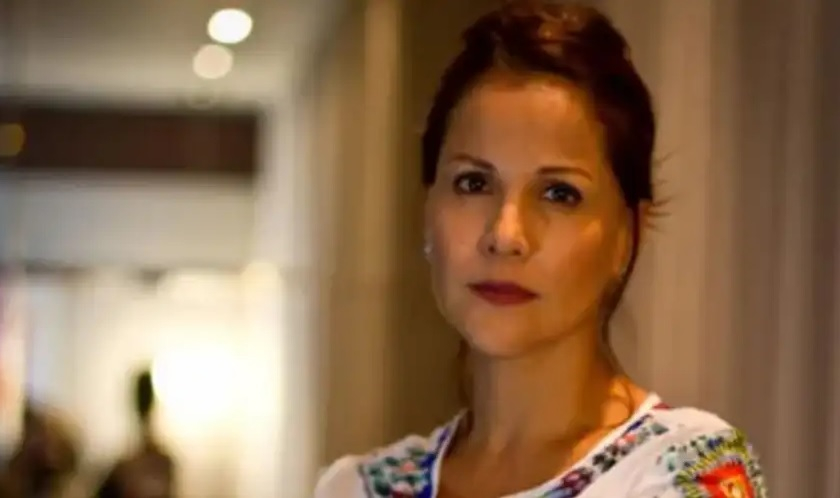
Peruvian actress Mónica Sánchez helped organize the first public forum against a recently enacted law creating a mandatory artists' college, bringing together filmmakers, theater performers and opposition senators and deputies to push for its repeal.
The forum, held this month after the law's promulgation, also drew former Attorney General Delia Espinoza, who now leads the Lima Bar Association. Former congresswoman Susel Paredes submitted a repeal bill to deputy Indira Huilca at the event.
Sánchez said her expectations lay with whatever leadership might emerge from the opposition. She described a right-wing tendency and an inclination toward authoritarianism, saying there was a clear announcement of restrictions on freedoms. She noted the pattern was not tied to a single political color, pointing to Peru Libre and Fujimorismo as having been close partners in the recent political season.
On the broader climate, Sánchez said the main risk was that what had long been informal and under the table was now being institutionalized, citing changes affecting policing, public demonstrations, human rights and now culture. Several filmmakers have said the situation is harder than it was in the 1990s.
A fragmented workforce
Sánchez described Peru's artistic workforce as fragmented and precarious. She said only 5 to 10 percent of artists had stable employment, while the majority worked informally with unstable incomes, facing the same uncertainties as millions of other Peruvians. She said building a unified front across ideological differences required finding a shared energy in the middle of that frustration.
On the risk that some artists might register with the new college rather than wait for repeal, Sánchez said the law's underlying purpose was an attack on freedom, covering content regulation and restrictions on access to public spaces. She called for solidarity around what she described as non-negotiables, with freedom being one of them.
Fear as a political tool
Sánchez said the forums should continue even if the law were eventually repealed, and called for more mature labor representation. She argued that guild organization should not make artists feel guilty or overly political, and that this needed to be understood not only by employers but by the state and public servants.
On public criticism of artists who participate in protests, Sánchez said fear had been deliberately installed as a political tool. She said fear and guilt were the two weapons that paralyzed people, and that an imaginary threat was being kept alive while those in power steadily eroded rights.