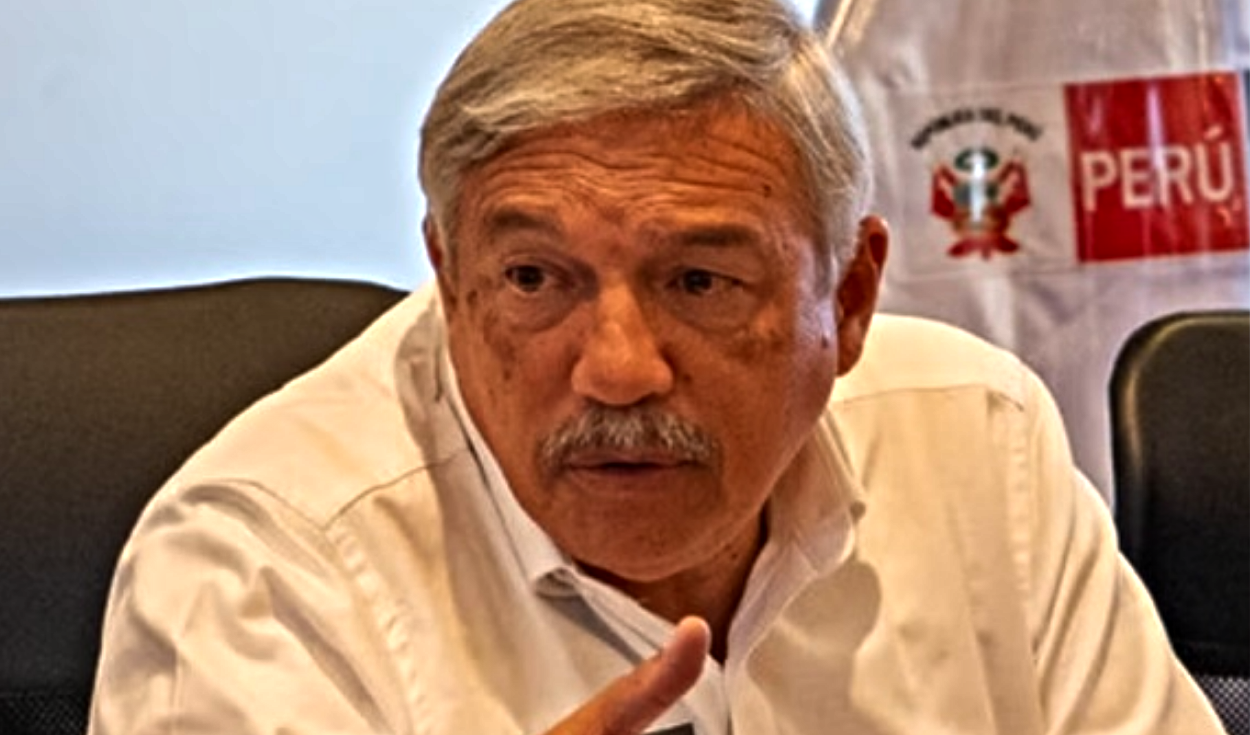
Peru's Public Prosecutor's Office has requested a 10-year prison sentence for Culture Minister Alberto Beingolea, accusing him of aggravated collusion over a 2019 contract awarded by the Regional Government of Callao, known as GORE Callao.
The First Permanent Preparatory Investigation Court of Callao has ordered an oral trial against Beingolea, ruling there was enough evidence to send the case forward. The decision was revealed by journalist Diego Casimiro of the news outlet Infobae, who obtained the court document.
The Specialized Provincial Corporate Prosecutor's Office for Corruption Crimes of Callao is seeking the 10-year sentence, along with 13 years of disqualification from holding public office and a fine of 550 days' income. Callao's Specialized Public Attorney's Office for Corruption Crimes is separately seeking 50,000 soles in civil damages.
Allegations Over a 2019 Legal Contract
The case dates back to 2019, when Beingolea allegedly worked with officials at GORE Callao to arrange his own contracting and payment for legal advisory services that, according to the prosecution, were never effectively delivered. The regional government paid him 30,000 soles under that service order.
According to Infobae, prosecutors argue Beingolea failed to provide documentary proof of the academic qualifications and experience required under the contract's terms of reference. They also contend that the three legal reports he submitted were either too generic or fell within the responsibilities of other legal departments inside the regional government.
Beingolea has maintained that the work was carried out, saying he holds sealed reports, visit records and witness testimony to back his account.
Defense's Failed Bid to Dismiss the Case
Beingolea's legal team tried two separate strategies to keep the case from reaching trial, according to Infobae. His lawyers asked for the case to be permanently shelved, and separately argued that even as described, the alleged facts could not amount to the crime of collusion.
In the dismissal request, the defense argued there were no communications, meetings or witnesses proving deliberate collusion, and that any irregularities found amounted at most to administrative errors. It also said Beingolea had no role in the internal stage of the contracting process.
The court rejected the dismissal request, a decision upheld by Callao's Criminal Appeals Chamber. The chamber said that in collusion cases, proof of coordination does not need to be direct and can instead rest on circumstantial evidence, including contracting records, an internal control report, an accounting expert's report and statements from regional councilors.
A second appeal from the defense was also rejected. Judges ruled that its arguments concerned questions of substance that belonged in the oral trial itself, not at this stage of the process.
What Happens Next
Beingolea appealed the indictment order, Infobae reported, but his lawyer failed to log into the hearing held last week to address that appeal.