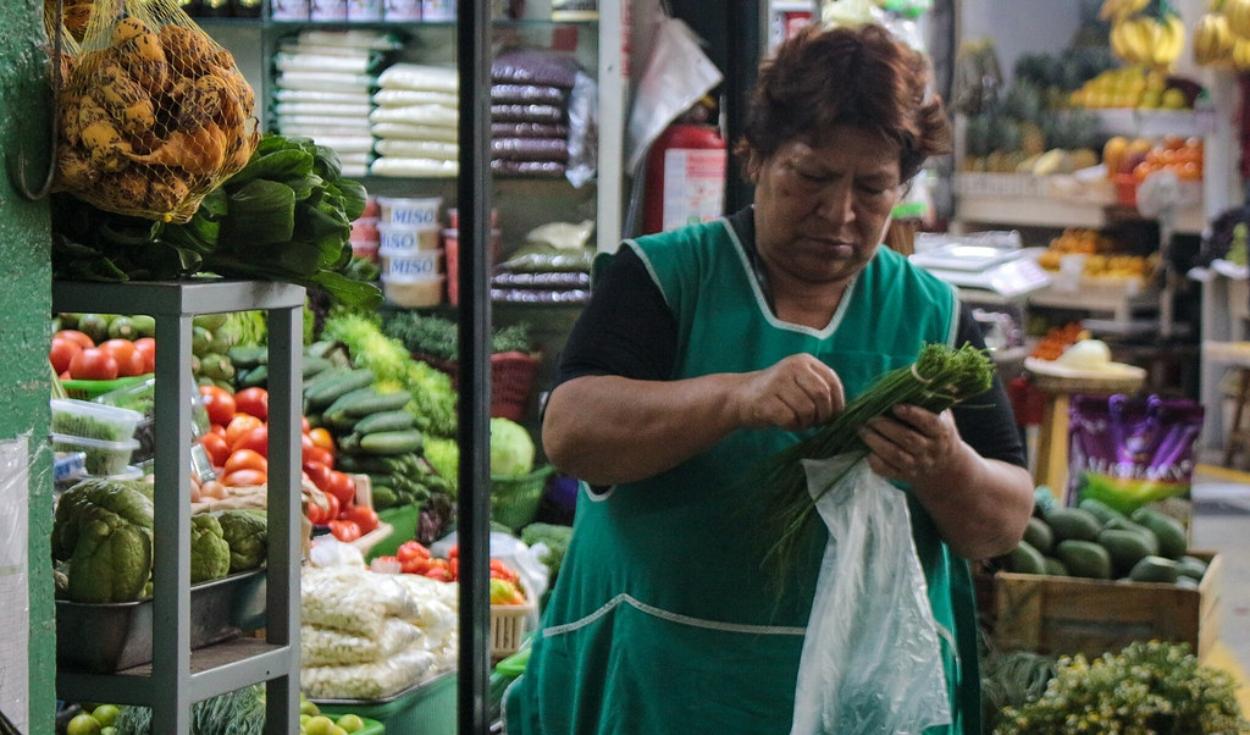
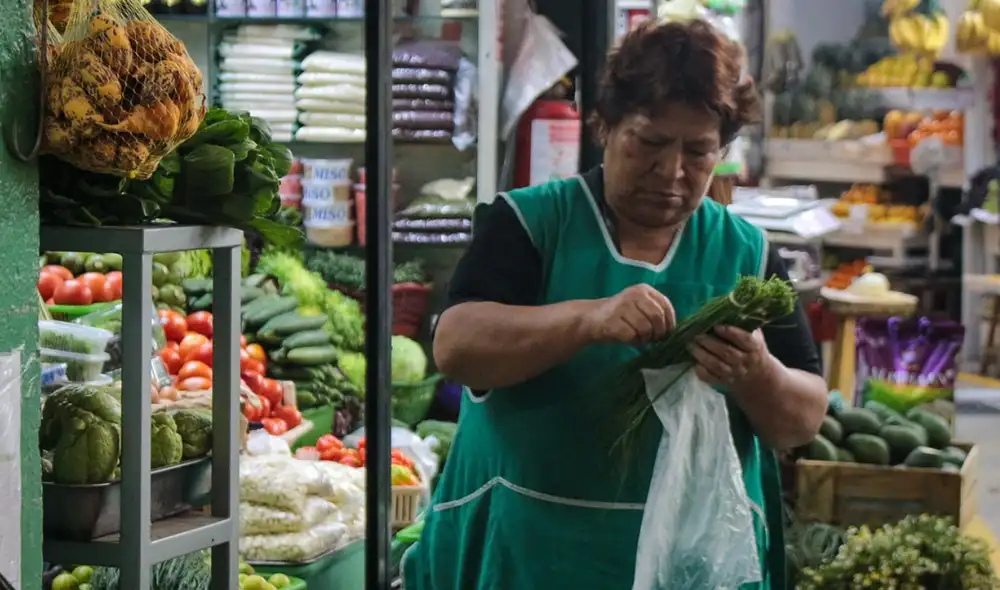
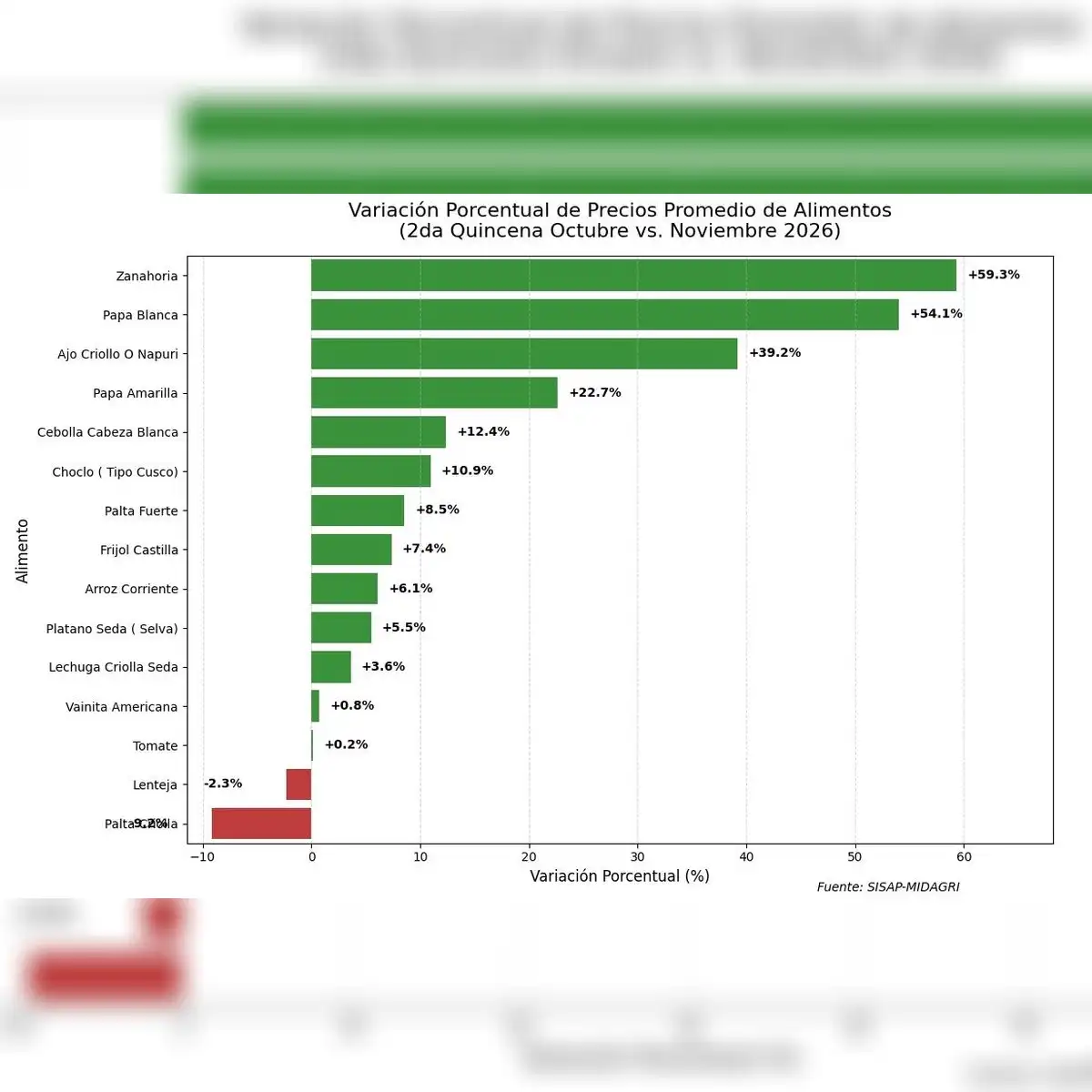
Food prices in Lima are rising sharply, with wholesale carrot prices up 59.3% in November and white potato prices up 54.1% compared with the second half of October, according to data from the Supply and Price Information System (SISAP) run by Peru's Ministry of Agrarian Development and Irrigation (Midagri). Producers and economists are warning of a risk of shortages and hunger among the country's most vulnerable families.
The price increases extend to other everyday staples. White onions rose 12.4%, Cusco-type corn climbed 10.9%, avocados increased 8.5% and Castilla beans went up 7.4%, according to the same data.
The figures reflect wholesale prices rather than what shoppers pay at the market, but the increases point to greater pressure on food costs ahead, particularly for households that spend a large share of their income on food.
Lower output and higher transport costs drive prices up
The rising cost of everyday food items stems from lower production volumes, temperatures affecting crops and higher transport costs, according to the report.
Eduardo Zegarra, an economist and principal researcher at the policy research group GRADE, said the scale of the price rises already amounts to an emergency, because the issue is no longer just how much certain products cost but whether families can access them at all.
Zegarra told the newspaper that the scale of the increase was so severe that even if it proved temporary, it was very serious, adding that a huge number of families were struggling to buy food.
Luis Cruz Cuadros, manager and spokesperson for the Peruvian Agricultural Convention (Conveagro), pointed to several factors behind the increases, saying one of the main ones was freight and fuel costs. He said, however, that the factor that had affected prices the most so far was the shift in temperatures.
Excessive heat and sharp temperature swings have stopped some crops reaching their usual output, Cruz Cuadros said. High temperatures stress plants, cause flowers to drop and hinder pollination, a process crops need to develop fruit. The heat also helps pests spread, damaging harvests further.
Cruz Cuadros named corn, carrots and tomatoes among the crops affected. He added that damaged rural roads are also making it harder to get produce from farms to market.
The Conveagro spokesperson also warned that overall supply figures can mask shortages of specific products. Daily arrivals at the Great Wholesale Market of Lima, in the Santa Anita district, remain between 8,000 and 10,000 tonnes, he said, but that does not mean every food item is arriving in the same quantities as before.
Farmers warn of lower potato supply in 2027
Producers are increasingly concerned about the coming months. Cruz Cuadros said the main agricultural season, when planting is concentrated between August and September, has already suffered a significant setback.
He said this large planting season could not go ahead as planned, with Conveagro estimating a shortfall of around 40%, and that the effects would become visible when this planting should be harvested, in January and February.
Conveagro believes the country has not yet faced the most difficult scenario arising from this disruption to production. Zegarra agreed there is no certainty about how long prices will stay elevated, but warned that falling purchases could create a further problem: when consumers stop buying food because of high prices, some traders respond by bringing in smaller quantities, which worsens shortages and pushes prices up again.
Calls for an emergency food bonus and support for farmers
Zegarra called on the government to introduce protective measures for lower-income households. Around a quarter of Peru's population lives in monetary poverty, he noted, meaning rising food prices could threaten even their ability to meet basic food needs.
He proposed using the country's contingency fund to finance an emergency food bonus for families living in poverty, with particular attention to those in extreme poverty. He also said Midagri should introduce more detailed monitoring of prices and the volumes of each product reaching markets, to identify where supply problems are emerging and which foods need priority attention.
Conveagro, for its part, proposed working-capital credit for farmers who can still plant, promoting crops with shorter growing cycles, and identifying areas where production could be increased for foods whose supply may fall. The organisation also called for state food reserves to be built through advance purchases of non-perishable products, and for imports to be considered to cover any shortfalls.
Community kitchens also feel the strain
The problem is also hitting comedores populares and ollas comunes, Peru's community soup kitchens. Cruz Cuadros said these organisations are already struggling to maintain their usual purchases, with some buying almost half the volume of food they bought before.
The price rises threaten not only household budgets but also the amount and variety of food reaching people who depend on these community programmes. Any government response, the report said, will need to address production and supply alongside the purchasing power of the most vulnerable sectors.
What happens next
Producers expect the effects of the roughly 40% shortfall in this year's main planting season to become visible when that crop is due to be harvested in January and February.
Test yourself
By how much did wholesale carrot prices rise in November, according to Midagri data?
Which organisation represents producers and estimated a 40% shortfall in the main planting season?
What did community soup kitchens report, according to Luis Cruz Cuadros?
Have your say
What do you think is the best way to address Peru's rising food prices?
Where it happened
Lima, Peru