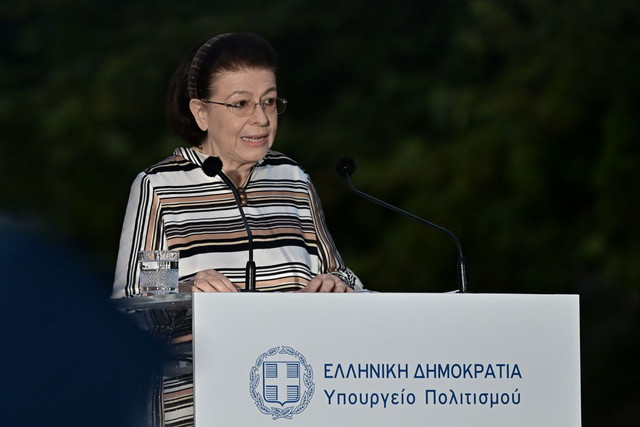
Greek Culture Minister Lina Mendoni stated that the Parthenon Sculptures will return to Athens, pointing to progress in dialogue with the British Museum.
Speaking on the ERTnews Radio program Proines Diadromes, Mendoni declared that the reunification of the classical Greek sculptures in their historic home is only a matter of time.
Progress in dialogue with the British Museum
Mendoni emphasized that the largest steps toward mutual understanding between Greek authorities and the British side have taken place in recent years. She noted that official dialogue with the British Museum has resumed after many years, bringing an end to an embargo on formal exchanges that Greece first instituted in the 1980s. Dialogue produces concrete results, she explained, adding that significant steps have already been achieved.
The minister highlighted a major shift in British public opinion, which she described as overwhelmingly supportive of returning the ancient artifacts to Athens. Conservative media outlets in London, including The Times newspaper, which historically favored retaining the sculptures in the British Museum, have reversed their long-standing stance to advocate for reunification. Mendoni observed that major museums across the globe are increasingly returning cultural treasures to their countries of origin after 40 years, aligning with a 2021 decision by UNESCO that formally recognized the justice of the Greek request and urged both sides to resolve the issue. She added that international museum ethics, as codified in regulations and principles of the International Council of Museums, strongly favor restitution.
Despite ongoing discussions, Mendoni affirmed that Greece will not deviate from its primary red lines. The Greek government refuses to recognize British legal ownership, possession, or custody over the sculptures, and will not accept any arrangement structured as a loan. She explained that accepting a loan would indirectly acknowledge British ownership of the marbles. Greece remains steadfast in its position while pursuing resolution through cultural diplomacy and dialogue, noting that while it would be frivolous to expect a resolution tomorrow or the day after, the eventual return of the sculptures is certain.
Bilateral agreement with Bulgaria for historical relics
Addressing other major diplomatic developments, Mendoni detailed a historic bilateral agreement signed between Greece and Bulgaria. Under the agreement, Bulgaria will return 48 looted ecclesiastical relics to Greece, while Greece will hand over the mortal remains of Tsar Samuel to Bulgaria. Mendoni described the deal as a vital step for two neighboring, friendly nations seeking to heal historical wounds that linger from past regional conflicts.
The agreement addresses the theft of precious religious and cultural treasures seized from monasteries and Metropolises across Greek Macedonia following the Balkan Wars and during World War II. Mendoni recalled that formal discussions regarding the recovery of these stolen items date back to peace treaties signed after World War I. While Bulgarian authorities sought the return of Tsar Samuel, who ruled the First Bulgarian Empire in the late 10th and early 11th centuries, Greek negotiators formally raised the return of the looted Macedonian relics 51 years ago. The newly signed memorandum of understanding covers the first phase of the restitution process without compromising any remaining Greek legal rights, setting the framework for continued bilateral negotiations where both sides hold their respective positions.
Mendoni also responded to domestic political criticism regarding the Bulgarian agreement raised by former Greek Prime Minister Antonis Samaras, who led the conservative government from 2012 to 2015. She defended the outcome by stressing that the primary objective of Greek cultural diplomacy is securing the return of stolen heritage. Mendoni noted that negotiations conducted under the previous Samaras administration yielded no returned items whatsoever. She questioned whether critics would prefer to receive zero relics back rather than securing the initial return of 48 or 55 historical items, reiterating that cultural diplomacy plays a decisive role in building functional bridges between neighboring states.
Strategic plan for the Kerameikos archaeological site
Turning to domestic heritage management in the capital, Mendoni outlined ongoing enhancements at the Kerameikos archaeological site in Athens. The project forms part of a broader strategic master plan by the Culture Ministry to protect, restore, and improve public accessibility across historical monuments, archaeological sites, and museum spaces throughout Greece.
The minister explained that targeted restoration efforts at Kerameikos are designed to help local citizens and international visitors better comprehend the ancient historical landscape. Located northwest of the Acropolis, Kerameikos served as the primary cemetery and potter's quarter of ancient Athens. Mendoni noted that Athens, like Rome, possesses a major comparative advantage in its prominent archaeological landmarks. When properly integrated, these sites showcase the unbroken continuity of Greek culture from prehistory to the modern era. The ongoing policy at Kerameikos includes upgrades to antiquities displays alongside the establishment of an expanded site museum, a dedicated sales shop, and visitor refreshment facilities.
Cultural preservation projects across Thessaloniki
Mendoni also revealed upcoming cultural preservation projects in Thessaloniki, Greece's second-largest city and the capital of the Central Macedonia region. The city possesses an extensive cultural heritage spanning ancient Greek, Roman, Byzantine, and modern historical periods. Mendoni reported that major restoration projects have already been completed across the city's Byzantine monuments, with ongoing structural work progressing at the Church of Agios Dimitrios. Built over an ancient Roman bath complex, the 5th-century basilica is dedicated to Saint Demetrius, the city's patron saint. Mendoni stated that the monumental value of Agios Dimitrios to Thessaloniki is directly comparable to the significance of the Acropolis to Athens.
Additionally, Mendoni announced that a specialized architectural lighting project for the White Tower, a prominent 15th-century waterfront fortification, will be completed before the end of the year. The White Tower illumination forms part of a wider initiative to illuminate the Byzantine walls of Thessaloniki, recognized as one of the most important surviving urban fortification networks in Europe. Funded through a private donation in partnership with the Ministry of Culture, the fully illuminated city walls will be formally delivered to the public by the end of January.