

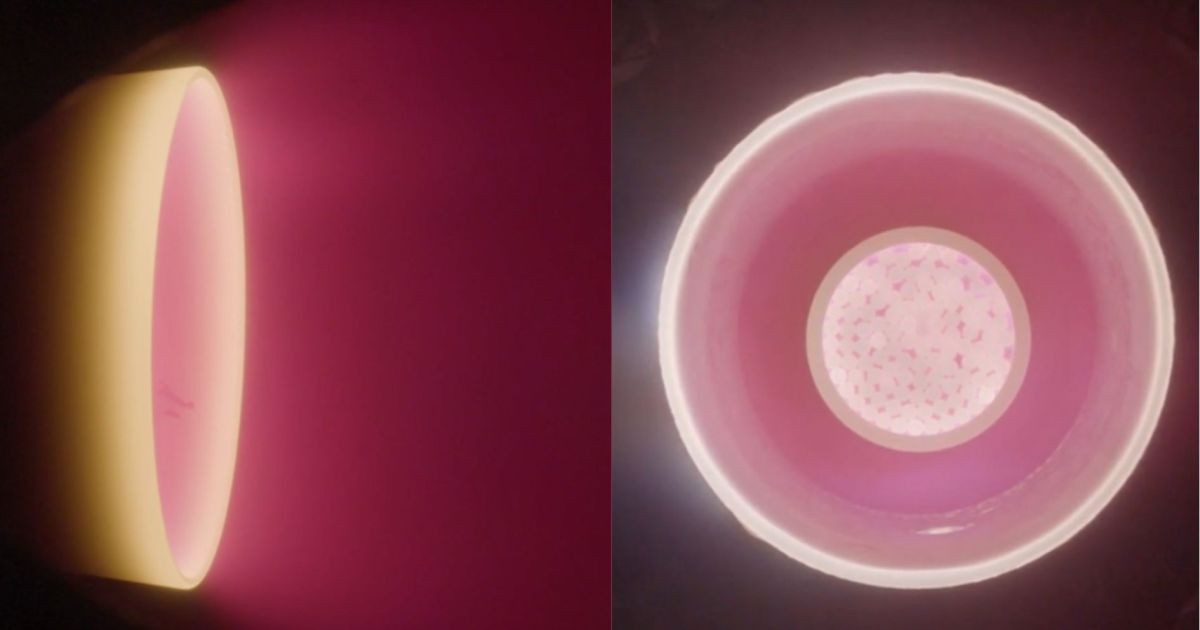
NASA has tested an experimental engine that could shorten the time it takes astronauts to reach Mars, using a propulsion system powered by lithium plasma. The agency said the technology, if eventually paired with a nuclear power source, could open the way to faster crewed missions to the Red Planet.
The tests were carried out by teams at NASA's Jet Propulsion Laboratory (JPL) and involved a magnetoplasmadynamic thruster, known by the acronym MPD. Jet Propulsion Laboratory, based in Pasadena, California, is the NASA center responsible for much of the agency's robotic exploration of the solar system, including its Mars rovers. According to NASA, the thruster reached more than five times the power of the electric propulsion systems currently in use.
How the new engine works
Unlike conventional rocket engines, the MPD uses high-intensity electric currents interacting with a magnetic field to electromagnetically accelerate a plasma made of lithium. Plasma can be described as a gas so energized that its atoms lose electrons, becoming electrically charged particles.
Inside the engine tested by NASA, those charged particles are accelerated and expelled at high speed, producing the thrust needed to move a spacecraft. Electric propulsion systems of this kind are known to be more fuel-efficient than traditional chemical rockets, though they typically produce less thrust and require longer periods of acceleration. Images released by NASA show the thruster running during the test series, with an intense glow and a plume of plasma being expelled from the equipment.
NASA said the main challenge for using this kind of propulsion on long-distance missions is supplying the system with enough power. When paired with a nuclear power source, the agency said, the thruster could cut the time needed for future crewed trips to Mars.
NASA did not say in the material it released how much time such a trip could save, nor did it give a timeline for when the technology might be used on a mission carrying astronauts.
Why a shorter trip to Mars matters
Developing more efficient propulsion systems is part of a bigger challenge facing future human missions into deep space. Journeys to Mars using current chemical propulsion technology are known to take many months, leaving astronauts exposed for extended periods to the conditions of the space environment, including microgravity and radiation.
One well-documented effect involves bone loss. According to NASA, crew members can lose on average between 1% and 1.5% of their bone density per month while in microgravity.

To address this, while developing propulsion technology for future spacecraft, NASA also uses the International Space Station to study how the human body responds to long stretches of time in space. The International Space Station, which has hosted astronauts continuously since 2000, orbits roughly 400 kilometers above Earth and serves as NASA's main research platform for the effects of long-duration spaceflight.
Among the technologies being evaluated is the European Exercise Device for Exploration (E4D), a compact system that allows for different types of exercise and can simulate varying levels of gravity.
This research is part of preparations for missions that will travel increasingly farther from Earth. After crewed flights to the Moon, NASA's long-term goal is to apply what it has learned so that astronauts can eventually travel to, live on and work safely on Mars.


