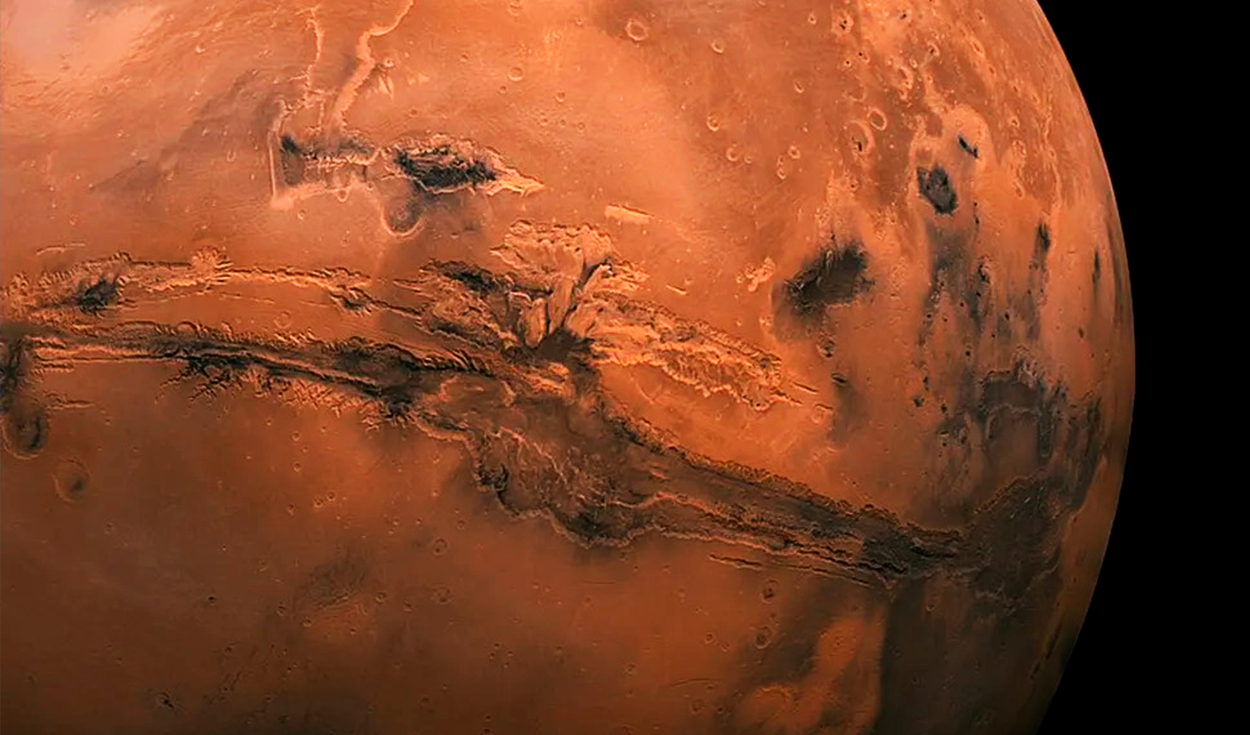
Deep underground faults beneath Valles Marineris on Mars are still actively shifting and generating marsquakes, according to a new study of seismic data.
The findings overturn longstanding assumptions that the Red Planet is a completely dormant world where crustal movement ceased billions of years ago. Although Mars lacks the mobile tectonic plates that drive earthquakes on Earth, researchers found that ancient fractures deep within its rocky shell can still trigger significant seismic shocks.
The discovery is based on an in-depth analysis of a marsquake recorded on 25 August 2021 by NASA's robotic InSight lander. Catalogued as S0976a, the event reached a magnitude of 4.2. At the time of its detection, it stood as the most powerful tremor ever recorded on Mars, before being surpassed in May 2022 by a magnitude 4.7 event. It remains one of the most critical seismic occurrences documented in Martian history.
By studying the seismic waves generated by the tremor, researchers pinpointed its origin to a fault located between 20 and 40 kilometres beneath the surface of Western Valles Marineris. The movement was identified as a strike-slip event, a mechanism in which crustal rock masses slide horizontally past one another rather than pulling apart or colliding vertically.
Scientists carefully evaluated alternative explanations for the shaking, including the possibility that a meteorite strike or a catastrophic landslide inside the chasm had generated the signals. Neither explanation matched the unique physical signatures recorded in the seismic wave patterns, confirming that tectonic displacement deep beneath the surface was the true cause.
Fault movement beneath Western Valles Marineris
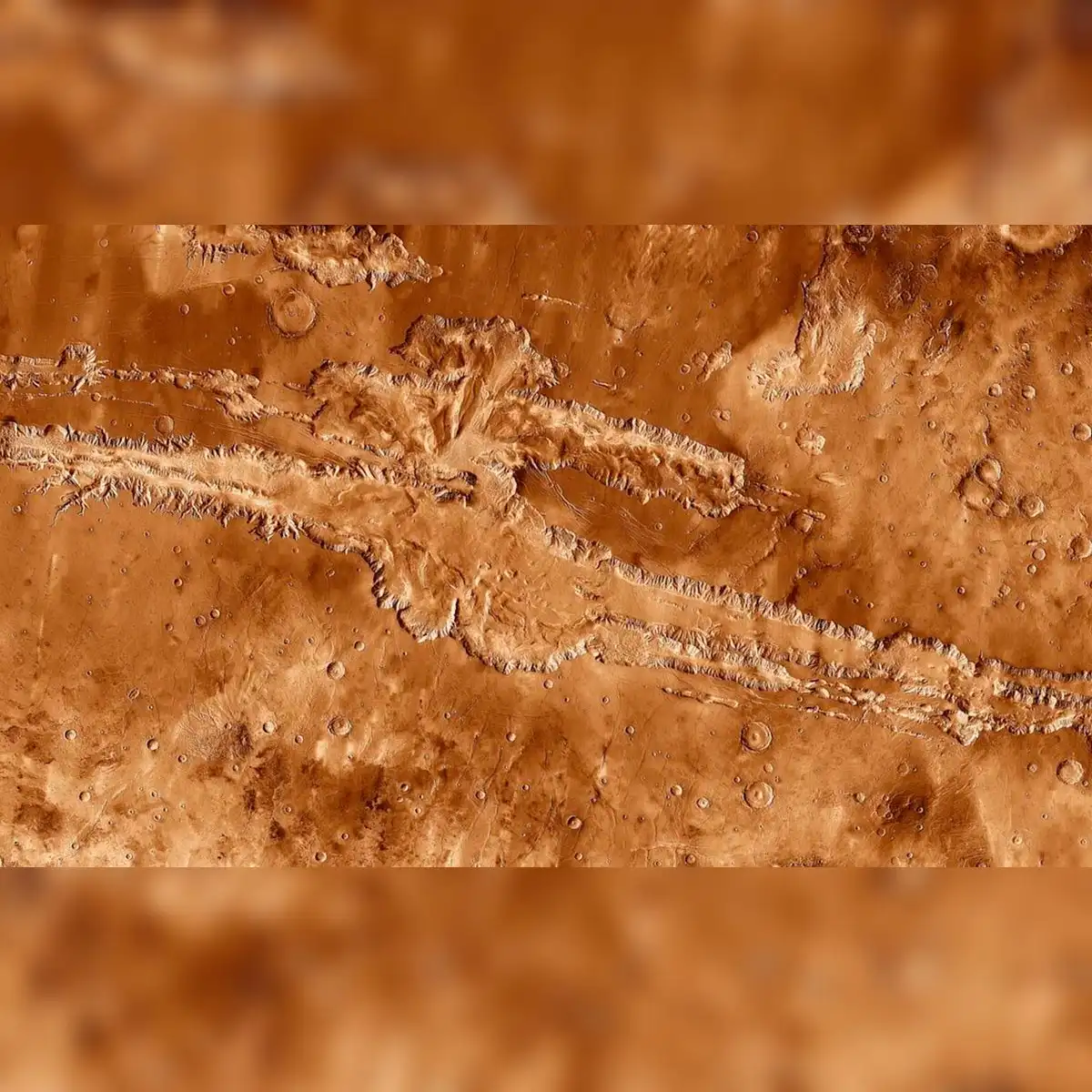
The study, published in the scientific journal Nature Communications on 15 October, was conducted by geophysicists at Imperial College London. The team demonstrated that the canyon system continues to deform long after the primary geological forces that created it wound down.
Jung-Hun Song, the lead author of the study and a planetary researcher at Imperial College London, explained that Valles Marineris is one of the most spectacular geological formations anywhere in the solar system, though researchers had never known with certainty whether its faults remained active.
Song added that deep fractures beneath the canyon can still shift and produce marsquakes long after the original geological processes that built them have ceased to operate.
Scale of the Martian canyon system
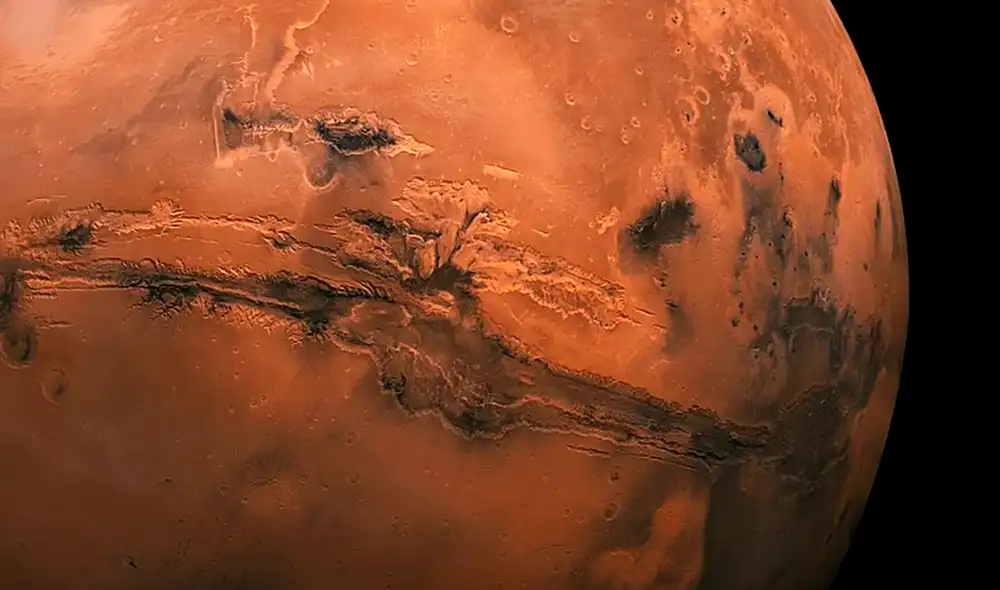
Valles Marineris is an immense chasm that cuts across the Martian equator. Stretching roughly 4,000 kilometres across the planet, it is approximately ten times longer than the Grand Canyon in the United States. In certain sections, the formation is up to 20 times wider and five times deeper than the Arizona landmark.
The canyon is so vast that orbital cameras and telescopes can easily spot it from space as a colossal scar across the surface of the planet. The geological system takes its name from the Mariner 9 orbiter, the NASA spacecraft that first mapped its enormous dimensions during an orbital mission in 1971.
While Mars experienced violent volcanic eruptions and widespread tectonic upheavals early in its history, its surface has remained largely undisturbed for nearly three billion years. Mars is much smaller than Earth, which caused its interior to cool down at a much faster rate. Because the planet never developed drifting continental plates, its crust acts as a single, rigid outer shell over its internal layers.
Seismic waves passing through the core
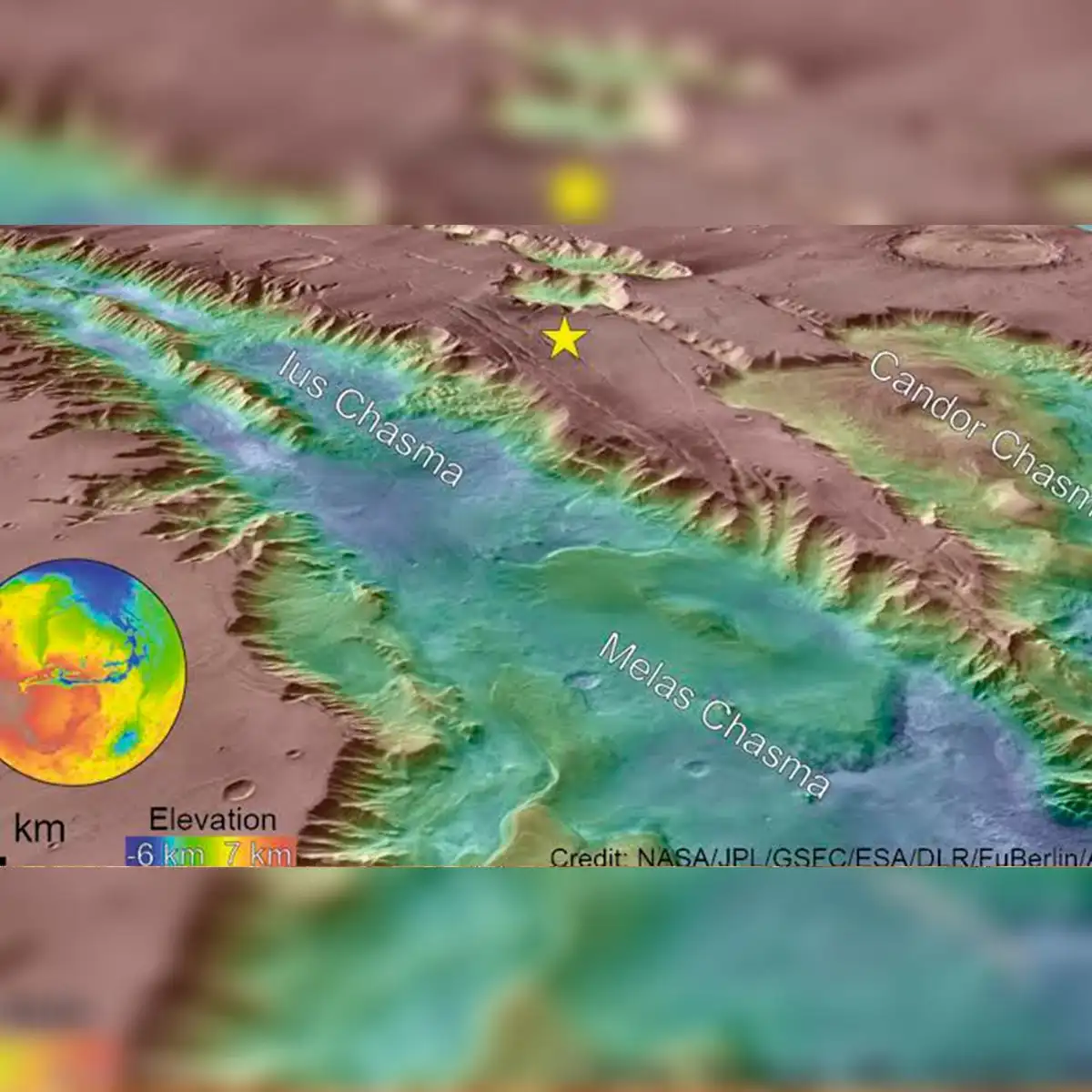
The S0976a earthquake also provided scientists with a rare opportunity to peer directly into the core of Mars. Because the seismic waves from the event traveled all the way through the Martian core, researchers were able to investigate both the deep structure of the planet and the specific fault rupture that triggered the shock.
Doyeon Kim, a study co-author and the head of the Earth and Planetary Seismology Laboratory at Imperial College London, noted that from a single marsquake, scientists can learn just as much about the center of the planet as they can about an active fault situated beneath one of its most extraordinary landscapes.
The authors pointed out that their analysis shows that seismic monitoring can detect hidden geological activity across other worlds in the solar system that planetary scientists currently consider dead. Moons and other rocky bodies with cooled interiors may still preserve shifting fractures below their surfaces.
Legacy of the NASA InSight mission
The data that made the discovery possible came from the InSight lander, which touched down on Mars in November 2018 equipped with ultra-sensitive seismometers to record planetary vibrations. The mission officially came to a close in December 2022 when Martian dust accumulated heavily across its solar panels, cutting off electrical power and ending communications with ground controllers.
Despite the end of surface operations, the extensive catalogue of measurements gathered by InSight continues to yield fresh scientific revelations. Researchers emphasize that the archived records prove that unmapped physical processes are still actively altering the interior of the Red Planet today.