


Former British Astronomer Royal Martin Rees has warned that Mars cannot serve as an alternative planet for humanity to escape mounting crises on Earth.
The veteran astrophysicist rejected the concept of mass space colonisation, cautioning that it is dangerous to view other worlds as an escape hatch from terrestrial problems. His comments directly challenged popular visions of humanity establishing a collective refuge on the red planet to flee environmental decline or existential catastrophe.
Rees delivered the warning during an address examining the world in 2050 and beyond at a seminar hosted by Darwin College in Cambridge on October 29, 2025. His observations were documented on page eight of the winter 2026 issue of the college bulletin, The Darwinian.
The bulletin identified Rees as an honorary fellow of Darwin College and noted that he had served as Britain's Astronomer Royal for 30 years, stepping down from the post in 2025. The historic office dates back to the seventeenth century and is typically awarded to the nation's most eminent astronomers. The Darwinian clarified that his statement emerged from that academic seminar rather than as an immediate reaction to any space mission or colonisation proposal announced this week.
Hostile surface conditions and atmospheric barriers
Rees stated that Mars was not a planet B, making a firm distinction between the scientific value of robotic exploration and the feasibility of human settlement. While acknowledging the importance of studying other worlds, he cautioned that transforming a hostile celestial body into a secondary home represents an entirely different scale of effort.
Data from the United States space agency, the National Aeronautics and Space Administration (NASA), underscores the severe physical obstacles confronting any long-term presence. The agency describes Mars as an arid world enveloped in an extremely tenuous atmosphere dominated by carbon dioxide.
The Martian surface offers no breathable air and completely lacks the ambient conditions required to sustain daily human activities without artificial life support. NASA officials point out that the gulf between analysing Martian geology and converting the planet into a human sanctuary remains immense. This distinction is critical when interpreting the ongoing search for extraterrestrial life, ensuring that the theoretical possibility of discovering microbial organisms is not confused with the availability of habitable real estate.
NASA continues to list Mars as a long-term destination for human exploration, but the agency emphasises that sending astronauts there requires developing entirely new technologies to sustain crews and return them safely to Earth. An expedition would demand continuous external support, even if visiting crews eventually succeed in manufacturing basic resources such as water or oxygen on site from local materials.
Radiation dangers and toxic atmospheric dust
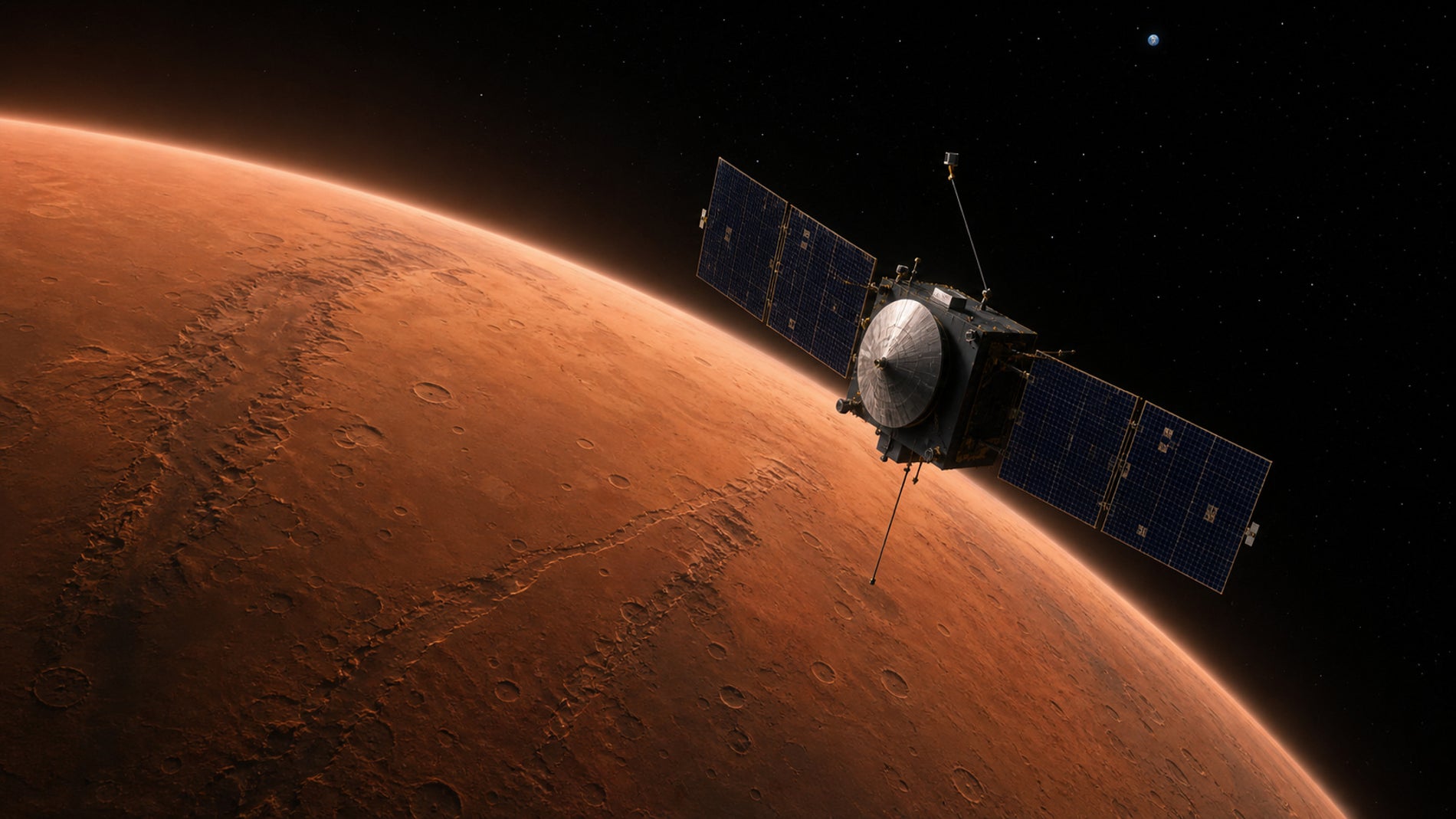
Orbital and surface images of Martian terrain, including striking polygonal crack patterns formed in frozen ground, showcase a scientifically fascinating landscape rather than an environment capable of housing civilian populations. Scientific exploration continues to reveal both discoveries and setbacks. While exploration vehicles have detected organic molecules on the Martian surface, NASA recently gave up its MAVEN orbiter as lost after 11 years of atmospheric operations following an unexpected operational turn.
Beyond the lack of breathable air, space radiation represents one of the most perilous hurdles facing human explorers. NASA's Human Research Program warns that once astronauts leave the protective shielding of Earth's dense atmosphere and strong magnetic field, energetic cosmic rays and solar particles pose grave health risks. Martian habitats would need heavy technical shielding solutions to protect occupants from severe cellular and genetic damage.
NASA researchers also emphasise that an environment capable of preserving biological traces or organic molecules over billions of years does not mean it is safe for human habitation. The conditions that shelter fossilised or dormant chemical signatures are often lethal to living tissue.
Martian atmospheric dust poses an equally serious and unresolved medical threat. In an agency update released in July 2026, NASA explained that the physiological impacts of inhaling or contacting Martian dust particles remain incompletely understood. Because space agencies have not yet returned actual samples of airborne Martian dust to terrestrial laboratories, researchers must rely on synthetic mineral simulants and telemetry transmitted by robotic rovers.
Limits of robotic missions and exploration
NASA acknowledges that substantial knowledge gaps persist regarding the day-to-day environmental hazards that an expedition crew would confront. While robotic rover discoveries continuously expand scientific understanding, they do not resolve the fundamental uncertainties surrounding prolonged human survival on the planet.
Rees argued that public discourse frequently confuses two separate scales: exploring space to learn about the universe, and seeking a replacement for our native planet. Developing a sealed, self-contained research outpost would stand as an extraordinary achievement of modern engineering. However, establishing an alternative habitat capable of supporting a significant human population demands vastly greater resources and infrastructure than current technology can provide.
The former Astronomer Royal insisted that the focus must return to protecting the home planet. Unlike Mars, Earth possesses a natural protective atmosphere and an active biosphere that already provide the essential conditions for human life free of charge. Rees concluded that addressing climate disruption and environmental hazards on Earth represents the only practical path forward, because no other celestial body can rescue humanity from its own mistakes.


