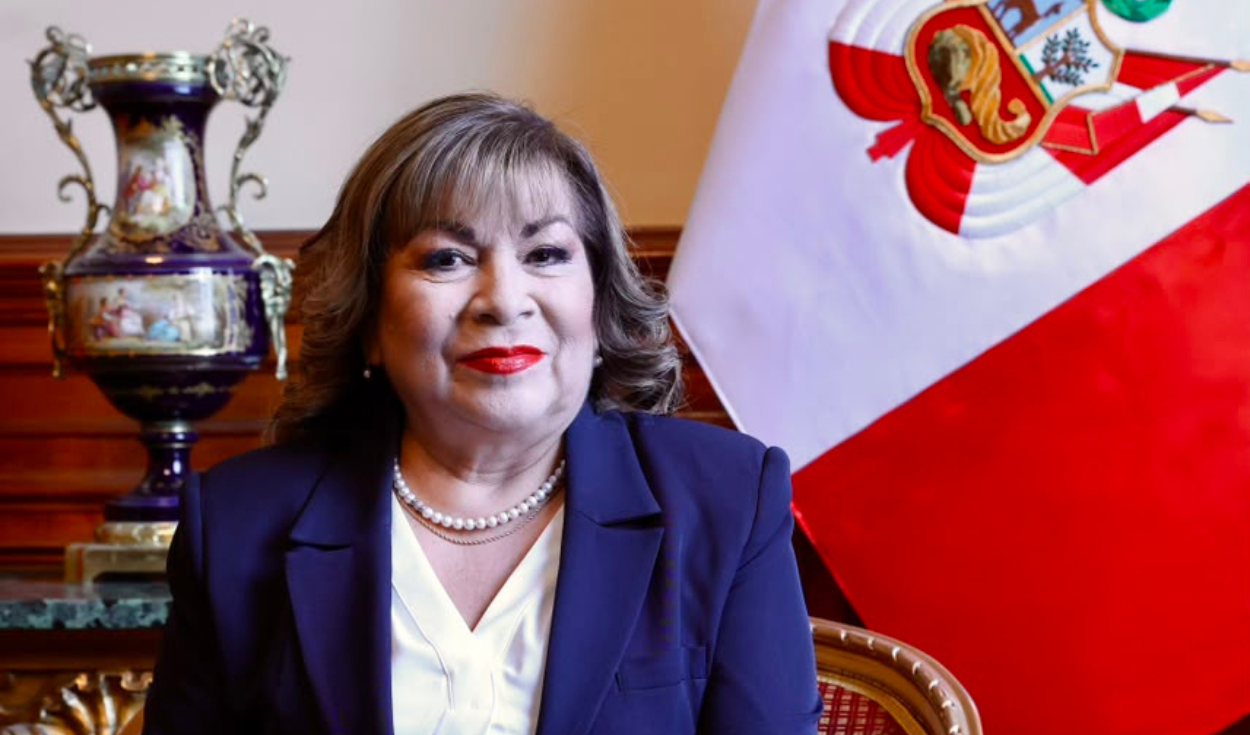
International Criminal Court judge Luz Ibáñez has urged Peruvian President Keiko Fujimori to back her candidacy for the International Court of Justice in The Hague.
Speaking in an interview with La República, the Peruvian magistrate said the government in Lima must decide whether to support Peru or Ecuador after Peruvian diplomats endorsed an Ecuadorian candidate instead of her.
Ibáñez revealed that her nomination for the United Nations tribunal was officially submitted by Mexico and Hungary after Peru failed to register her candidature before last month's deadline.

The official list of nominees published by the UN Secretary-General on July 1 listed Peru as supporting a representative from Ecuador for the Latin American seat. Ibáñez questioned that decision, noting that the Ecuadorian candidate is a law professor and advisor compiling legislation for the International Law Commission, whereas she brings 44 years of judicial experience. She compared her situation to a marathon runner from Huancayo competing in a global race and calling on her home nation for backing.
The International Court of Justice, also known as the World Court, is the principal judicial organ of the United Nations. Located at the Peace Palace in The Hague, Netherlands, the 15-member tribunal settles legal disputes between sovereign states and gives advisory opinions on international legal questions.
Diplomatic backing from Mexico and Hungary
According to Ibáñez, her candidacy was originally approved as an official state initiative in March 2025. However, transition governments later stalled the campaign, resulting in Peru missing the registration deadline. Mexico and Hungary then stepped in to submit her nomination in recognition of her professional career.
Although the UN window for submitting or withdrawing candidate names has closed, Ibáñez urged the Peruvian Ministry of Foreign Affairs, known as the Cancillería, to reactivate its diplomatic roadmap immediately. She stressed that Peruvian diplomats need to consolidate support through formal diplomatic notes before voting takes place on November 6.
The magistrate noted that Mexico recently restored diplomatic relations with Peru. She suggested that her nomination by Mexican authorities could serve as a diplomatic bridge between Mexican President Claudia Sheinbaum and President Fujimori, demonstrating how cooperation on major international causes can transcend political and ideological differences.
Meetings with Peruvian officials in Lima
Ibáñez returned to Peru to seek formal backing from the state and has requested audiences with several top officials. She reported that she was received by the president of the Chamber of Deputies and its directorial board, who expressed full support for her nomination.
She also met with the Foreign Minister shortly before his trip to Colombia. She noted that while he appeared uninformed about the situation initially, she explained the significance of the election and perceived positive signals of sympathy from the administration.
Ibáñez is still awaiting a meeting with President Fujimori, as well as requested audiences with the Prime Minister and the President of the Senate. She emphasized that under Article 2, Clause 20 of the Peruvian Constitution, she has a right as a citizen to request government backing for a national candidacy of high state interest.
Career at the International Criminal Court
Ibáñez brings 44 years of legal experience to her bid, including 35 years as a prosecutor and judge in Peru and nearly nine years at the International Criminal Court in The Hague, where she served as vice president. The International Criminal Court is a permanent tribunal established to prosecute individuals for genocide, crimes against humanity, war crimes, and the crime of aggression.
During her judicial career in Peru, Ibáñez participated in the landmark mega-trial that resulted in life sentences for Abimael Guzmán, the founder of the Shining Path guerrilla movement, and members of his central command structure. A native of Trujillo with Mochica Chimú heritage, she has spent 23 years specializing in human rights and international justice.
Gender representation and historical precedent
If elected, Ibáñez would become the first Peruvian woman and the first Latin American woman to serve on the International Court of Justice. Currently, only five of the 15 judges on the tribunal are women, and none of the court's past presidents have been Latin American women.
The only Peruvian judge to sit on the ICJ was former Peruvian President José Luis Bustamante y Rivero, who was elected 63 years ago and later served as president of the court. Ibáñez stated that her election would mark another historical milestone for Peru and align with UN 2030 Agenda targets to increase female leadership in senior judicial roles.
Evolving role of international justice
Ibáñez explained that the nature of cases before the International Court of Justice has shifted significantly over the past decade. While the court traditionally focused on territorial and border disputes between states, it now increasingly handles cases concerning international treaty obligations.
She cited ongoing cases involving the Genocide Convention, such as proceedings between Azerbaijan and Lithuania, as well as cases under the Convention Against Torture, racial discrimination agreements, migrant treatment protocols, and environmental protection. She argued that her extensive judicial experience at the ICC provides a practical perspective that complements the backgrounds of judges coming from diplomatic or administrative roles.
Ibáñez concluded by advocating for a humanized approach to international law, recalling discussions with the late Brazilian jurist Antônio Augusto Cançado Trindade. She emphasized that judicial rulings must consider the impact on human populations rather than treating sovereign states solely as abstract legal entities. She confirmed that she will return to Europe shortly to continue her global campaign ahead of the November election.