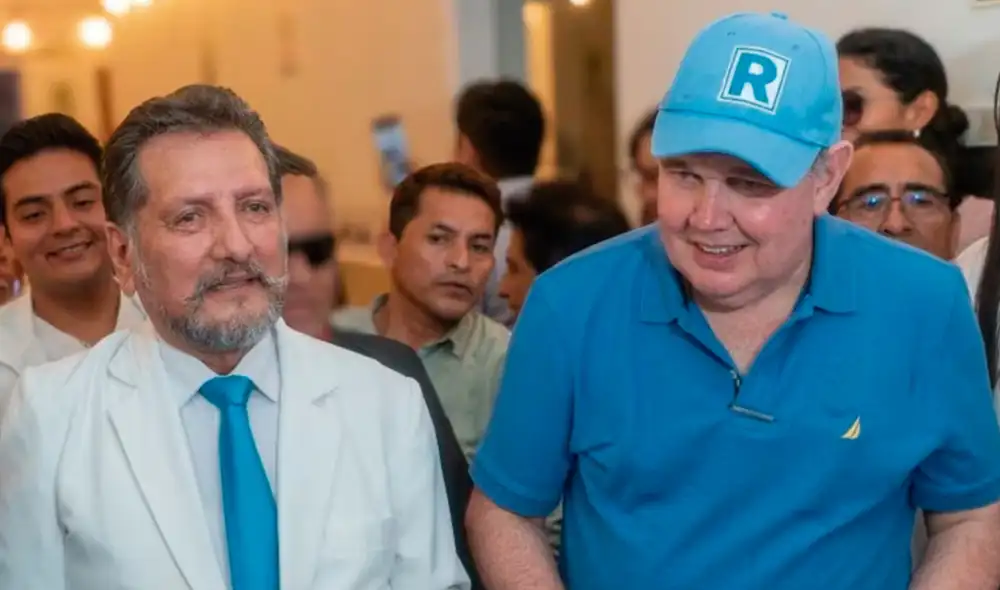
Luis Isael Rubio Idrogo has withdrawn his candidacy for mayor of Lima Metropolitana, running under the Renovación Popular Perú party in Peru's 2026 Regional and Municipal Elections. Rubio called the decision irrevocable.
Rubio formalized the withdrawal on August 4 in a document filed with the Mesa de Partes of the Jurado Electoral Especial (JEE) of Lima Centro. In the filing, Rubio cited strictly personal reasons for the decision, even though electoral authorities had already admitted his candidacy on July 26.
The document, signed by Rubio and submitted in four pages, invokes Peru's Municipal Elections Law and asks the JEE's Secretary General to certify his signature to formally validate his exit from the race. Rubio filed the resignation one day before the August 5 deadline.
On the same electoral list, Renovación Popular leader Rafael López Aliaga is running for first regidor, or councilman, and deputy mayor. Rubio's withdrawal clears the way for López Aliaga to automatically take the mayor's office if the list wins, since he holds the first regidor position on the ticket.
Electoral lawyer explains the process
Kevin Advíncula, a lawyer specializing in electoral and constitutional law, told La República that filing a resignation for personal reasons does not close the case immediately. Advíncula said that although the document meets the formal and material requirements, the JEE must still issue a ruling on it. The stated reason in the resignation letter is the formal justification, he said, but it does not by itself limit the JEE's authority to carry out a review of material legality.
Advíncula said that even if the JEE accepts the resignation, the decision could be appealed before the full Jurado Nacional de Elecciones (JNE), which would have to rule under the Constitution on whether there is a defect from the outset and whether electoral rules have been manipulated.
On whether Rubio's exit puts the party's participation at risk, Advíncula said the resignation of the head of the ticket does not by itself void the registration. He explained that Peru's municipal electoral system operates on a logic of succession within the list itself, so if the withdrawal is admitted within the deadline, the order is rearranged and the first regidor effectively becomes the remaining candidate.
On the possibility that López Aliaga's ascension to the mayor's office could conflict with the constitutional ban on immediate reelection, Advíncula said that while running for a different office is defensible on paper, it carries legal risk. He said the JEE and JNE have sufficient regulatory grounds to determine whether there are objective signs the candidacy was used as a maneuver to later hand the position to the first regidor, warning that failing to examine the matter substantively would amount to a concealed reelection.
Advíncula added that the case highlights the need for a comprehensive overhaul of Peru's electoral rules, which he said are scattered across roughly 48 separate regulations rather than a single, organized electoral code, leading to patchwork fixes and gaps. He said maneuvers like this one exploit legal loopholes to breach the Constitution and the law, defrauding citizens, and that sensitive issues of this kind should be addressed urgently to prevent such fraud.
"No legitimacy," second lawyer says
Jorge Jáuregui, another lawyer specializing in electoral matters, questioned the validity of the entire process and criticized electoral authorities for allowing López Aliaga to be part of the municipal ticket while still holding his position as an elected member of Congress. He told La República the case goes beyond a routine administrative procedure and could open the door to more serious legal claims, including a request to nullify the election, arguing that López Aliaga is not constitutionally permitted to take part in this election.
Jáuregui said the JNE exceeded its legal authority by endorsing López Aliaga's situation, calling the decision baseless and without legal merit. He said that once an election has taken place, the JNE has no legal power to decide who receives credentials or to rearrange candidate lists.
Jáuregui said that if López Aliaga reaches the mayor's office following Rubio's resignation, he will completely lack direct citizen backing for the post. He asked what level of legitimacy a mayor who arrives only through succession would have, answering that such a mayor would have none at all. He said maneuvers of this kind reflect a hunger for power in which citizen legitimacy becomes secondary, arguing that such leaderships care little about legitimacy or public opinion, forming whatever alliances are needed to reach office and repaying supporters with public money and benefits while the system keeps turning.
Jáuregui said the Lima Metropolitana case reflects a deep deterioration of Peru's political and institutional system, describing the 2026 general and municipal elections as marking the end of faith that liberal democracy can function. He said these strategies expose a degradation of democratic rules and the exploitation of legal technicalities to sidestep the ban on reelection, using loopholes and regulations to undermine the spirit of the Constitution and directly harm citizen representation.