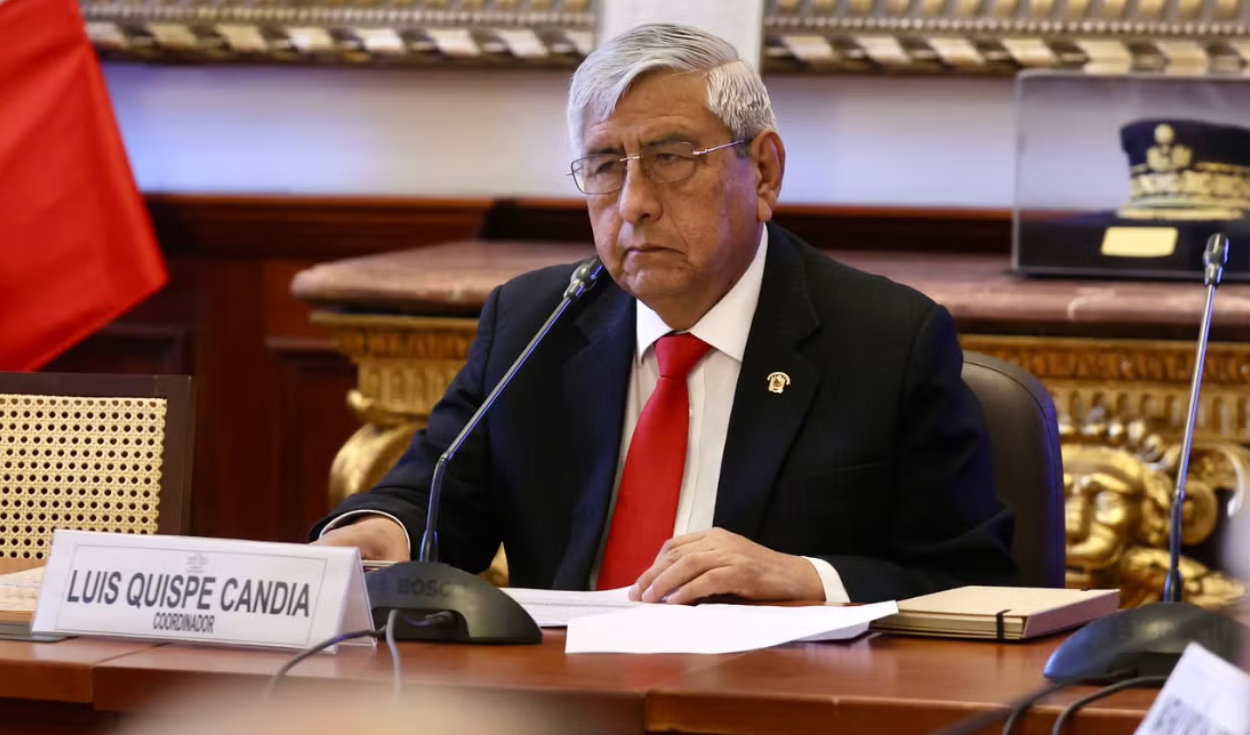
Deputy Luis Quispe Candia has rejected motions to interpellate ministers in the government of Keiko Fujimori, describing the initiatives as out of place.
Quispe Candia, who serves as chairman of the Infrastructure, Housing and Transport Committee in the Chamber of Deputies, stated that the cabinet has been in office for less than a month and that sufficient grounds for congressional questioning do not yet exist.
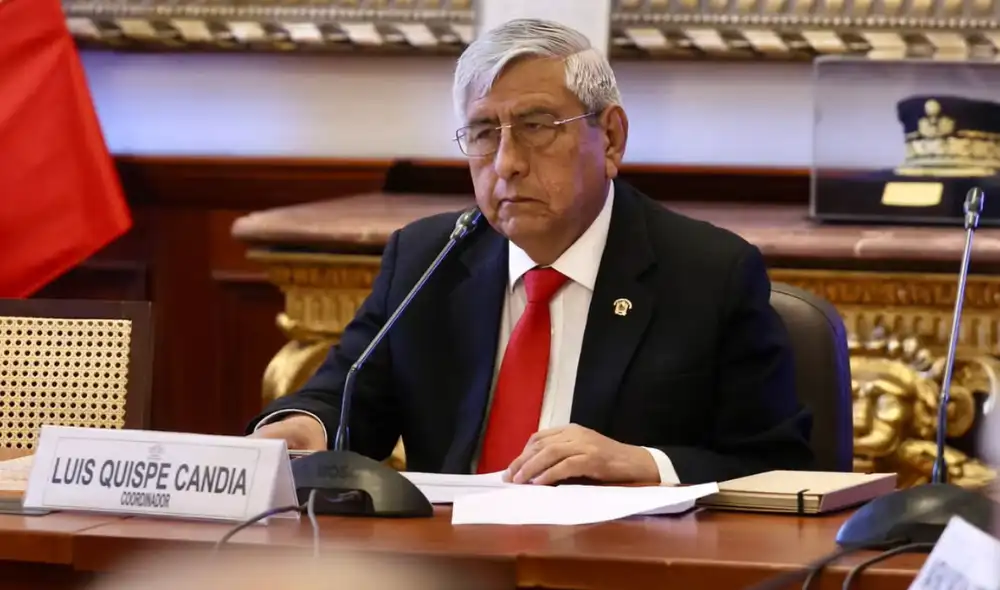
Speaking on the radio program Ampliación de Noticias on RPP, the lawmaker insisted that his parliamentary group, the Good Government Party, maintains its identity as an opposition force despite refusing to back the interpellation motions.
The Good Government Party, known locally as Partido del Buen Gobierno, is a political caucus in Peru's unicameral parliament. In Peruvian legislative procedure, an interpellation is a formal summons requiring cabinet ministers to appear before lawmakers to answer questions about departmental management, a process that can precede a vote of censure or forced resignation.
Opposition motions in Congress
Opposition lawmakers have already formalized interpellation motions against Defense Minister Rafael Belaunde Llosa and Minister of Energy and Mines Guillermo Shinno.
The motions targeting Belaunde Llosa and Shinno were submitted by Juntos por el Peru, a left wing parliamentary coalition that has taken an assertive stance against the executive branch early in the administration's term.
A separate motion against Interior Minister Cesar Astudillo remains pending formal submission. Astudillo previously stated that an eventual censure motion would provide him with an opportunity to demonstrate the work being accomplished by the police force.
The Ministry of Defense oversees the Peruvian Armed Forces, while the Ministry of Energy and Mines regulates the country's vast mining and energy sectors. The Ministry of the Interior manages internal security and oversees national law enforcement operations.
Arguments against cabinet interpellations
Quispe Candia argued that his party's decision not to support the interpellations does not signal alignment with the executive branch. He explained that the Good Government Party considers itself an opposition party chosen by voters, but emphasized that opposition lawmakers should not act irrationally.
The lawmaker questioned the rationale of groups seeking immediate interpellations, asking how lawmakers could easily summon a minister after only one month without giving them the opportunity to demonstrate their capabilities. He added that each parliamentary group must remain accountable for its own words and actions.
Quispe Candia noted that while the present moment is not appropriate for cabinet interpellations, the proper time for legislative oversight and questioning will eventually arrive. He stressed that parliamentary actions require reasonable criteria rather than premature challenges.
Radio Programas del Peru, widely known as RPP, is one of Peru's major news and radio broadcasting networks. Its flagship morning program Ampliación de Noticias frequently features interviews with leading political figures and members of parliament.
National police and municipal security
In addition to commenting on congressional oversight, Quispe Candia addressed the national state of citizen security. He urged the government to strengthen the work of the National Police of Peru rather than relying on municipal watchmen.
The deputy argued that municipal security personnel lack the legal authority necessary to tackle security challenges effectively. He asserted that police forces require greater institutional backing to combat crime across the country.
Municipal serenazgos are local security patrols maintained by district and provincial councils across Peruvian cities. Although serenazgo officers assist with public order and neighborhood surveillance, they do not possess police powers, legal authority to make arrests, or authorization to carry firearms under Peruvian law.
Congress is expected to schedule debates on the formalized interpellation motions against the ministers of defense and energy and mines in upcoming sessions, while lawmakers decide whether to formalize the motion against the interior minister.